The Merzouga Village Guide: 8 Things to Do Beyond the Dunes
Merzouga village is the small desert settlement next to Erg Chebbi where local life happens, but most travelers skip it completely.Most visitors arrive in Merzouga, go straight to the dunes, and leave without spending a single hour in the village. Entire itineraries are built around the sand, even though the settlement itself sits just 5 km from Erg Chebbi.
That means they miss the part where people actually live: local cafés, small family kitchens, fossil workshops, and the daily rhythm of a desert village that exists beyond the postcard experience.
This Merzouga village guide fixes that. You’ll learn where to eat food locals actually eat, which places are worth your time before or after a camel trek, and how to use those “in-between hours” most travelers waste.
By the end, you’ll know how to experience Merzouga as a place, not just a stop on the way to the dunes.
Quick Facts
- Location: 5 km from Erg Chebbi dunes, 45 min from Erfoud, 1 hour from Rissani
- Population: Around 300 residents, primarily Berber with Arab influences
- Average meal cost: 50–100 MAD ($5–$10 USD) at local restaurants
- Accommodation range: 200–500 MAD budget, 500–1,000 MAD mid-range, 1,000+ MAD luxury per night
- Fossil museum entry: 20 MAD; houses Devonian-period trilobites (350 million years old)
- Dayet Srij seasonal lake: Best visited March–April after winter rains; attracts flamingos and migratory birds
- Cooking class cost: Around 200 MAD per person, 2–3 hours including market walk
- Taxi from Rissani: Approximately 150 MAD (negotiate before departure)
- ATMs: Limited and unreliable; withdraw cash in Rissani or Erfoud before arrival
- Best months to visit: October through April (avoid June–August heat over 45°C)
- Wi-Fi availability: Slow and intermittent in some hotels and cafés; mobile signal disappears in the dunes
All prices in Moroccan Dirham (MAD) and approximate USD equivalents where applicable.
Why Most Travelers Miss the Real Merzouga (And Why You Shouldn’t)
Most visitors arrive in Merzouga, transfer straight to a desert camp for sunset, sleep under stars, watch sunrise, then leave. The village itself gets treated like a parking lot. That is a mistake, because Merzouga is a living Berber settlement of around 300 people with its own rhythm, far removed from the choreographed camel-trek experience.
The village sits along a single paved road that runs parallel to Erg Chebbi, about 5 km from the first line of dunes. This is where locals actually live: children walk to school in the morning, men gather at cafés in the late afternoon, and women buy vegetables from the weekly souk truck that passes through on Wednesdays. Visit the village in late afternoon, between 4 PM and 6 PM, when the heat subsides and locals are out socialising. You will hear the clatter of mint tea glasses, smell wood-fired bread baking near the mosque, and see the real pace of desert life.
What Most Guides Get Wrong About Merzouga Village
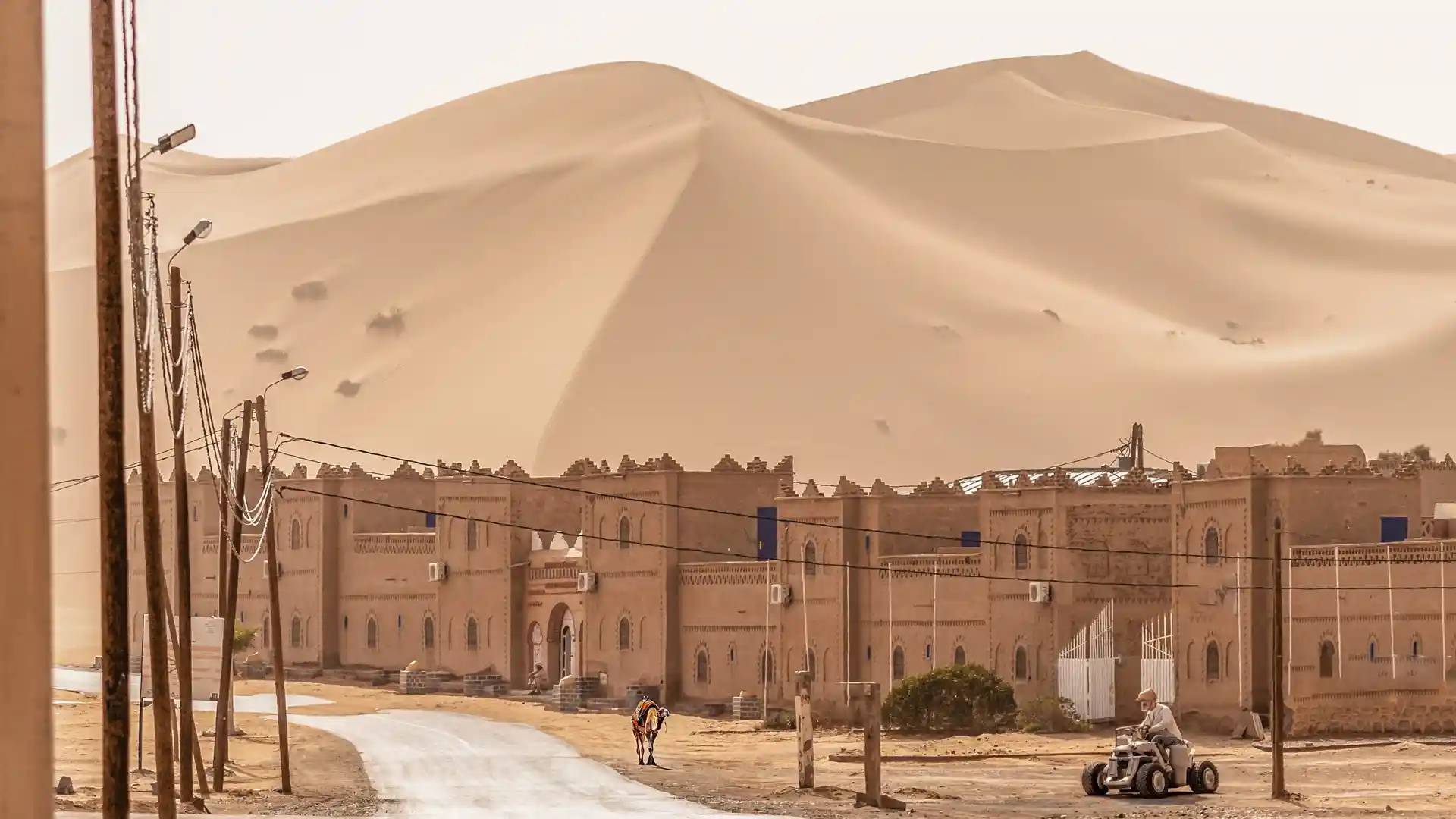
Travel blogs call Merzouga “authentic” without defining what that means. Merzouga is not a preserved cultural museum. It is a working village that adapted to tourism out of economic necessity. Many families switched from subsistence farming to running guesthouses or working as camel guides after the 1990s when overland travel to the Sahara became popular. The architecture you see, pisé walls, kasbahs with decorative crenellations; is real, but it is also maintained because tourists expect it to look a certain way. That does not make it fake; it makes it a hybrid economy. Understanding this before you arrive means you engage with the village honestly rather than looking for something it was never trying to be.
Where to Eat in Merzouga: Local Restaurants and Hidden Gems
Not all restaurants in Merzouga are equal. Some cater exclusively to tour groups with bland buffets. Others serve food locals actually eat. Average meal price runs 50 to 100 MAD ($5 to $10 USD). A typical menu includes tagine (lamb, chicken, or vegetable), couscous on Fridays, harira soup, grilled meat skewers, and fresh bread baked in a communal wood oven.
Restaurant Tajine Wa Tanjia, located on the main road near the fuel station, is known for slow-cooked lamb tagine with prunes and almonds. Order two hours ahead if you want it done right. Café Restaurant Chez Julia is reliable for breakfast and lunch, fried eggs, bread, olive oil, fresh orange juice, and stays open year-round, unlike some places that close in summer. Haddou’s Place is a family-run spot with no sign; look for the blue door just behind the main square. Ask for harira and you will get a thick lentil soup with fresh coriander that locals order in winter. Wash it down with Moroccan mint tea, served sweet and poured from height in the traditional style.
Some guesthouses offer cooking classes for around 200 MAD per person. You will prepare tagine, couscous, or Berber pizza (medfouna) with the family matriarch, then eat what you cooked. Classes last two to three hours and include a market walk if scheduled in the morning. Vegetarian tagines are common, but vegan options require advance notice since many dishes use butter or meat broth by default.
Unique Activities in Merzouga Village Beyond Sandboarding
Most visitors know about sandboarding on Erg Chebbi and the sunset camel trek. Fewer know what to do with the hours in between. The village itself fills them well.
The fossil museum sits on the edge of the village and charges 20 MAD entry. It houses trilobites from the Devonian period (350 million years old), ammonites, and orthoceras fossils pulled from the Erfoud region. The best time to visit is late afternoon when the light hits the display cases. You can buy polished specimens at the shop for 50 to 500 MAD depending on size and rarity. Bargaining is expected, but the owner knows the scientific names and will not move much on genuine pieces.
Dayet Srij is a seasonal lake that fills with water between March and April after winter rains. It sits about 3 km north of the village and attracts flamingos, herons, and migratory birds. By June, it dries into a salt flat. If you visit during the wet months, it is worth a short walk or bike ride (some guesthouses lend bicycles for free). The lake has no facilities, so bring water and a hat. The stargazing from this edge of the village, away from guesthouse lights, is exceptional on clear nights between October and March. For the debate on which is better at Erg Chebbi, our post on sunrise vs sunset in the Sahara gives an honest answer.
The palm oasis on the western edge of Merzouga offers a 30-minute walking circuit through date palms and irrigation channels. This is where locals grow vegetables and maintain small gardens using the traditional khettara system (underground channels that bring water from distant aquifers). Mornings are cooler for this walk; afternoons between May and September are brutal. If you want more active dune experiences, quad biking on Erg Chebbi is available from several operators in the village.
Artisan Cooperatives and What to Buy
Several artisan cooperatives in Merzouga sell handwoven Berber rugs, silver jewellery, and fossils. Prices start around 300 MAD for small rugs and climb to 5,000 MAD for large hand-knotted pieces that take months to complete. Do not buy fossils from street vendors; fakes are common. Stick to cooperatives or the museum shop where provenance is traceable. If you are serious about a rug, ask to see the weaver and inspect the knots, tighter knots mean higher quality and longer life.
Merzouga Accommodation Guide: Where to Stay Before or After Your Camp
Even if you have booked a desert camp, you will likely need a guesthouse for arrival or departure days. For a full comparison of what different camp types provide, our guide to desert camp facilities covers beds, bathrooms, charging points, and what each price tier realistically delivers. For what you will eat once you are at camp, our post on desert camp food covers menus, dietary options, and what to request in advance.
Accommodation in Merzouga village ranges from budget guesthouses at 200 to 500 MAD per night to mid-range riads at 500 to 1,000 MAD and luxury lodges above 1,000 MAD. Most include breakfast (Moroccan pancakes, jam, bread, tea, coffee). Kasbah Mohayut sits on the edge of the dunes, making it ideal if you want to catch sunrise without a long drive. Auberge du Sud is a traditional pisé guesthouse with a small pool (welcome after a dusty drive from Fes or Marrakech). Hotel Tenere is the budget option at around 250 MAD per night, basic but clean.
Most travelers arrive from Fes (around 7 hours by road) or Marrakech (around 10 hours via Ouarzazate and the Dades Valley). For the full breakdown of the Marrakech route; distances, timing, and what to stop at along the way — our guide to Marrakech to Sahara distance and travel time covers every leg. If you are coming from Fes, our post on Fes to Sahara routes explains the options and which is fastest. During peak season (October to April), book accommodation at least one week in advance.
Essential Merzouga Practical Tips for a Smooth Visit
ATMs in Merzouga are unreliable. The single machine near the mosque runs out of cash frequently, especially during high season. Withdraw money in Rissani or Erfoud before arriving. Bring enough cash to cover meals, souvenirs, and tips, guides, drivers, and camp staff expect 50 to 100 MAD per day depending on service quality. Credit cards are accepted at some mid-range and luxury guesthouses but not at budget places or restaurants. For a full breakdown of what Morocco actually costs, our Morocco trip cost guide breaks down every expense from accommodation to tips.
Wi-Fi exists in some hotels and cafés but it is slow and cuts out often. Mobile signal (Maroc Telecom, Orange) works in the village but disappears completely once you enter the dunes. If you need to stay connected, buy a local SIM card in Erfoud or Rissani before arrival. For everything you need to bring, our complete Sahara packing list covers clothing for both the day heat and the sharp cold that arrives after sunset.
If your visit falls in summer, read our post on visiting the Sahara in summer before you book, temperatures above 45°C require a completely different daily schedule. For winter visitors, our guide to the desert in winter covers what cold nights actually feel like and what bedding to request from your camp.
Touts and Unwanted Guides
When you arrive in Merzouga, touts may approach offering “free guided tours” of the village or special deals on camel treks. Politely decline and keep walking. These tours are never free; they end with aggressive sales pitches at carpet shops or fossil stores where the guide earns commission. If you want a genuine guide, ask your guesthouse to recommend someone with a local licence. Expect to pay 100 to 200 MAD for a two-hour village walk with cultural context.
Public toilets in Merzouga are rare. If you need a bathroom during village exploration, buy a mint tea at a café (10 MAD) and use the facilities there. Guesthouses have Western-style toilets; desert camps typically use squat toilets or eco-toilets with no running water.
Best Time to Visit Merzouga Village
October through April is ideal. Daytime temperatures range from 20°C to 28°C (68°F to 82°F), and nights drop to 5°C to 15°C (41°F to 59°F). Avoid June, July, and August when midday temperatures exceed 45°C and the village empties out. March and April bring occasional rain and the seasonal lake. November through February offer the clearest night skies for stargazing but require warm layers after sunset. For a month-by-month breakdown of conditions across the whole country, our Morocco travel guide by month shows how the desert fits into a broader itinerary. If you are traveling with children, our post on whether the Sahara is suitable for kids covers everything a family needs to know before booking. For solo women, our guide to Sahara desert solo female travel addresses safety, camp dynamics, and how to choose the right operator.
Ready to See Another Side of the Sahara?
Merzouga village is more than a pitstop between your hotel and the dunes. It is a chance to experience Moroccan desert life beyond the postcard images of camels and sand. From local food and fossil museums to tranquil oasis walks, your non-dune hours can be just as memorable as watching the sun drop over Erg Chebbi. If you are still deciding whether the whole Sahara experience is worth building into your trip, our honest take in is a Sahara desert tour worth it gives a direct answer. For the full planning picture, our complete guide to Sahara desert tours in Morocco covers every route, price point, and decision you need to make before you book.
Memento Morocco designs private Sahara tours that build in time to explore Merzouga properly, not just the dunes, but the village, the people, and the pace. Our 3-day Marrakech desert tour and 3-day Fes desert tour are the most direct routes to Merzouga from Morocco’s two main starting points. For a complete Morocco experience that combines Merzouga with Fes, the Atlas Mountains, and Marrakech, our 10-day Marrakech, Sahara and Fes tour builds everything into one private itinerary at your pace. We handle the logistics, the timing, and the local knowledge, you focus on the experience.
📩 Contact us: contact@mementomorocco.com | +49 1522 3075977 | WhatsApp