Dayet Srji Merzouga: A Seasonal Flamingo Lake in the Sahara
Over 20,000 waterfowl descend on Dayet Srji Merzouga every year, yet most travelers passing through Merzouga village never hear about this seasonal lake. Located just 4 km east of Merzouga in southeastern Morocco, this ephemeral wetland transforms the Sahara into an unlikely birdwatching paradise between December and April. By the end of this guide, you will know exactly when to visit, how to get there, what birds to expect, and how to photograph this rare desert lake without the guesswork that leaves most visitors standing on dry salt flats wondering where the flamingos went.
Quick Facts
- Location: 4 km east of Merzouga village, southeastern Morocco
- Best months to visit: December to April (peak flamingos in February and March)
- Water presence: Seasonal, the lake dries completely June to November
- Flamingo species: Greater Flamingo (Phoenicopterus roseus), numbers exceed 1,000 in good years
- Access: No entrance fee, reachable by car (4×4 recommended after rain), walking, or cycling from Merzouga (20–30 minutes)
- Transport cost: Private taxi from Merzouga 150–200 MAD ($15–20 USD)
- Birdwatching guide cost: 200–300 MAD ($20–30 USD)
- GPS coordinates: 31.0870° N, 4.0040° W (approximate)
- Best time of day: Sunrise and early morning (before 10 AM) for calm wind and active birds
- Photography gear: 300–600mm telephoto lens, polarizing filter, tripod, lens blower for sand
What Is Dayet Srji Merzouga and Why Does It Matter?
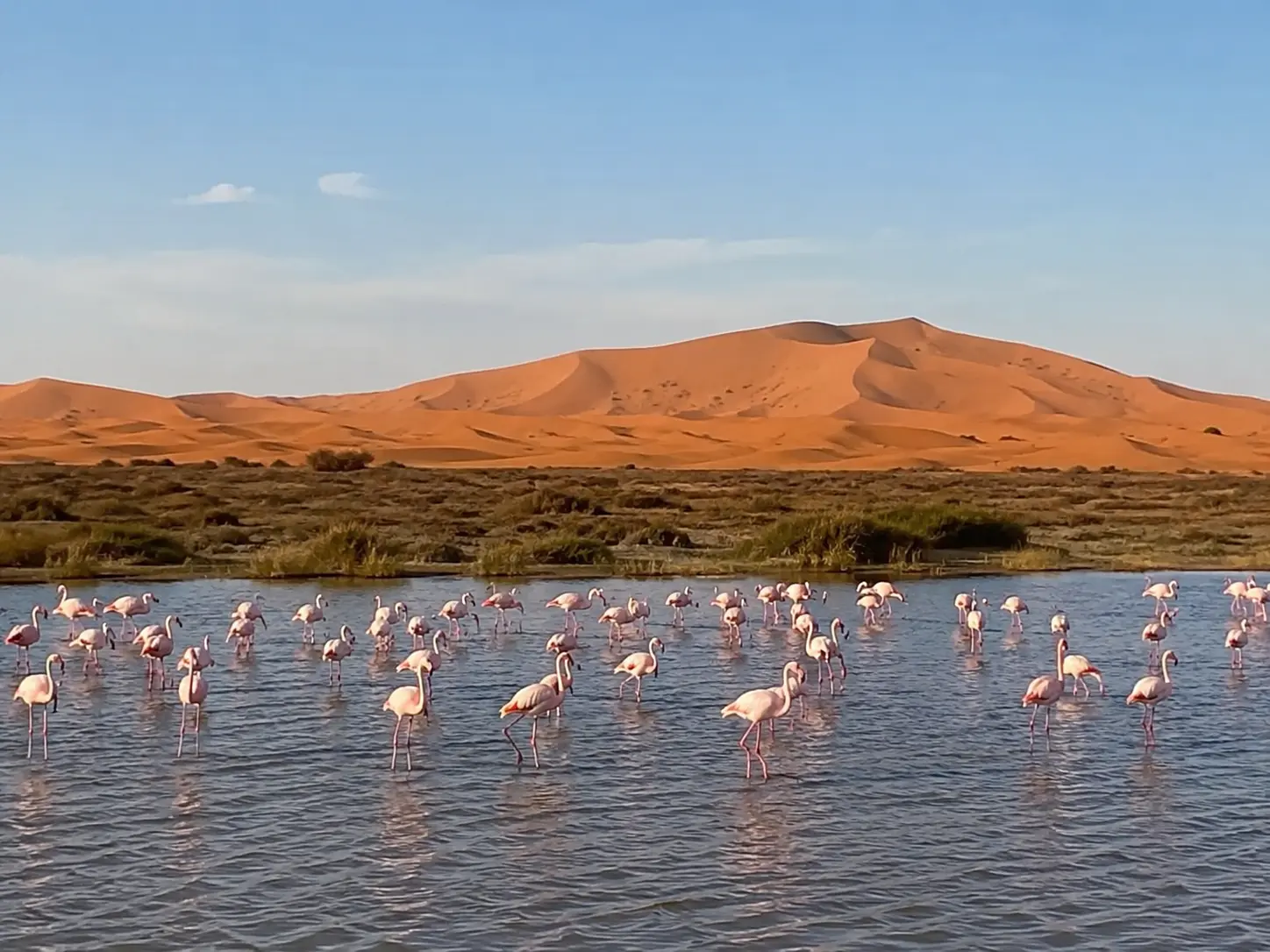
Dayet Srji Merzouga is a seasonal lake that forms in the middle of the Sahara Desert when rainfall and groundwater seepage fill a shallow depression east of the Erg Chebbi dunes. Most travelers assume the Sahara is nothing but sand, so the sight of a 30 to 200-hectare lake hosting thousands of pink flamingos against orange dunes surprises everyone who finds it. Water depth rarely exceeds 1.5 metres, and the lake can vanish completely from June through November.
BirdLife International recognises Dayet Srji as an Important Bird Area (IBA), one of the most significant inland wetlands in southeastern Morocco. This designation reflects the lake’s role as a critical stopover for migratory species crossing the Sahara. The area varies in size depending on the season: after heavy winter rains, it can stretch to 200 hectares, while in dry years it may shrink to scattered pools of 30 hectares or disappear entirely. For a full picture of how the desert changes month by month, our guide to Sahara desert weather gives temperature ranges and seasonal patterns that directly affect whether the lake holds water during your visit.
There is no entrance fee, no gate, and no official visitor centre. You simply drive or walk to the lake and observe. Ask local drivers or guesthouse owners in Merzouga for real-time conditions before heading out, because online reports can be weeks out of date.
Merzouga Lake Flamingos: When to See Them at Dayet Srji
The peak flamingo season at Dayet Srji runs from December to April, with the highest numbers appearing between February and March. During these months, you can see flocks of over 1,000 Greater Flamingos (Phoenicopterus roseus) wading through the shallow water, feeding on brine shrimp and algae that thrive when the water salinity is just right. Lesser Flamingos are rarely seen here. For those visiting in the colder months, our guide to visiting the desert in winter covers what to expect from December through February, including the cold nights that catch most travelers off guard.
February is the start of the mating season, when you may witness synchronised group displays such as head-flagging and marching. These courtship rituals involve dozens of flamingos moving in tight formation, raising and lowering their heads in unison. Early morning and late afternoon are the most active feeding times, when the birds are visible at close range along the shore.
Numbers fluctuate year to year based on rainfall. In good years, the lake supports well over 1,000 individuals. In drought years, the flamingos move to other wetlands in Morocco or southern Spain. A guide with a scope can help you spot these behaviours and explain why the flamingos gather in one section of the lake rather than another, usually dictated by algae concentration and water depth.
How to Get to Dayet Srji for Birdwatching
From the centre of Merzouga village, drive east on the road toward the Algerian border for approximately 4 km, then turn south onto a short dirt track that leads directly to the lake. The GPS coordinates are roughly 31.0870° N, 4.0040° W, though the shoreline shifts depending on water levels. A standard car can handle the drive if the ground is dry, but a 4×4 is recommended after rain when mud can bog down lighter vehicles. If you are still deciding how to reach Merzouga from Morocco’s main cities, our guide on Marrakech to Sahara distance and travel time covers the full route, including road conditions and how long each leg actually takes.
Walking or cycling from Merzouga is feasible and takes 20 to 30 minutes on flat terrain. There is no public transport to the lake, so your options are hiring a private driver or taxi from Merzouga (expect to pay 150 to 200 MAD, or $15 to $20 USD, for a round trip with waiting time), or arranging a drop-off through your desert camp. Most Erg Chebbi desert camps are 5 to 10 km away and camp managers can coordinate transport.
The best approach is via the small kasbah area east of Merzouga. A short walk from there at dawn will give you the light and solitude for excellent birdwatching. Avoid arriving midday when the sun is harsh and the wind kicks up sand, reducing visibility and scaring off the birds. If you want to understand what the Sahara looks and feels like during summer specifically, our post on the Sahara in summer explains why June through November is both the dry season for the lake and the hottest period of the year.
Birdwatching at Merzouga’s Seasonal Lake: Species and Tips
Beyond flamingos, Dayet Srji hosts Black-winged Stilts, Little Ringed Plovers, Common Snipes, Yellow Wagtails, and the occasional Marbled Duck (a rare species in Morocco). Eurasian Spoonbills sometimes appear during migration. Raptors such as Marsh Harriers and Kestrels hunt over the reeds and mudflats, especially in the early morning when smaller birds are most active. For those curious about the wider wildlife of the Sahara region, including the scorpions, snakes, and fennec foxes that live in the sand around the lake, our guide to desert bugs, snakes, and scorpions separates the genuine risks from the myths.
Bring binoculars rated 8×42 or 10×42 for general viewing, and a 15 to 60x spotting scope if you want to study distant flocks without disturbing them. Stay at least 50 metres away from feeding birds, especially during nesting season (March to April), to avoid causing stress or abandonment of nests. Wind tends to pick up after 10 AM, so plan your visit for the calmer early morning hours.
During migration periods (March to April and September to October), you may catch rarer waders that overshoot their routes and stop at Dayet Srji to rest. A local guide with knowledge of bird calls can point out species you would otherwise miss, such as the Temminck’s Stint or the Wood Sandpiper. Most kasbahs in Merzouga offer birdwatching guide services for about 200 to 300 MAD ($20 to $30 USD).
Photography at Lake Dayet Srij Morocco: Capturing Flamingos and Dunes
Golden hour (sunrise and sunset) provides warm light on both the dunes and the pink flamingos, creating the high-contrast compositions that make Dayet Srji photographs stand out. For the debate on which is better at Erg Chebbi, our post on sunrise vs sunset in the Sahara gives an honest comparison that applies just as well to the lake as to the dunes. A telephoto lens of 300 to 600mm is recommended for distant birds, as getting too close will flush the flock.
Bring a tripod for sharp images in low light and for panning flocks as they take off or land. Reflections are best at sunrise when the water is still, before the wind picks up later in the morning. Wind can blow sand onto your lens, so carry a blower and a protective cover to shield your gear between shots. Our complete Sahara packing list covers photography gear alongside everything else you need for a desert visit, including what to wear for cold mornings at the lake in February and March.
For a unique shot, position yourself so that the flamingos’ pink contrasts with the deep blue of the early-morning sky and the orange sand of Erg Chebbi behind them. Underexpose slightly (about -0.3 to -0.7 stops) to retain colour saturation and prevent the white salt and bright sand from blowing out your highlights. If you only have a smartphone, a clip-on telephoto lens adapter can work for wider shots of the flock against the dunes.
What Most Guides Get Wrong About Visiting Dayet Srji
Most travel articles mention Dayet Srji as a “seasonal lake near Merzouga” without specifying that the lake is completely dry from June through November. This omission leads travelers to arrive in summer expecting flamingos and finding only cracked mud and heat. The lake exists because of winter rains, not year-round springs, and no amount of wishful thinking changes the hydrology. Before booking your desert trip, our guide on the best time to visit the Sahara desert in Morocco gives month-by-month recommendations that include Dayet Srji’s water cycle as part of the seasonal picture.
Another common mistake is failing to mention that even in the wet season, the lake can be bone-dry if winter rains fail. The 2022 to 2023 season saw lower-than-average rainfall, and by March 2023, the lake held only scattered pools. Always confirm current water levels with your guesthouse or tour operator before making the trip, because outdated blog posts will not reflect real-time conditions.
Finally, many guides suggest Dayet Srji is “easy to find” without providing GPS coordinates or noting that the dirt track south of the main road is unmarked. First-time visitors often drive past the turnoff or get stuck asking directions from locals who may not speak English. Save the coordinates (31.0870° N, 4.0040° W) in your phone before you leave Merzouga. If you combine the lake visit with a morning at the Khamlia Gnawa music village (also just outside Merzouga) and an afternoon at Rissani’s souk, you have a genuinely full day without touching the dunes at all — which surprises most people who thought Merzouga was only about sand.
Ready to Add a Wildlife Twist to Your Sahara Adventure?
Dayet Srji offers a rare opportunity to see thousands of flamingos and waterbirds against the iconic backdrop of Erg Chebbi dunes. Plan your visit between December and April, confirm water levels with locals, and prepare for a tranquil birdwatching experience far from the crowds that gather at the main dune overlooks. If you are still deciding whether the broader Sahara experience is worth building into your itinerary, our honest breakdown of whether a Sahara desert tour is worth it addresses the question directly. And for the stargazing that follows a dawn birdwatching session at the lake — the sky above Erg Chebbi on a clear winter night is in a different category from anything you will see in Europe.
We design private tours through Merzouga that treat Dayet Srji as a genuine destination rather than an afterthought. Our 3-day Marrakech desert tour can include a dawn visit to the lake on the morning of Day 2, timed around flamingo feeding hours, before the camel trek at sunset. Travelers coming from Fes can add it on arrival day via our 3-day Fes desert tour. For those wanting a longer route that combines the lake, Khamlia, Rissani, and the full desert circuit, our 10-day Marrakech, Sahara and Fes tour builds everything into a properly paced private itinerary. We check lake conditions before every departure so you never arrive to find a dry salt flat. Contact us to plan your visit.
📩 Contact us: contact@mementomorocco.com | +49 1522 3075977 | WhatsApp