Sahara Desert in Winter Morocco: Weather, Packing & Tips (by a Local)
At 3 AM in January, the Sahara desert winter Morocco air bites harder than you expect. The thermometer reads 0°C, and the silence feels frozen. Then you step into the communal tent where a propane heater glows orange and someone passes you a glass of hot mint tea. That contrast, the bone-deep cold outside and the warmth inside, is what defines a winter night in the dunes. Yes, the Sahara gets genuinely cold at night between December and February. But that cold brings crystal-clear skies, empty dunes at sunrise, and the kind of stillness you cannot find in summer. This guide tells you exactly what temperatures to expect each winter month, how to pack so you stay comfortable, which camps offer real heating, and why January might be the best-kept secret for visiting Morocco’s desert.
Is the Sahara Cold in Winter? December Weather & Temperatures
In December, daytime highs in Merzouga and the Erg Chebbi dunes hover between 18°C and 22°C (64–72°F). You can walk the dunes in a long-sleeve shirt and light jacket. But after sunset around 5:30 PM, temperatures drop fast. By midnight, expect lows between 0°C and 5°C (32–41°F). January is the coldest month: daytime highs range from 16°C to 20°C (61–68°F), and night lows can dip to -2°C to 3°C (28–37°F) in exposed areas like the open dunes.
February warms slightly, with day highs reaching 19°C to 23°C (66–73°F) and night lows of 1°C to 6°C (34–43°F). The wind chill factor matters here. A 15 km/h breeze at 2°C can feel like -5°C on your face during a camel trek at dawn. Sunrise arrives around 7:30 AM in December and shifts to about 7:15 AM by late February, giving you roughly 10 to 10.5 hours of daylight. The coldest moment is always 30 minutes before sunrise, when the sand radiates its last heat into the black sky above.
Most Sahara desert December weather guides say “cold nights, warm days” and leave it at that. Here is what they miss: the dry desert air makes the cold sharper because humidity traps warmth. You feel 3°C in the Sahara more intensely than 3°C in coastal Essaouira. The upside? That same dry air creates flawless visibility for photography and stargazing. If you want hard numbers before booking, check our month-by-month Sahara Desert weather for seasonal breakdown in the Desert.
What Others Get Wrong About Winter Desert Temperatures
Many travel blogs claim the Sahara “never freezes” because it is a desert. That is incorrect. Ground frost forms regularly in January on the shaded sides of dunes near Merzouga, especially after a clear night. We have photographed it dozens of times. The sand itself does not freeze solid, but surface moisture from overnight condensation can ice over. This happens because nighttime temperatures drop below 0°C and there is no cloud cover to trap residual heat. Tour guides who arrive at 7 AM for sunrise treks often scrape frost off their vehicle windshields.
Sahara Desert in January: What to Pack for Freezing Nights
Layering is not optional for visiting Sahara in January February. Start with a merino wool or synthetic thermal base layer top and bottom. Cotton traps sweat, stays damp, and leeches heat from your body at night. A merino base layer costs around 250 MAD (25 USD) in Marrakech sports shops or 400 MAD (40 USD) for higher-end brands. Your mid layer should be a fleece pullover or lightweight down jacket. For the outer layer, bring a windproof jacket with a hood, essential during camel rides when wind cuts across the dunes.
On your legs, wear thermal leggings under hiking trousers or loose canvas pants. Avoid jeans after dark because denim holds cold and restricts movement inside a sleeping bag. For footwear, closed-toe hiking boots or sneakers with thick wool socks work best. Save sandals for inside the camp tent only. On your head, wear a beanie or fleece headband at night. You lose up to 60% of body heat through your head and neck, so covering them makes a measurable difference in comfort.
Most desert camps provide two to three heavy wool or synthetic blankets per person. Some mid-range and luxury camps add a portable propane heater in the communal dining tent, and a few place smaller heaters inside sleeping tents. Do not assume heating is standard. Always ask your tour operator: “Does the sleeping tent have a heater, or just the common area?” That single question reveals whether you will sleep warm or merely survive the night. Read more about the difference between standard and luxury desert camp and Desert camps facilities to help you better plan your trip. For extra insurance, bring a small reusable hot water bottle. Many camps will fill it from the tea kettle before bed. Tucked into your sleeping bag, it stays warm for three to four hours. You can find collapsible hot water bottles in pharmacies in Fes or Marrakech for about 50 MAD (5 USD). Check our full Sahara desert packing list with winter additions for a complete breakdown of what to bring year-round, with a dedicated winter section.
Items Most Tourists Forget (And Regret)
- Lip balm with SPF: Your lips crack from sun exposure during the day and dry cold at night. Bring two sticks.
- Hand warmers (chemical packs): Not sold easily in Morocco. Bring them from home if you run cold.
- Headlamp with red-light mode: Preserves night vision for stargazing and does not wake tent-mates.
- Thick socks (two pairs per day): One pair for daytime walking, one clean pair for sleeping. Dirty socks smell and lose insulation.
- Buff or neck gaiter: Doubles as wind protection during camel treks and a pillow wrap at night.
Winter Desert Activities: Camel Treks, Stargazing & Camp Life
All classic Sahara experiences run through winter. Camel treks depart daily, typically lasting one to three hours. Sunset treks (around 4 PM departure) are more comfortable than sunrise treks because the afternoon sun warms the air. You still see a spectacular sunset over the dunes, and you return to camp before the coldest part of the night begins. Sunrise treks depart around 6:30 AM when temperatures are near their lowest, so layer aggressively. The reward is watching the sun turn the dunes from grey to gold to blazing orange in 15 minutes.
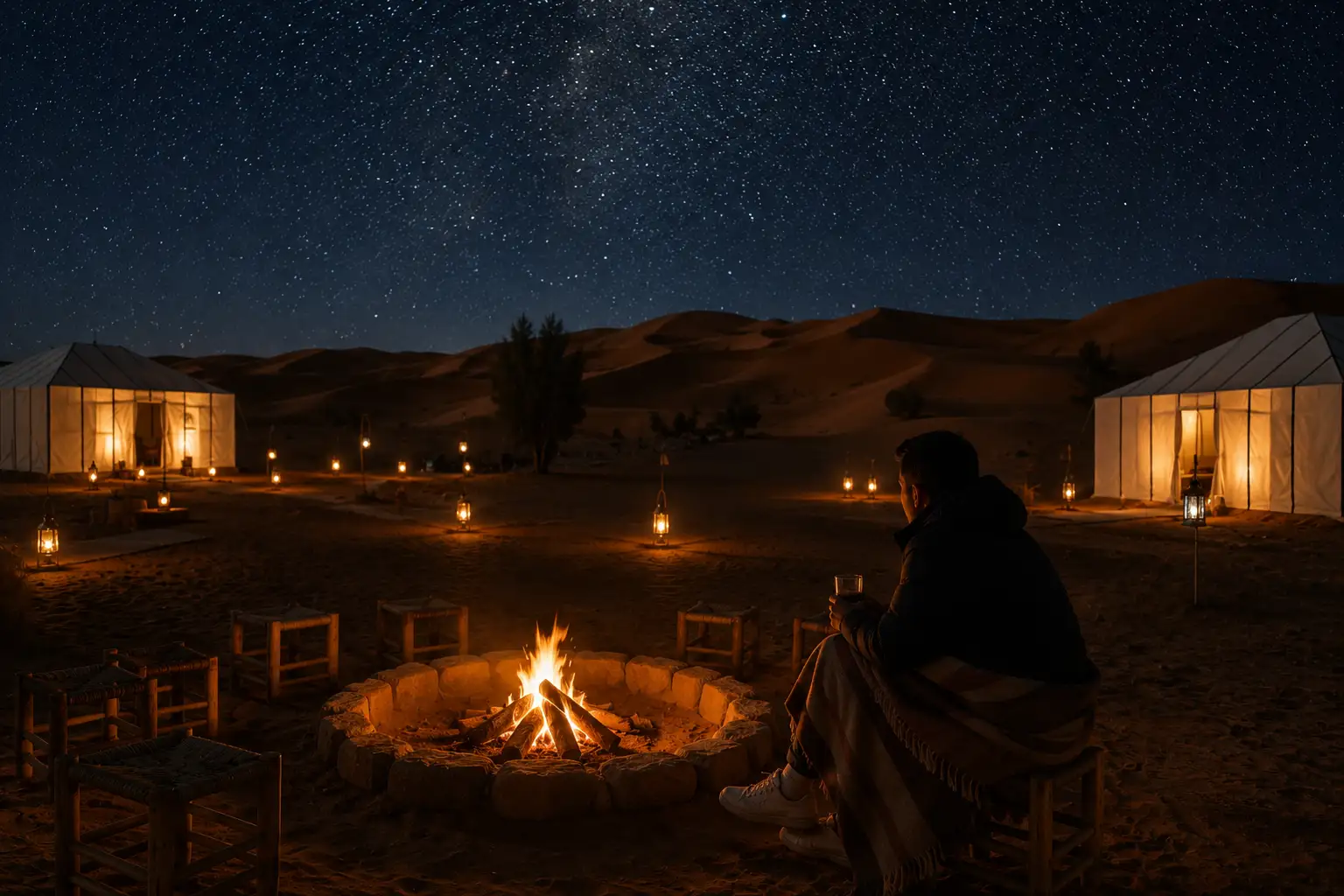
Stargazing in winter is extraordinary. With sunset at 5:30 PM and no moon during the new moon phase, you get 13 hours of darkness. The Milky Way stretches from horizon to horizon by 8 PM. You can see the Andromeda Galaxy with naked eyes on clear nights in January. Low humidity means zero haze, and the lack of tourists in winter means no light pollution from nearby camps. Campfire evenings with Berber music happen every night, usually starting around 7 PM after dinner. Drums, singing, and mint tea continue until guests retreat to their tents, often around 10 PM when the cold drives everyone to bed.
Sandboarding and quad biking operate in winter, but confirm availability with your tour operator. Some adventure companies pause quad rentals during the rare January and February rains because wet sand damages engines. Sandboarding works best on drier days when the sand flows smoothly. A few luxury camps close for two to three weeks in mid-January for annual maintenance, so verify your camp’s winter schedule before booking.
Best Time of Day for Each Activity in Winter
- Camel trek: Sunset trek (4 PM) for warmer air, or sunrise trek (6:30 AM) for dramatic light and solitude.
- Dune climbing: Late morning (10 AM–12 PM) when sand is warm underfoot but air is still cool.
- Photography: Golden hour (5–5:30 PM sunset, 7–7:30 AM sunrise) for side-lit dunes and long shadows.
- Stargazing: After 8 PM once the campfire dies down and your eyes adjust to darkness.
- Quad biking: Mid-afternoon (2–4 PM) when temperatures peak and sand is dry.
Are Sahara Desert Tours Available in Winter? (Yes, and Here’s How to Choose)
All standard desert tours from Marrakech and Fes operate year-round, including December, January, and February. Group tours run on fixed schedules with shared transport and accommodation. Private tours offer more flexibility: you can request a camp with heating, adjust trek departure times to avoid the coldest hours, and add extra blankets or sleeping bags to your booking. Budget group tours, often priced at 600–1000 MAD (60–100 USD) per person for a two-day trip, typically use basic camps with minimal heating. You get blankets but no heater, and the communal tent might have a wood fire that burns out by midnight.
Mid-range and luxury private tours, starting around 1,200 MAD (120 USD) per person per day, include camps with propane heaters, and thicker mattresses. These camps also serve hot meals later in the evening, so you are not sitting outside in the cold at 6 PM for dinner. New Year’s Eve (December 31) is a peak period because travelers want to celebrate in the desert. Prices rise by 30–50%, and camps book out two months in advance. January, by contrast, is the quietest month. You might share a camp with only two or three other groups, or have the dunes almost entirely to yourself on weekdays.
Tour prices drop in January and February except during the Christmas and New Year week. Expect discounts of 15–25% compared to October or April rates. When booking, ask your operator these specific questions: “Does the sleeping tent have a heater, or only the common area?” and “How many blankets are provided per person?” Those answers reveal more than any camp’s star rating. If you are planning a Sahara Desert trip, start with our complete guide to Sahara desert tour planning, which breaks down route options, camp categories, and what each price tier includes.
Private vs Group Tours in Winter: What Changes
Group tours stick to fixed schedules regardless of weather. If temperatures drop to -3°C, the sunrise camel trek still departs at 6:30 AM. You bundle up or you suffer. Private tours let you negotiate. You can request a later departure (7:30 AM) when the sun has warmed the air by 5°C. You can also choose a camp closer to your budget that still has heating, rather than being assigned a random budget camp in a group tour lottery. For winter specifically, private tours give you control over the variables that determine comfort: timing, camp quality, and gear. Read our complete comparison guide between private or group Sahara desert tour to decide which one is right for you.
Why Winter Is Actually a Great Time to Visit the Sahara (Pros & Cons)
Winter offers fewer tourists, which is the single biggest advantage. In January, you might see 10 other travelers at Erg Chebbi instead of 200 in April. The dunes feel emptier, quieter, and more cinematic. Photography improves because clear skies and low-angle winter sun create dramatic shadows and rich colors. Daytime temperatures between 18°C and 22°C (64–72°F) are ideal for hiking and exploring without sweating through your shirt. Tour prices drop by 15–25% outside the Christmas and New Year week. And if you visit in mid-January to early February, you can photograph the rare phenomenon of frost dusting the shaded sides of the dunes at dawn.
The downsides are real. Nights are very cold, often dropping below freezing. If you are not prepared with proper layers and a camp with heating, you will be miserable. Daylight hours shrink to about 10 hours, leaving less time for activities. Some luxury camps close for maintenance in mid-January, reducing your accommodation options. Rain is rare but possible in February: one or two days of drizzle per month on average. When it rains, the desert turns muddy, quad biking stops, and the romantic image of endless dry dunes disappears temporarily.
February is the sweet spot if you want winter benefits with slightly warmer nights. Lows rise to 1–6°C (34–43°F), and daylight stretches to 10.5 hours. You still avoid the peak season crowds, but you gain an extra hour of usable light for activities. The best winter itinerary combines the Sahara with Fes (cool but sunny in winter) and Marrakech (mild and pleasant). Avoid the High Atlas mountain passes in January if you are driving yourself, as snow can close Tizi n’Tichka. For a full seasonal breakdown of when to visit each region, check our month-by-month guide to visiting Morocco.
Who Should Visit the Sahara in Winter (And Who Should Wait)
| Ideal For | Less Ideal For |
|---|---|
| Photographers seeking dramatic light and empty landscapes | Travelers who hate cold weather or need warm swimming |
| Budget travelers looking for lower prices | Families with young children who struggle with cold nights |
| Solo travelers or couples seeking solitude | Those expecting year-round beach weather |
| Stargazing enthusiasts (longest, clearest nights) | Travelers with limited time who want maximum daylight |
Is a Winter Sahara Desert Tour Right for You?
Winter in the Sahara offers an unforgettable experience of star-studded nights, crisp days, and vast empty dunes, if you come prepared for the cold. The key is to embrace the season: pack smart with thermal layers and a hot water bottle, choose a camp with real heating in the sleeping tent, and book a private tour that lets you tailor departure times to avoid the worst of the pre-dawn chill. With daytime temperatures that are perfect for exploring and fewer crowds than any other season, December through February can be one of the most rewarding times to visit the desert.
The question is not whether winter works for a Sahara trip. The question is whether you are the kind of traveler who values solitude and dramatic landscapes over guaranteed warmth and long daylight. If you are, then visiting Sahara in January February will give you stories and photographs that summer visitors never see.
Ready to Swap Summer Heat for a Cozy Campfire Under the Winter Stars?
Winter in the Sahara rewards those who prepare for the cold. With the right camp, proper layers, and a flexible itinerary, the desert becomes a quiet, intimate world of clear skies, long shadows, and crackling fires. You will have the dunes nearly to yourself, and the Milky Way will feel close enough to touch.
We design private winter Sahara tours that take the guesswork out of cold-weather comfort. Every camp we select provides thick blankets, proper heating, and hot mint tea whenever you need it. Our guides know how to time your camel treks for the warmest hours and which camps keep the tents warmest at night. Whether you are starting from Marrakech, Fes, or Casablanca, we will build an itinerary that maximizes your daylight hours and ensures you sleep warmly every night.
Browse our most popular winter-ready Sahara routes below. Each one includes private AC transport, a heated desert camp, and a schedule designed around the season.
3 Days Marrakech to the Sahara Desert | 3 Days Fes to the Sahara Desert | 7 Days Casablanca to the Sahara Desert
Have a different starting point or longer itinerary in mind? We customize everything. Reach out and we will plan your winter Sahara trip together.
Contact us: contact@mementomorocco.com | +49 1522 3075977