Moroccan Mint Tea: How It’s Made, When It’s Served, and What It Means
You hear the metallic clink of the teapot before you see it. A man in a white djellaba lifts a silver berrad high above his head and pours a thin stream of steaming liquid into a painted glass. The arc is perfect. The foam rises thick. The scent of fresh spearmint fills the tiled courtyard. This is Moroccan mint tea, and in Morocco, it is never just a drink. It is the opening gesture of every conversation, the pause in every negotiation, the warmth offered before you even ask for it. By the end of this guide, you will know not only how to make it but how to accept it, when to refuse it, and why the foam matters more than you think.
The History and Cultural Significance of Moroccan Mint Tea
Moroccan mint tea arrived in the mid-19th century when British traders began importing Chinese green tea through Tangier and Mogador (now Essaouira). The tea stuck. Within decades, it became the national drink. Morocco now imports over 50,000 tons of green tea annually, mostly from China, making it one of the world’s largest per-capita tea importers. Moroccans drink an average of four to five cups per day, and you will too if you spend more than two days there.
The drink is often called “Berber whiskey,” not because it contains alcohol but because it carries the same social weight. Refusing tea in a Moroccan home is like refusing a handshake. The Moroccan tea culture is built on the concept of diyafa (hospitality), and tea is its most visible expression. You will be offered tea when you arrive, tea when you negotiate, tea when you sit, tea when you leave. In Amazigh homes in the Atlas Mountains, the ritual is even more precise: the host pours from shoulder height to create a thick layer of foam called k’sab. No foam means the host rushed or does not care.
There is a saying that the first glass is bitter like life, the second sweet like love, the third gentle like death. This is poetic but not literal. Most hosts pour the same blend three times, refilling your glass until you leave it full to signal you are done. What changes is not the tea but your state of mind. To understand Moroccan mint tea and its cultural significance, you must accept that it is not a beverage. It is a social contract.
Regional Variations You Should Know
In the Rif Mountains and southern desert regions, locals often replace spearmint with wild mint called timijja. It tastes earthier and slightly medicinal. In the Sahara, tea is brewed over an open flame using a charcoal stove, and the sugar content is even higher to offset dehydration. In coastal cities like Essaouira, you may find verbena or wormwood mixed with the mint. These are not tourist gimmicks. They are regional preferences passed down through generations.
What Is Moroccan Tea Made Of? Essential Ingredients
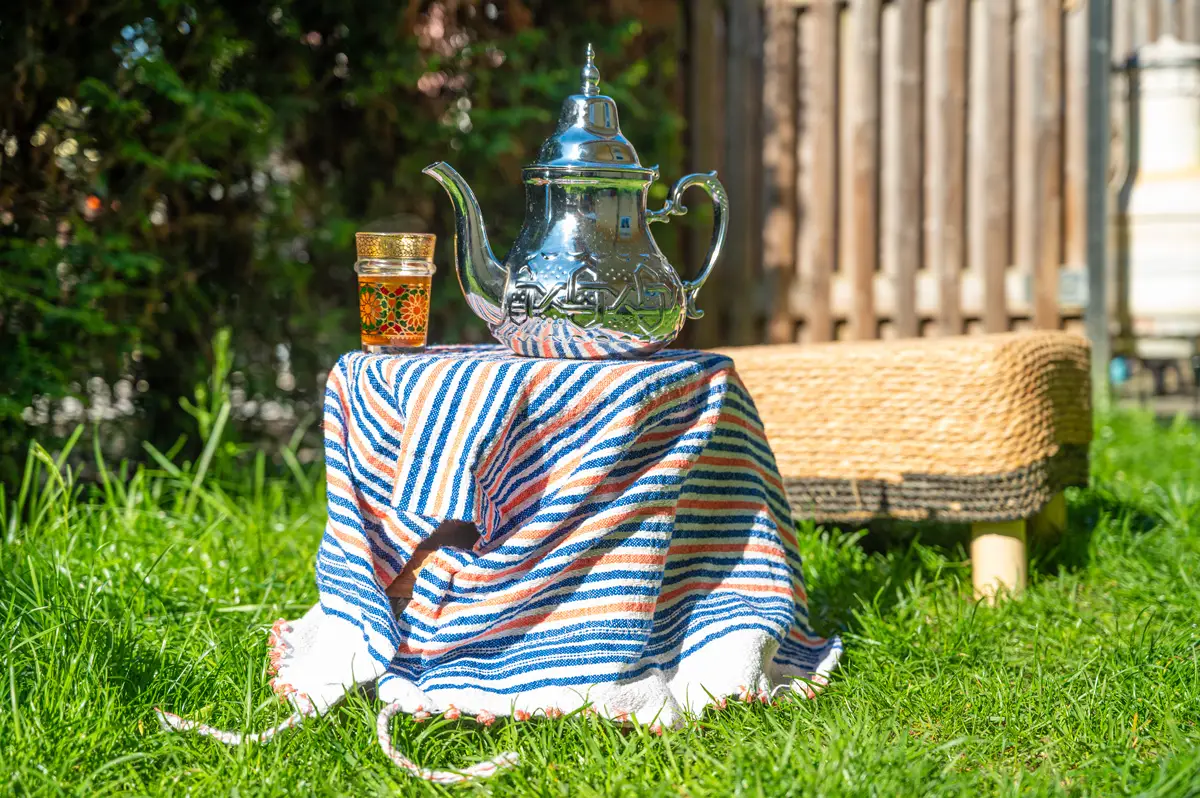
Moroccan mint tea requires three ingredients and all three matter. The base is Chinese green tea, specifically grades 3505 or 9371. This is not any green tea. Gunpowder tea is rolled into tight pellets that unfurl when steeped, releasing a strong, slightly smoky flavor. If you try to make this with sencha or matcha, you will fail. The second ingredient is fresh spearmint, locally called nana (Mentha spicata). Never use peppermint. Peppermint is too aggressive and will drown the tea. The third ingredient is sugar, traditionally cone-shaped (sucre en pain) but now more often granulated.
Water quality is the invisible fourth ingredient. In Morocco, many households use mineral water for tea because tap water in cities like Marrakech and Fes can taste metallic. If you are making tea at home, use filtered or bottled water. The traditional ratio is one teaspoon of tea, a generous handful of fresh mint (about 20-30 small sprigs), and two to three tablespoons of sugar per four small glasses. Most Westerners find this unbearably sweet. You can ask for less sugar, but expect a puzzled look.
Some regions add optional herbs. In the Middle Atlas, you may taste orange blossom water. In the south, chiba (wormwood) is common, especially in winter. These variations are seasonal and medicinal. Wormwood aids digestion. Orange blossom calms the nerves. If you are buying tea in a Marrakech souk, vendors often use lower-grade tea and mask the bitterness with extra sugar. Ask for atay b’nana (tea with fresh mint) and watch them prepare it. If they hesitate, the mint is probably wilted.
Where to Source Authentic Ingredients
If you want to bring ingredients home, buy gunpowder tea from a grocer in the Marrakech or Fes medina, not a tourist shop. Look for tins labeled “Thé de Chine” or “Gunpowder 3505.” Fresh spearmint is harder to transport, but you can grow it from cuttings. Moroccan spearmint is hardier than the supermarket variety and survives in most climates. Sugar is sugar, but if you want authenticity, look for cone-shaped loaves in Moroccan grocery stores abroad.
How to Make Moroccan Mint Tea: A Step-by-Step Recipe
Making Moroccan tea correctly takes ten minutes and requires patience. The ritual begins by rinsing the tea leaves. Place one teaspoon of gunpowder tea in a metal teapot (a traditional berrad works best, but any small teapot will do). Pour boiling water over the leaves, swirl gently, and discard the water immediately. This step removes bitterness and dust. Moroccans never skip it. If you skip it, your tea will taste sharp and unpleasant.
After rinsing, add the fresh mint and sugar. Pour boiling water into the pot until it is three-quarters full. Place the pot on medium heat and bring it to a gentle boil. Let it steep for three to five minutes. Now comes the critical step: pour a small amount of tea into a glass, then pour it back into the pot. Repeat this twice. This aerates the tea and blends the flavors. The foam you see forming on top is called k’sab, and it is the mark of a well-made tea. If there is no foam, the tea was not mixed properly.
Finally, pour the tea from at least 12 inches above the glass. The height creates more foam and cools the tea slightly. Serve immediately in small glasses, filling them only halfway. Moroccans refill constantly. The first pour is the strongest, the second smoother, the third lighter. If you are visiting Fes, watch a tea master in Café Clock or a riad courtyard. The motion is theatrical but precise.
Common Mistakes Travelers Make
Most home recipes simplify the process and lose the essence. They skip the rinse, omit the aeration, pour from low, or add the mint too early. The mint should steep, not boil. Boiling destroys the oils and leaves a bitter aftertaste. Another mistake is using too little tea. Moroccan tea should be strong enough to wake you up. If it tastes weak, you used too much water or too little gunpowder tea. Adjust and try again.
When and Where Moroccan Mint Tea Is Served
You will be offered Moroccan mint tea in nearly every setting, but the context changes the meaning. In a private home, tea is pure hospitality. In a riad, it is a welcome ritual performed the moment you arrive. In a carpet shop or leather tannery, tea is a negotiation tactic. The vendor knows you will feel obligated to stay longer if you accept. You are not obligated. Accept the tea, enjoy it, set a time limit, and leave if you are not interested. In the Sahara, tea is served after sunset around a fire, often by your guide. This is not transactional. This is communion.
During Ramadan, tea takes on a different role. It is served immediately after the call to prayer at sunset, following a bowl of harira (soup) and dates. The tea breaks the fast and rehydrates the body. If you are traveling in Morocco during Ramadan, expect tea service to pause during daylight hours. Most cafes will still serve tourists, but the ritual is suspended until evening. In official meetings or government offices, tea is poured by the youngest person in the room as a sign of respect. If you are the youngest, you may be asked to pour. Accept gracefully.
You will also find tea offered in markets, barbershops, mechanic shops, and even police stations. Moroccans drink tea while working, waiting, talking, thinking. It is a pause button in a culture that values conversation over speed. If you are staying in a desert camp, the evening tea ceremony is one of the most memorable parts of the experience. Your guide will prepare the tea over a low flame, pour it high, and pass the first glass to the eldest guest.
What Most Guides Get Wrong About Tea in Shops
Travel blogs often warn you to refuse tea in shops to avoid being pressured into buying. This is partly true but misses nuance. Accepting tea does not obligate you to purchase anything. The tea is always complimentary. What it does is create a social space where the vendor expects you to engage. If you are genuinely interested in carpets or leather goods, accept the tea and enjoy the process. If you are not, politely say “La, shoukran” (No, thank you) when offered. One refusal is expected. Two refusals is final. The vendor will move on.
Moroccan Mint Tea Etiquette for Travelers
Understanding how to accept and refuse Moroccan mint tea will save you from awkward moments. Always accept with your right hand. The left hand is traditionally reserved for hygiene and is considered unclean in social contexts. If you are left-handed, practice using your right hand for tea before your trip. This is not optional. To refuse tea, place your right hand gently over the rim of the glass and say “La, shoukran” (No, thank you). One refusal is polite. Persistent refusal is rude and signals that you do not want to engage socially.
Never blow on the tea to cool it. Moroccans wait or pour a small amount into the saucer and sip from there. Blowing is considered childish and unhygienic. When drinking, take small sips. The glass will be refilled as soon as you finish. To signal you are done, leave the glass full. This tells the host you have had enough. If you keep emptying the glass, the host will keep refilling it. In a group setting, the eldest person or guest of honor is always served first. If you are the guest, accept gracefully and wait for others to be served before drinking.
If you are seated on cushions around a low table, do not stretch your legs out toward others. Sit cross-legged or tuck your feet to the side. The tea tray is often placed in the center, and reaching across others is acceptable as long as you say “Smeh liya” (Excuse me). When the tea is poured, you may hear the phrase “Bismillah” (In the name of God) before the first sip. You do not need to repeat it unless you are Muslim, but a nod of acknowledgment is respectful.
What to Say When You Want Less Sugar
If the tea is too sweet for you, ask for “sukar chwiya” (a little sugar) or “b’la sucre” (without sugar). Most Moroccans will be surprised, but they will accommodate you. In tourist-heavy areas like Marrakech’s Jemaa el-Fnaa or the Fes medina, some cafes now serve sugar on the side. This is rare but growing. If you are diabetic or avoiding sugar, explain politely. Moroccans understand dietary restrictions and will offer unsweetened tea or water instead.
Ready to Savor Morocco Beyond the Tea Glass?
Moroccan mint tea is more than a drink. It is the pause before the conversation, the gesture that says you are welcome here. Now that you know the ritual, the ingredients, and the etiquette, you can accept every cup with confidence. You will recognize the foam, taste the difference between rushed tea and carefully brewed tea, and know when to leave your glass full.
The best way to experience tea in its truest form is to travel with someone who can take you beyond the tourist cafes. Into a family home in the Fes medina. Into a desert camp where the only sound is the wind and the clink of glass on brass. Into a village in the Atlas Mountains where the tea is poured from shoulder height and the mint grows wild in the courtyard.
We design private tours across Morocco that take you into these moments. In Fes, we arrange tea with artisans in their workshops. In Marrakech, we introduce you to riad owners who still use cone sugar and silver trays. In the Sahara, your guide will brew tea under the stars and explain why the third glass is never the last. Let us take you there, book your private tour today and experience Moroccan hospitality firsthand, one mint tea at a time.
📩 Contact us: contact@mementomorocco.com | +49 1522 3075977