Sahara Desert Sunrise vs Sunset: Which is Better for Photographers?
You wake at 5:30 AM to cold desert air and silence so complete you hear sand settling. Later that evening, you watch the same horizon turn crimson while drums pulse from the camp below and fifty other travelers line the dune ridge. This is the choice every Sahara photographer faces: Sahara desert sunrise vs sunset. Both deliver golden hour magic, but they could not feel more different. If you have only one desert night, which do you chase? This guide gives you the light data, crowd realities, and exact timing you need to decide. By the end, you will know which experience matches your photography goals and how to schedule your camel trek for the best light.
The Golden Hour Showdown: Timing and Light Quality
In Erg Chebbi, sunrise golden hour runs roughly 7:00 to 8:00 AM in winter and 5:30 to 6:30 AM in summer. Sunset golden hour stretches from 5:00 to 6:00 PM in winter or 6:30 to 7:30 PM in summer. These windows sound equal, but the light behaves differently. Sunrise light is softer, more diffused, with a cooler temperature that creates pale gold and rose tones across the sand.
Sunset light runs warmer and deeper, pulling out oranges, pinks, and purples that saturate the dunes. The angle of morning light Erg Chebbi produces longer shadows that emphasize every ripple and contour in the sand. Evening light is lower but more direct, creating shorter shadows and flatter highlights. For texture detail, sunrise wins. For color drama, sunset takes it.
In late October, the sunrise golden hour lasts only about twenty minutes before the sun climbs too high and washes out contrast. Arrive at your dune lookout thirty minutes before sunrise to capture the pre-glow and set up your tripod. Sunset gives you a slightly longer window, but crowds arrive early to claim the best spots. Read our detailed Erg Chebbi guide to plan your exact location.
Dune Colors from Dawn to Dusk
Erg Chebbi sand ranges from pale beige to deep burnt orange, with occasional violet hues appearing at twilight. At sunrise, dunes wear pale gold with blue shadows that define every ridge. At sunset, they turn deep amber and crimson as the low sun saturates the iron oxide in the sand. Midday sun washes out all color and flattens the landscape into a featureless glare. This is the worst time for photography.
The blue hour after sunset often gives a surreal, monochromatic purple tone that lasts about fifteen minutes. If you stay on the dune past the last light, you will catch this moment when the sand glows violet against a darkening sky. Few photographers stay this late because the cold sets in fast and the walk back to camp is pitch black. But if you have a headlamp and warm layers, the dune colors Sahara produces during blue hour are unlike anything you will see at sunrise.
For the richest dune colors, visit in late October or November when the low sun angle creates maximum saturation. Summer sun in the Sahar Desert is too overhead. The sand looks washed out by 9 AM and stays that way until 5 PM. Winter light is sharp and clean, but temperatures drop to freezing at dawn, so your hands will struggle with camera settings if you do not bring hand warmers. You can learn more about the Sahara desert weather and the best time to visit the Sahara Desert on our detailed articles for more information.
Best Photo Spots in Merzouga for Sunrise and Sunset
For sunrise, hike to the tallest dune near the Erg Chebbi entrance, roughly a thirty-minute climb in soft sand. The viewpoint sits at approximately 31.07°N, 4.01°W and offers a sweeping view of the entire erg. From this height, you can capture the camel caravan arriving from camp below, creating a scale reference against the dunes. The walk requires a headlamp and happens in total darkness, so follow your guide closely.
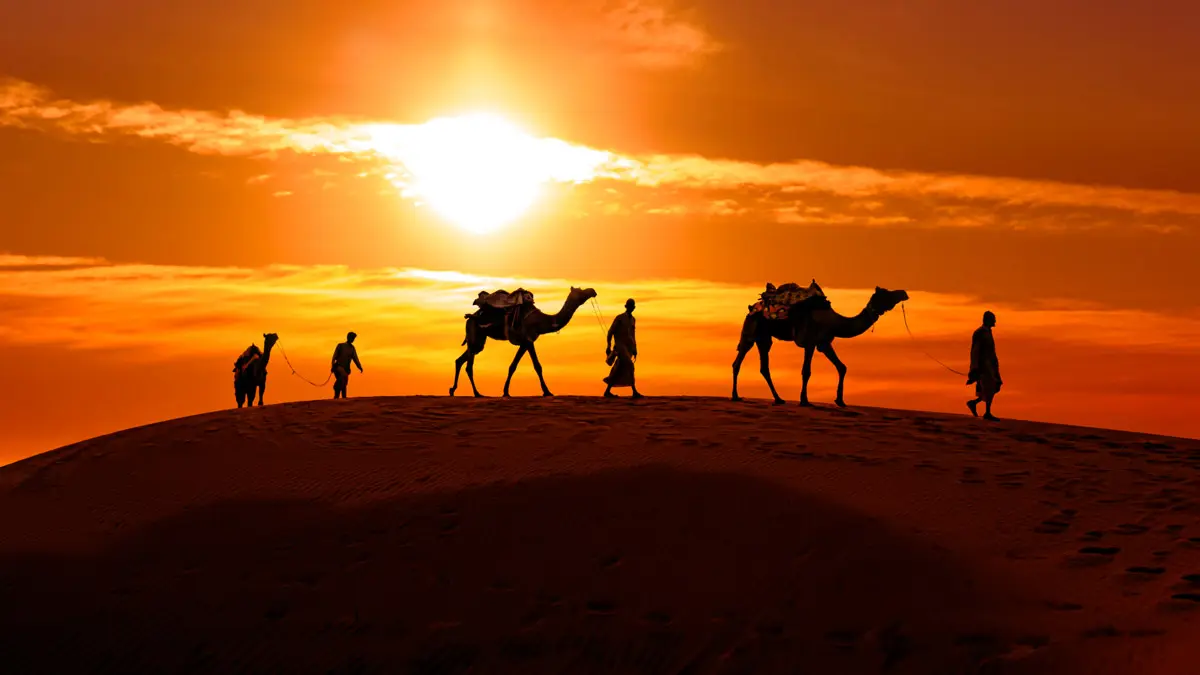
For sunset, the dune at the edge of Merzouga village, near Hotel Yasmina around 31.09°N, 4.00°W, frames the sunset camel trains as foreground elements. This spot is easier to access and closer to the camps, so it fills up fast. By 5:30 PM in winter, you might share the ridge with fifty other travelers. Sunrise viewpoints rarely see more than ten people because most guests skip the early wake-up call.
If you can only do one shoot, choose sunrise from the high dune. You will capture the camel caravan arriving from camp below, the soft directional light, and zero crowds. The best photo spot Merzouga golden hour offers is that high vantage point at dawn. Sunset gives you vibrant colors, but you will spend half your time dodging other photographers in your frame.
Camel Trek Timing: When to Ride for the Best Light
Standard sunset camel treks depart camp between 4:30 and 5:00 PM, reaching the dunes as the sun drops. The trek lasts about one to one and a half hours out and back. You ride to the dune, dismount for photos, then return to camp for tea and drumming. Group tours almost always default to sunset because it fits the afternoon arrival schedule and keeps guests together.
Sunrise camel treks require a 5:30 AM wake-up call and a forty-five-minute ride to the main dune. You shoot for twenty to thirty minutes, then ride back to camp for breakfast. Most camps offer this option, but you have to request it in advance because guides do not schedule sunrise treks unless guests ask. Private tours can flex to sunrise without issue. You can learn about the two different types of desert camps to learn the differences and what each offers.
Timing camel trek for light also affects animal welfare. Sunrise treks are ten degrees Celsius cooler in summer, which is easier on the camels and more comfortable for you. You will not be sweating through your shirt while trying to frame a shot. Book a private tour that includes a sundowner camel trek to a dune away from the main tourist ridge. Your photos will be free of other campers. For full itinerary planning, see our complete guide to Sahara camel trekking for photography itineraries.
Crowds, Comfort, and Practical Considerations
Sunset at Erg Chebbi can host fifty to one hundred tourists at a popular dune. Sunrise typically sees fewer than ten. If you want intimate, clean compositions, sunrise is unmatched. Sunset includes drumming and Moroccan Mint tea at camp afterward, a social highlight that makes the experience feel festive. Sunrise is quiet, cold, and solitary.
Sunrise temperature in winter can drop to 0°C (32°F), so bring hand warmers and a down jacket. You will be standing still on a windy dune for thirty minutes. Sunset is warmer but still requires a light jacket once the sun drops. You can find more details about what to pack when visiting the desert for a great Sahara experience. Both experiences require a one to two-hour time commitment from camp, so plan meals and rest accordingly.
If you want both, stay two nights in the desert: one for sunset, one for sunrise, and split your photography focus between people and landscapes. Most travelers underestimate how much the early wake-up call affects them after a late night of drumming and tea, or just stargazing. If you stayed up past midnight, you will struggle to get out of your sleeping bag at 5:30 AM. Be honest with yourself about your sleep habits. So, staying more than a day in the Sahara Desert, if possible, would help enhancing the experience a lot.
What Most People Get Wrong About Sahara Light
Most travel articles say both sunrise and sunset are “equally magical” and leave it at that. This is lazy advice. The truth is that sunrise and sunset serve different photographic goals. Sunrise is for landscape purists who want texture, solitude, and soft light. Sunset is for travelers who want vibrant color, cultural atmosphere, and social energy.
Another common mistake is claiming you can “just wake up early” and catch both on the same day. You cannot. After a late night in camp with drumming and socializing, waking at 5:30 AM is brutal. Your body will not cooperate. If you want both, you need two nights. Do not let a guide talk you into a one-night itinerary if you care about photography. You will compromise both shoots.
Finally, most guides do not mention that the best light in Erg Chebbi happens in November, not summer. Summer dunes look flat and washed out by mid-morning. November gives you rich color saturation, manageable temperatures, and clean skies. Book your trip for late October or November if you want the best conditions.
Still Torn Between Sunrise and Sunset? Here’s How to Do Both.
The Sahara Desert is worth it, and both sunrise and sunset offer unique photographic rewards. Sunrise delivers solitude, soft light, and clean dune textures. Sunset provides vibrant colors, camel caravans, and a festive atmosphere. Your choice depends on your sleep habits, tolerance for cold, and desire for crowd-free shots. If you can only pick one, ask yourself: do I want drama or detail?
For photographers who want the best of both worlds, a customized Sahara itinerary ensures you are at the right dune at the right time, with a local guide who knows the light. A private tour with a flexible schedule can let you capture both magic hours without sacrificing comfort.
At Memento Morocco, we design private Sahara desert tours that put you in front of the best light, not the biggest crowds. Whether you want to shoot sunrise from the tallest dune in Erg Chebbi or capture the camel caravans at sunset in Merzouga, we handle the logistics so you can focus on your composition. Our tours start from Marrakech, Casablanca, and Fes and include flexible schedules for photographers. Discover our private Sahara desert tours, designed for photographers, by locals.
If you prefer to take on this experience on your own without booking a tour, you can find more info about routes from Marrakech to the Desert, Fez to the Desert, and Tangier to the Desert. You can as well learn more about the road conditions and safety measurement if traveling on your own to the Sahara desert.
Contact us: contact@mementomorocco.com | +49 1522 3075977