Rissani Morocco: The Ancient Market Town and Sahara Gate
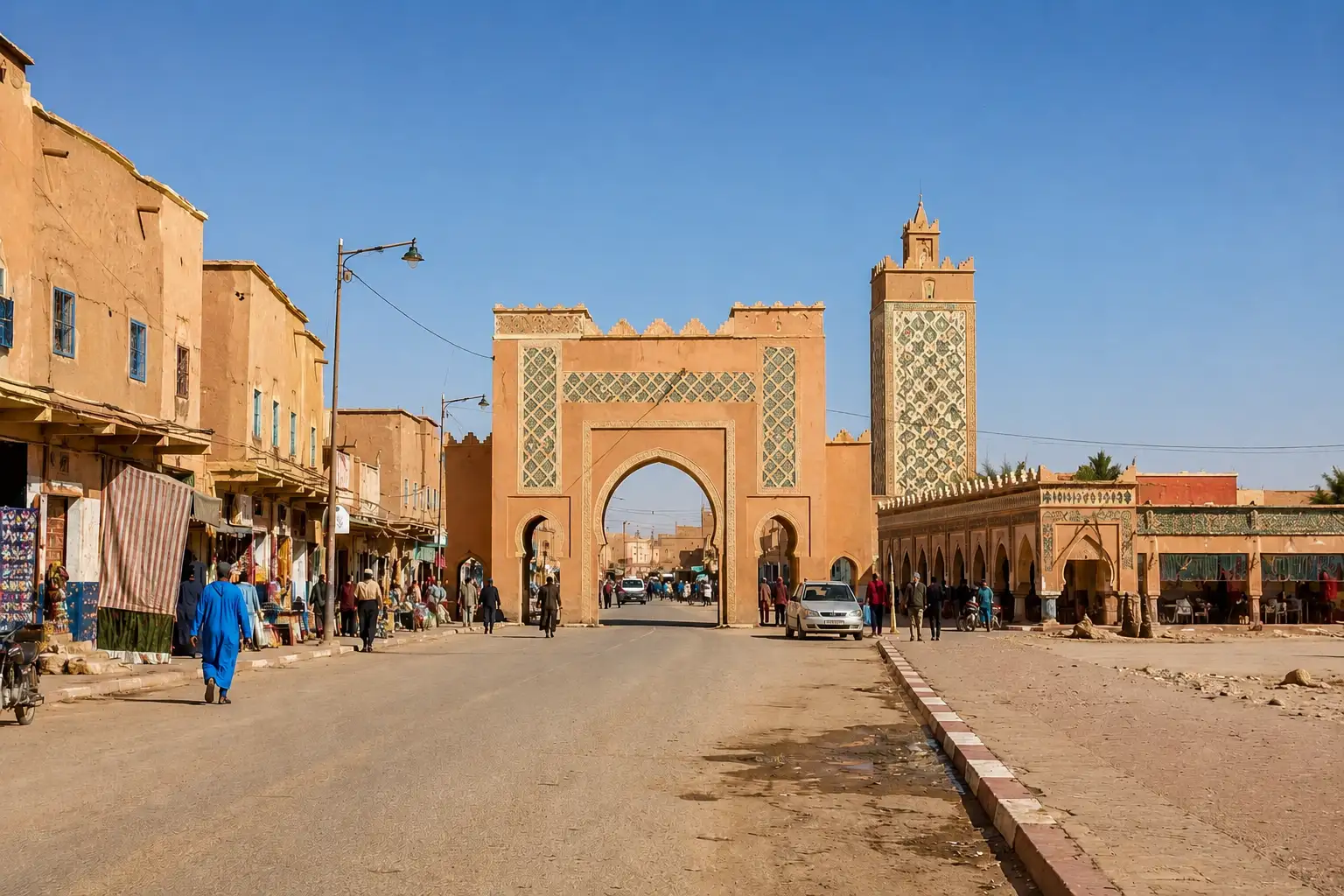
Most travelers heading to Merzouga drive right past Rissani without stopping. They miss the most authentic souk in southern Morocco and the birthplace of the Alaouite dynasty that has ruled the country since 1666. This town of 20,000 people, located 35 km from the Erg Chebbi dunes, offers something no polished tourist attraction can replicate: a working market where locals still trade livestock, dates, and hand-woven carpets exactly as they did a century ago. By the end of this guide, you will know exactly when to visit the souk (Tuesday, Thursday, and Sunday), what to see at the Alaouite Mausoleum, and how to plan your trip from Merzouga or Erfoud.
Quick Facts
- Market Days: Tuesday, Thursday, and Sunday (arrive by 9:00 AM for full experience)
- Distance from Merzouga: 35 km (22 miles), 30 to 40 minutes by car
- Taxi Cost from Merzouga: 100 to 150 MAD private, 20 to 30 MAD per person shared
- Best Months to Visit: October to April (avoid July and August extreme heat)
- Alaouite Mausoleum Entry: Free, non-Muslims allowed in courtyard only, dress modestly
- Where to Eat: Chez Hada near the souk (tajine and couscous 30 to 50 MAD)
- ATM Availability: One ATM (BMCE Bank), often runs out of cash, bring money from Erfoud or Merzouga
- What to Buy: Fresh Medjool dates, Berber carpets (300 to 800 MAD), pottery, woolen blankets, saffron
- Photography: Allowed in the souk, ask permission before photographing people, especially near the mausoleum
All prices in Moroccan Dirham (MAD) and approximate USD equivalents where applicable.
What is Rissani? The Historical Heart of Tafilalt
Rissani is not just a market town. It is the former capital of the Tafilalt region and the cradle of Morocco’s current ruling dynasty. Moulay Ali Cherif, founder of the Alaouite dynasty, is buried here in a mausoleum that remains an active pilgrimage site. This history transforms a quick stop into a meaningful cultural encounter, not a checkbox on a Sahara desert tour itinerary.
Founded in the 17th century, Rissani served as a key stop on trans-Saharan caravan routes connecting West Africa to the Mediterranean. Traders brought gold, salt, and slaves north through this oasis town, making it one of the wealthiest settlements in the region. Today, it sits 35 km southwest of Merzouga and 25 km south of Erfoud, close enough to visit as a morning excursion before heading into the dunes. If you are planning a multi-day route from Fes, our guide to Fes to Sahara desert routes explains the different road options and where Rissani fits naturally on each one.
The town’s population hovers around 20,000, swelling significantly on market days. You will see evidence of its commercial past in the decaying ksars (fortified villages) that line the outskirts and the date palm groves that once fed entire caravans. Ask the guardian at the Alaouite Mausoleum to see the original 17th-century Quran manuscript kept inside. It is rarely mentioned but freely shown to visitors who ask.
The Real Souk: Rissani Market Days and What to Expect
Rissani’s market is not designed for tourists. It is chaotic, dusty, and utterly authentic. Vendors set up before dawn on Tuesday, Thursday, and Sunday, and by 10:00 AM the entire town centre transforms into a sprawling open-air bazaar. Fresh produce, spices, dates, livestock, handmade carpets (300 to 800 MAD), pottery, and traditional djellabas fill the stalls. Unlike Marrakech’s Jemaa el-Fnaa, no one is performing for cameras here.
Arrive by 9:00 AM on market day to catch the livestock auction. This is the most photogenic and least touristy part of the souk. Farmers haggle over camels, goats, and donkeys in a dusty pen near the main entrance while buyers inspect teeth, hooves, and temperament. The auction follows no posted schedule. It happens when enough animals and buyers show up. By 2:00 PM, most vendors have packed up and the streets return to their usual quiet rhythm.
Haggling is expected on everything except fresh produce. Start at half the asking price for carpets, pottery, and textiles. If a seller quotes 600 MAD for a woolen blanket, counter with 300 MAD. The final price will settle around 400 to 450 MAD. Buy dates here rather than in Erfoud — they are fresher and cheaper, especially Medjool varieties. For a broader look at how much to budget for shopping, meals, and transport across Morocco, our Morocco trip cost guide breaks down realistic daily spending at every level.
What Most Guides Get Wrong About Rissani Souk
Most travel articles describe Rissani as a “hidden gem” or claim it is “untouched by tourism.” This is misleading. The souk sees tourists, especially those on Sahara desert tours that stop here for an hour. What makes it authentic is not the absence of visitors but the fact that 95% of the people shopping here are locals buying what they actually need. The vendors are not performing. They are working. If you want to understand what separates a genuine experience from a tourist-facing one, our post on private vs group Sahara tours explains why pacing and guide choice matter more than the destination itself.
The Alaouite Mausoleum: A Sacred Pilgrimage Site
The mausoleum of Moulay Ali Cherif sits in central Rissani, a short walk from the souk. Non-Muslims may enter the courtyard and observe from outside the inner chamber, but they cannot enter the tomb itself. This restriction is standard at most Moroccan mausoleums. Entry is free, though donations are welcome. The site is modest, humble, and deeply spiritual, not architectural.
Visit early in the morning before the market gets busy, or after afternoon prayer when the courtyard is quietest. Dress modestly: covered shoulders and knees, and women should bring a scarf to cover their hair out of respect. The guardian, often an elderly man who has worked there for decades, will answer questions about the dynasty and the mausoleum’s history. He may show you the original Quran manuscript if you ask politely.
Go just before the midday call to prayer. You will hear the adhan echo through the courtyard while locals arrive for the service. This creates a moving atmosphere that no guided tour can manufacture. The mausoleum is not a grand monument like the Hassan II Mosque in Casablanca. It is a place where Moroccans come to pay respects to the man whose descendants rule the country today.
Rissani to Merzouga Distance and How to Get There
Rissani sits 35 km from Merzouga, approximately 30 to 40 minutes by car along route P21/R702. The road is fully paved and passes through palm groves and small ksars with crumbling pisé walls. This is not a boring desert drive. The landscape of date palms and ancient irrigation canals is part of the charm. If you are self-driving the Marrakech to Merzouga route and want to understand the full road conditions and timing, our guide on Marrakech to Sahara distance and travel time covers every leg of that journey.
A private taxi from Rissani to Merzouga costs 100 to 150 MAD (approximately $10 to $15 USD). A shared grand taxi costs 20 to 30 MAD per person but leaves only when full, which can take 30 minutes or more. Many 3-day Marrakech desert tours include Rissani as a half-day stop on the way to or from the dunes, which means the logistics are handled without you needing to negotiate taxis separately.
Ask your taxi driver to stop at the viewpoint overlooking Erfoud’s palm grove just before reaching Rissani. It sits on a curve in the road with no official signage, but drivers know it. The view of thousands of date palms stretching toward the horizon is worth the two-minute detour, and no guidebook mentions it.
Practical Tips for Visiting Rissani Morocco
Rissani is a real town, not a tourist attraction. The best months to visit are October to April. July and August bring extreme heat that makes walking through the souk uncomfortable. For a month-by-month breakdown of temperatures and crowd levels across the south, our guide to the best time to visit the Sahara gives specific recommendations for the Merzouga and Rissani area. For lunch, try Chez Hada, a local restaurant near the souk that serves tajine and couscous for 30 to 50 MAD. Do not expect an English menu or air conditioning, but the food is good and the prices are honest.
There is one ATM in Rissani (BMCE Bank), and it frequently runs out of cash. Bring enough money from Erfoud or Merzouga to cover your visit. You can combine Rissani with Erfoud’s fossil souk on the same day since they are only 15 minutes apart by car. Photography is allowed in most of the souk, but always ask permission before taking photos of people, especially near the mausoleum. For everything you need to carry into the desert region, our complete Sahara packing list covers clothing, cash, and practical items for towns and dunes alike.
Try medfouna from a street stall near the souk. This Berber pizza is stuffed with spiced meat and vegetables and costs about 15 MAD. You will not find it in most restaurants, even in larger cities. It is one of those dishes that belongs to the street, and Rissani does it well.
Ready to Explore the Real Morocco Beyond Marrakech?
Rissani offers one of the most authentic market experiences in Morocco, a deep connection to the Alaouite dynasty, and easy access from the Sahara dunes. Whether you come for the souk, the mausoleum, or both, a visit here adds historical depth to any Sahara itinerary. It pairs naturally with a morning at the dunes and an afternoon in the village — the kind of day that is only possible when you are not locked into a group tour schedule. For those still deciding how many days to allocate to this part of Morocco, our post on how many days you need for a Sahara desert tour gives honest recommendations based on starting point and pace.
At Memento Morocco, we design private Sahara tours that treat Rissani as a destination rather than a quick stop. Our 3-day Fes desert tour routes through Rissani on the way to or from Merzouga, with time built in for the souk on market days. Our Fes to Marrakech desert tour combines Rissani with the Dades Valley, Ait Ben Haddou, and Ouarzazate in one continuous private route. And for travelers who want the full picture from north to south, our 10-day Marrakech, Sahara and Fes tour builds Rissani into a properly paced itinerary that gives you time to walk the souk, visit the mausoleum, and still reach the dunes before sunset. Contact us to build your desert itinerary.
📩 Contact us: contact@mementomorocco.com | +49 1522 3075977 | WhatsApp