Sahara Desert Camp Food: Menus, Dietary Options & Reviews
The first spoonful of bubbling lamb tagine under a canopy of stars: that’s the moment you forget the bumpy camel ride here. But before you book your Sahara desert tour, you probably want to know what sahara desert camp food actually looks like beyond the Instagram photos. Will it be authentic? Will there be enough? Can your vegan partner eat anything besides salad? This guide answers all of that. You’ll learn exactly what appears on your plate, how camps handle dietary restrictions, and which experiences are worth the trek across the dunes. By the end, you’ll know whether to pack protein bars or just bring your appetite.
What’s on the Menu? Typical Sahara Desert Camp Meals
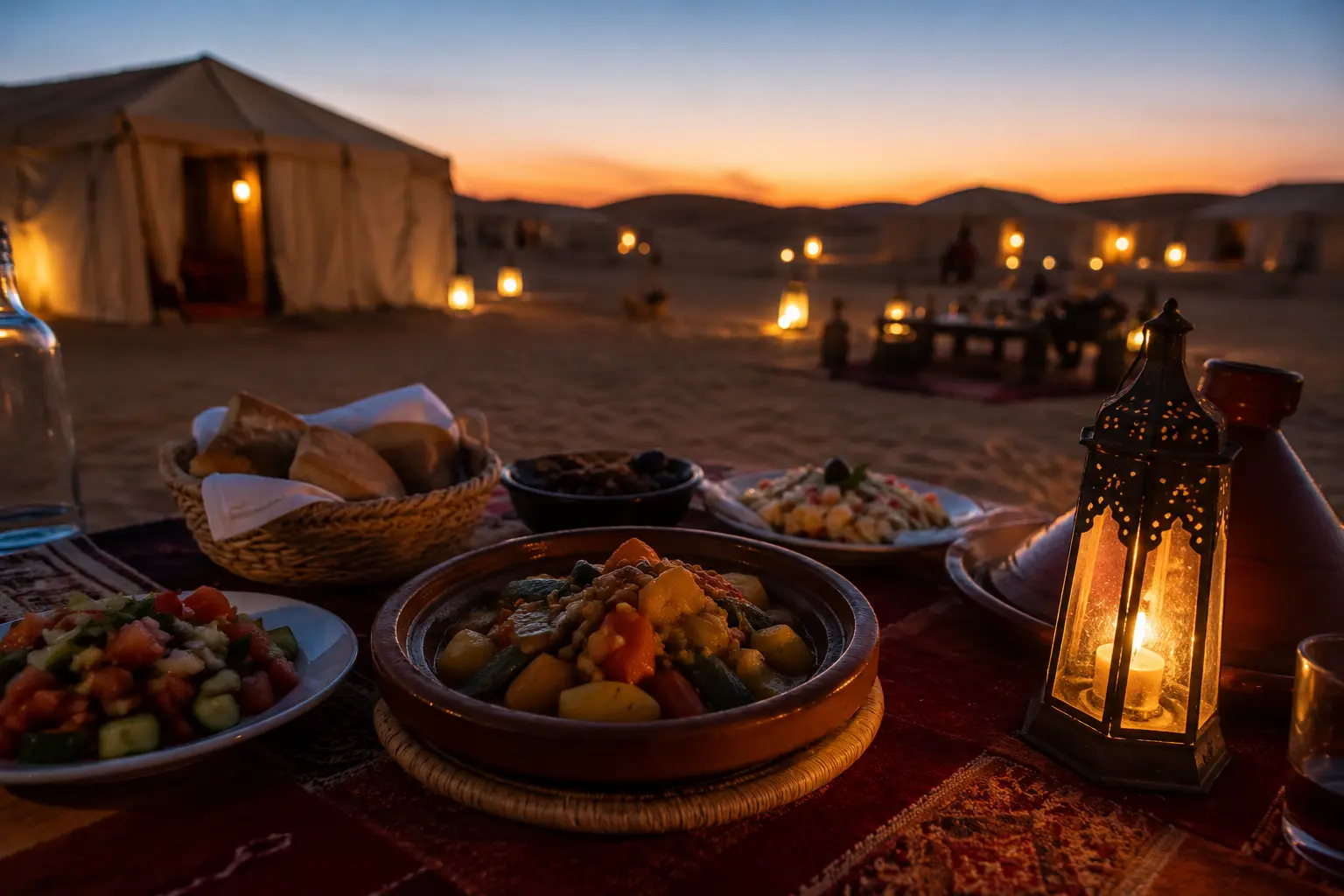
Dinner at a Sahara desert camp follows a predictable rhythm, and that’s not a bad thing. You start with harira (a thick lentil and chickpea soup flavored with tomato and coriander) or a Moroccan salad plate: diced tomatoes, cucumbers, onions, and roasted peppers dressed in olive oil. The main course is almost always a tagine, slow-cooked in a clay pot over low heat. Chicken with preserved lemon and olives is the most common version. Lamb with prunes and almonds appears in higher-end camps. Vegetable tagine shows up when requested in advance. Some camps prepare Mefouna, the “Berber Pizza” – a flat piece of bread filled with ground beef and vegetables, cooked on hot sand.
Dessert is fresh fruit: dates from the Draa Valley, sliced oranges, or watermelon in summer. Some luxury camps in Erg Chebbi add Moroccan pastries like chebakia (sesame cookies soaked in honey) or almond briouat triangles. Breakfast the next morning is simpler: msemen (square buttery pancakes), baguette with apricot jam, laughing cow cheese wedges, hard-boiled eggs, and bottomless mint tea or instant coffee.
Almost all camps include dinner and breakfast in the tour price, but drinks beyond tea are extra. Budget camps serve meals communal-style at long tables. Luxury camps offer private tables and sometimes wine (where alcohol is permitted). If you’re on a Sahara desert tours, clarify what’s included upfront to avoid surprises when the bill arrives. Also, you can learn more about Sahara desert camps to know what to expect during your visit.
Dietary Options: Vegetarian, Vegan, and Gluten-Free at Desert Camps
Vegetarian and vegan travelers can eat well in Sahara camps, but only if they notify their tour operator at least 48 hours in advance. Camps in remote areas like Erg Chigaga don’t have refrigeration or nearby markets, so ingredients arrive in supply runs from Zagora or M’hamid. Without advance notice, you’ll end up picking around meat in a communal tagine while everyone else eats. With notice, camps prepare vegetable tagine with carrots, zucchini, potatoes, and turnips cooked in tomato and olive oil. You’ll also get lentil harira, grilled peppers, couscous with caramelized onions, and fresh fruit.
Gluten-free options are trickier. Couscous is made from semolina (wheat), and bread appears at every meal. Some camps in Merzouga can prepare gluten-free flatbread if you request it early, but don’t count on it. Your safest bet: rice dishes, plain grilled meats, salads without croutons, and fruit. Bring rice crackers or gluten-free bars as backup. Camps near towns like Merzouga have better access to alternatives than those deep in the dunes. Ask your operator which camp you’re visiting and whether they have experience with celiac-safe meals.
Nut allergies, dairy intolerances, and other restrictions require the same proactive communication. Some Morocco desert camps have dedicated kitchens and skilled chefs who can adapt recipes. Others operate out of a single tent with one pot and limited substitutions. Always reconfirm your dietary needs a day before departure, and carry your own EpiPen or emergency medication if you have severe allergies. The Sahara is two hours from the nearest hospital.
What Travelers Really Say About Camp Food
Most travelers rate sahara desert camp food somewhere between “surprisingly good” and “better than expected,” but the praise often focuses on ambiance more than flavor. Eating lamb tagine under the Milky Way with Berber music in the background turns an average meal into a story you’ll tell for years. The food itself? It’s hearty and flavorful when fresh, but repetitive if you’re staying multiple nights. Tagine for dinner on night one feels exotic. Tagine again on night two feels like Groundhog Day.
The most common compliments: warm Berber bread baked in sand ovens, the mint tea ceremony (three rounds, each sweeter than the last), and the theatrical presentation of lifting the tagine lid to reveal steam and spices. The most common complaints: small portions (especially in budget camps), lukewarm food by the time it reaches your table, and over-reliance on preserved lemons, which some people find too salty. Luxury camps in Erg Chebbi score higher on flavor and variety because they source ingredients from Merzouga’s markets daily. Budget camps rely on canned vegetables and frozen meat.
If you read reviews of Sahara desert tours, you’ll notice a pattern: solo travelers and couples on private tours rate food higher than large group tours. Smaller groups get fresher meals cooked to order. Groups of 15 eat reheated stews from giant pots. Look for camps that offer a cooking demonstration or let you help bake bread in the sand. The interactive experience compensates for menu monotony, and you’ll leave with a skill you can (sort of) recreate at home.
The Best Sahara Desert Dining Experiences: Luxury vs Budget Camps
Luxury desert camps transform dinner into theater. Expect a multi-course meal served at candlelit private tables: salad trio, chicken pastilla (sweet and savory phyllo pastry), slow-roasted lamb tagine with apricots, and dessert that might include French-style chocolate mousse or Moroccan orange cake. Wine appears on the menu where permitted, and staff announce each dish with ceremony. In camps like those near Erg Chebbi’s golden dunes, chefs sometimes prepare a special dish like mechoui (whole roasted lamb) for groups celebrating occasions.
Budget camps strip away the pageantry but often deliver more authentic meals. You’ll sit at long communal tables with other travelers, eat from shared tagine pots, and tear bread with your hands. The food is simpler: one salad, one tagine, one dessert. But it’s often cooked by local Berber families who’ve been making the same recipes for generations, and the portions are generous enough to leave you full. The experience feels less curated, more real. You might end up learning Berber phrases from your guide or swapping travel stories with a couple from Germany between bites.
Mid-range camps split the difference. You get individual plates instead of communal pots, a bit more variety (maybe a kefta tagine one night, chicken the next), and attentive service without the luxury price tag. Location matters as much as budget: camps in Erg Chebbi benefit from proximity to Merzouga, where supplies are 20 minutes away. Camps in Erg Chigaga sit three hours from the nearest town, so even luxury options rely on preserved ingredients.
Tips for Picky Eaters and Special Requests
If you’re a picky eater or have strong food preferences, your best defense is preparation. Pack a stash of snacks you know you’ll eat: salted almonds, protein bars, dried mango, instant oatmeal packets. Camps provide hot water for tea, so you can use it to make instant soup or rehydrate dehydrated meals if you brought them. A small jar of hot sauce or your favorite spice blend can rescue a bland tagine, and it weighs almost nothing in your luggage.
Communicate your preferences at booking time and again 24 hours before departure. Don’t assume the message reached the camp chef. Some camps serve meals cooked hours earlier and reheated over a fire, so asking for something “lightly cooked” or “no sauce” might not translate. If you can’t eat what’s served, you won’t starve (bread and fruit are always available), but you’ll enjoy the trip more if you set realistic expectations and bring backup options.
Water safety is non-negotiable. Tap water in desert camps comes from wells or hose and isn’t safe for foreign stomachs. Use bottled water for drinking, brushing teeth, and rinsing fruit. Most camps provide free bottled water at meals and in your tent, but confirm before you arrive. If you’re worried about plastic waste, bring a filtered water bottle like a LifeStraw or SteriPEN. Pack your Sahara desert packing list with rehydration salts in case you do get sick. One bad tagine shouldn’t ruin your trip. You can find more about the facilities in the Sahara Desert camps for more details.
What Other Guides Get Wrong About Sahara Camp Food
Travel blogs love to romanticize Sahara dining, but here’s what they don’t tell you: the food is rarely as photogenic as it looks online. That perfect tagine shot you saw on Instagram? It was styled, lit, and probably photographed at a luxury camp in peak season with a professional chef. The average camp serves functional, filling meals that taste good enough but won’t blow your mind. If you arrive expecting Moroccan fine dining under the stars, you’ll be disappointed. If you arrive expecting a warm, honest meal cooked over fire in the middle of nowhere, you’ll be delighted.
Another misconception: that all camps cook fresh meals on-site. Many budget and mid-range camps prepare food in a central kitchen hours before dinner, then transport it to your camp in insulated containers. The tagine arrives lukewarm, not sizzling. The couscous clumps together instead of being fluffy. This isn’t a quality issue, it’s logistics. Cooking for 20 people in a tent with no electricity requires advance prep. Luxury camps sometimes have on-site chefs and portable gas stoves, which makes a noticeable difference in temperature and texture.
Finally, most guides won’t admit that dietary accommodations can be hit or miss. A camp might say “yes, we do vegan,” then serve you plain couscous with boiled vegetables while everyone else eats a rich lamb stew. It’s not malice, it’s inexperience. Vegan cooking isn’t common in Moroccan culture, and remote camps don’t always understand the difference between vegetarian and vegan. Bring your own protein (nuts, nut butter, protein powder) to supplement what they serve, and you’ll eat well enough to enjoy the rest of the experience.
Now That You Know What to Eat, Which Sahara Desert Camp is Right for You?
From hearty tagines under a starry sky to flexible options for special diets, Sahara desert camp food is generally memorable and satisfying when you plan ahead. With honest expectations and a little preparation, you can focus on the magic of the desert instead of worrying about your next meal. The food won’t be the highlight of your trip, but it won’t be a disappointment either, especially if you choose the right camp and communicate your needs early.
You’ve got all the food insights. Now it’s time to choose the perfect camp and tour that match your taste, budget, and dietary needs. That’s where we come in.
Memento Morocco designs private Sahara desert tours from Marrakech to Sahara, Fes to Sahara, and deep into Merzouga, Erg Chebbi, and Erg Chigaga. We work directly with camp owners to customize your dining experience, whether that means arranging vegan tagines, gluten-free alternatives, or a private candlelit dinner under the stars. You won’t eat from a communal pot unless you want to. You won’t wonder if the chef remembered your allergy. You’ll just show up, sit down, and enjoy a meal that’s been prepared with your preferences in mind. Contact us to design your Sahara desert tour with tailor-made dining arrangements that suit your preferences.
Contact us: contact@mementomorocco.com | +49 1522 3075977