Sandboarding in The Sahara Desert: Best Dunes & Pro Tips
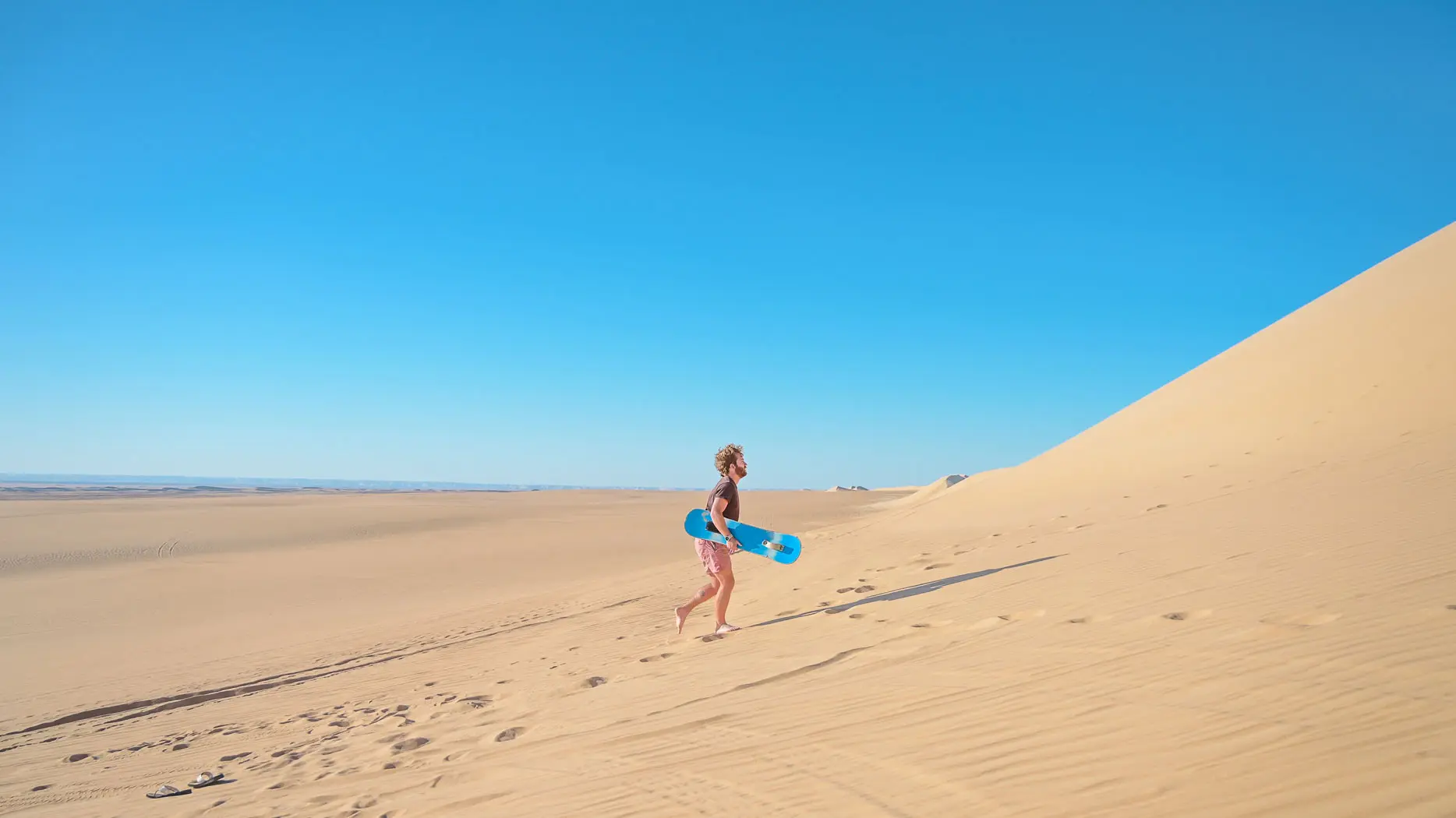
The board hisses beneath you as you carve down a 100-meter dune face, fine golden sand spraying behind like powder snow. The silence of the Sahara breaks only with the rush of wind past your ears and the crunch of compressed sand under the waxed wood. You lean forward, knees bent, and suddenly you’re picking up speed faster than you expected. This is sandboarding in the Sahara Desert, and it’s harder than it looks. Most first-timers wipe out within the first 10 seconds because they lean back like they would on snow. By the end of this guide, you’ll know exactly which dunes to target near Merzouga, how to rent a board without getting overcharged, what to wear so you don’t end up sunburned and sandy, and the technique that will keep you upright past that critical first slope.
Why Sandboarding in the Sahara Desert? (And Why It’s Not Just a Gimmick)
Sandboarding offers a physical thrill that breaks up the slow rhythm of camel treks and long desert drives. You climb a dune for 15 minutes, carve down in 30 seconds, and immediately want to do it again. It’s also one of the best ways to get incredible action photos: you against a golden slope, long shadows stretching across wind-rippled sand, the kind of shot that makes your Instagram followers ask, “Where is that?”
But sandboarding is not as easy as it looks in those photos. The sand is slower and grippier than snow, which means you need more forward momentum to maintain speed. Most runs on the best dunes near Merzouga are 100 to 200 meters long on slopes of 20 to 30 degrees. The feeling is closer to carving on wet, heavy spring snow than on fresh powder. Many private desert tours include sandboarding if you ask for it, but it’s not always advertised upfront.
If you’re booking a private tour, ask your driver to stop at a dune with a gentle slope for your first try. The steep, towering dunes look stunning in photos, but they’re much harder to control on a board. You want a slope that lets you practice your stance without launching you into a faceplant on your first run. Sand surfing the Erg Chebbi dunes is a highlight, but only if you approach it with realistic expectations and the right preparation.
Best Dunes for Sandboarding in the Sahara: Erg Chebbi vs. Erg Chigaga vs. Others
Erg Chebbi, located just outside Merzouga in southeastern Morocco, is the most accessible and popular dune field for sandboarding. These dunes reach up to 150 meters high, with golden sand that reflects the sun like polished copper. You can walk from the edge of Merzouga town to the base of the dunes in 20 minutes. Rental shops are available in town, and the sand here is fine and fast, which makes for smoother, longer runs if you can keep your balance. The downside is that Erg Chebbi can get crowded, especially during peak season (October to April), with camel caravans, quad bikes, and other sandboarders sharing the same slopes.
Erg Chigaga, on the other hand, sits near M’Hamid El Ghizlane in the far south, about 300 kilometers southwest of Merzouga. These dunes are taller (up to 300 meters) and more spread out, which means fewer people and a more isolated experience. The sand is coarser and slower than Erg Chebbi, so you’ll need steeper slopes to pick up speed. The biggest challenge is access: you need a 4×4 vehicle or a guided tour to reach Erg Chigaga, and rental shops are scarce. If you’re serious about sandboarding here, bring your own board or arrange one through your tour operator in advance. If you’re considering Erg Chigaga, our complete guide to Erg Chigaga will help you prepare for the journey. For more on exploring Erg Chebbi, read our detailed guide to Erg Chebbi dunes.
Tinfou Dunes near Zagora are smaller (50 to 70 meters) and much gentler, which makes them ideal for beginners or families with kids. The sand is softer and the slopes are forgiving. You won’t get the adrenaline rush of a 150-meter drop, but you also won’t spend the afternoon digging sand out of your ears. Erg Zahar, a quieter section just north of Erg Chebbi, offers similar conditions to the main dunes but with far fewer tourists. Local guides know these spots well and can take you there if you want to avoid the crowds.
For the best sandboarding photos, aim for late afternoon between 3 PM and 5 PM, when the dunes cast long shadows, and the sand glows orange in the slanting light. Midday sun washes out all the texture and turns the dunes into a flat, blown-out white in photos. The golden hour is not just beautiful; it also makes it easier to see the contours of the slope, which helps you pick a better line.
Sandboard Rental in Merzouga: Prices, Locations, and What to Expect
You can rent a sandboard in Merzouga for 100 to 200 MAD (10 to 20 USD) per hour, though prices are often negotiable if you want it for half a day. Common rental spots include Hotel Kasbah Miguiri near the main square, Café Merzouga, and several smaller shops along the road leading to the dunes. Many private tour drivers also keep a sandboard in the trunk of their 4×4, so if you’re already on a tour, just ask. They’ll either lend it to you or add a small fee to the tour cost.
The boards themselves are usually wax-surfaced wooden planks or old snowboards adapted for sand. Some have metal edges, but most are simple planks with a rough wax coating on the bottom to reduce friction. Don’t expect bindings, helmets, or safety gear. If you need a helmet or knee pads, bring your own. The boards are functional but not fancy. They work well enough for a few runs, but if you’re planning a full day of sandboarding, you might want to rent from a shop that maintains its equipment better.
A few shops in Rissani (about 30 kilometers north of Merzouga) also rent boards, but Merzouga is the hub. If you’re staying overnight at a desert camp, many camps have boards available for guests, either included in the price or for a small extra charge. Check our guide to the Sahara desert camps (many include sandboarding) to see which camps offer this. Some camps will even arrange a sunset sandboarding session, which is the best time for both light and cooler sand temperatures.
If you’re doing a multi-day desert tour, ask your tour operator to include a sandboard rental in the package before you leave. They often have a connection with a rental shop or a board already available. This saves you the hassle of haggling in Merzouga and guarantees you’ll have a board when you reach the dunes. If the operator doesn’t mention sandboarding in their itinerary, it doesn’t mean they don’t offer it. Just ask.
Wondering how many days you need for a Sahara tour?
What to Wear for Sandboarding in the Sahara: Clothing and Gear Tips
Shorts and a tank top might seem like the obvious choice for a hot desert afternoon, but they’re a terrible idea for sandboarding. The sand is scorching hot (often 50°C or higher at midday), the sun is relentless, and when you fall (and you will fall), exposed skin burns and scrapes. Wear a light-colored, long-sleeve shirt made of synthetic fabric or lightweight wool. Cotton soaks up sweat and becomes heavy and sticky. See our complete Sahara desert packing list for more gear recommendations. Loose pants work better than jeans, which trap heat and sand in the fabric. A keffiyeh or scarf is essential: wrap it around your neck and pull it over your mouth and nose to keep sand out when you’re climbing or falling.
For footwear, closed-toe sandals with straps or lightweight sneakers are your best bet. Flip-flops will fly off on your first run, and walking barefoot on sand that hot is impossible. Some travelers bring water shoes, which work surprisingly well because they’re light, they grip the board, and they protect your feet from the heat. If you’re planning multiple runs, bring an extra pair of socks to change into after your feet get sandy. Wet socks can help cool your feet between runs, though they’re not essential.
Sun protection is critical. Use SPF 50 or higher, reapply every hour, and don’t forget the back of your neck and ears. A wide-brimmed hat helps, but make sure it has a chin strap or it will blow off. Sunglasses with straps are a must because sand gets everywhere, including into your eyes. Some people bring ski goggles, which are even better if you’re planning steep, fast runs where sand spray is an issue.
Wear a buff or bandana over your neck and mouth. Sand will get in your mouth even if you’re careful, and it’s not pleasant. Also, tie your sunglasses tight. Losing them halfway down a dune means you’re either climbing back up in the scorching heat or saying goodbye to them forever. If you’re a beginner, consider bringing knee pads and elbow pads. Falling on sand still stings, and pads can save you from scrapes and bruises.
How to Sandboard: Technique Tips for First-Timers (and How to Avoid a Faceful of Sand)
Start with your stance: feet shoulder-width apart, knees bent, and your weight slightly forward. Most beginners lean back, thinking they’ll slow down, but on sand, that just causes you to lose balance and fall backward. The sand is slower and grippier than snow, so you need to lean into the slope to maintain momentum. Keep your center of gravity low and your knees flexed. If you stand too upright, the first bump or shift in the sand will knock you off balance.
To carve and turn, shift your weight to your heels or toes, just like on a snowboard. But don’t expect sharp, quick turns. The sand resists movement, so your turns will be slower and wider. If you try to carve too hard, the board will dig into the sand and stop abruptly, which usually means you keep going without the board. Most people find success by making gentle, sweeping turns rather than aggressive cuts.
When you fall (and you will), roll to your side instead of trying to catch yourself with your hands. The sand looks soft, but it’s packed hard on windward slopes, and landing on your palms at speed can scrape and bruise. Rolling distributes the impact and keeps sand out of your face. Most people succeed on their third or fourth try. The first run is about learning how the sand behaves. The second is about adjusting your stance. By the third, you’re usually carving small turns and picking up speed.
If standing feels too difficult or intimidating, sit on the board and use your hands to steer, like riding a sled. This is easier and much more forgiving, especially for kids or nervous adults. You won’t get the same thrill as carving on your feet, but you’ll still move fast, and you can focus on enjoying the ride instead of worrying about balance. Before your first run, walk up the dune and feel the sand texture. If it’s soft and deep, you’ll sink, and the board will be harder to control. Look for a patch with a hard, wind-packed crust. These patches are usually on the eastern or windward side of the dune, where the wind compresses the sand into a smooth, fast surface.
Here you can find a video on how to sandboard for first-timers: https://www.youtube.com/watch?v=hgURcX9u40s
When to Go: Best Seasons and Time of Day for Sandboarding
The best months for sandboarding in the Sahara Desert are October to April, when daytime temperatures range from 20°C to 30°C. Find out the best month to travel to Morocco for outdoor activities. Avoid June through August unless you can go at sunrise or sunset. Midday sand temperatures in summer can exceed 50°C (122°F), which is too hot to stand on, let alone slide down. Even with shoes, the heat radiates through the soles, and the sun overhead makes it dangerous without constant hydration and shade breaks. You can learn more about the Sahara Desert weather for planning your trip.
The best time of day is early morning (8 AM to 10 AM) or late afternoon (4 PM to 6 PM). Morning sand is cool, the light is soft, and the dunes are quiet. Late afternoon offers the golden hour glow that makes every photo look professional, and the sand has cooled enough to be comfortable. Midday is brutal: the sun is directly overhead, there’s no shade, and the glare off the sand makes it hard to see the slope clearly. Wind can also be a factor. Strong khamsin winds blow sand into your face and erase all the tracks, which makes it harder to judge the slope. Ask your guide or check the local forecast before heading out. Here’s what it’s like to visit the desert in winter.
Friday is the Muslim weekend, and you’ll often see more local visitors at the dunes near Merzouga on Fridays. It’s not crowded by city standards, but if you want total solitude, plan for a weekday. During Ramadan (dates vary each year), rental shops may have reduced hours or close during the day, so plan ahead or ask your tour operator to arrange the board in advance. For more on the best time of year to visit the Sahara Desert, check out our guide on the best time of year to visit the Sahara Desert.
If you’re staying overnight in a desert camp, ask your guide if you can sandboard at sunset. The light is incredible, the sand is cool, and the experience of carving down a dune as the sun dips below the horizon is unforgettable. Some camps have boards available for guests, so you don’t even need to bring your own or rent one in town.
What Most People Get Wrong About Sandboarding
Most travel articles say sandboarding is “like snowboarding but on sand,” which is misleading. The physics are different. Snow is slippery and fast. Sand is grippy and slow. On snow, you can lean back to slow down. On sand, leaning back makes you fall. The technique is closer to skateboarding on rough pavement than snowboarding on fresh powder. If you go into it expecting a snowboarding experience, you’ll be frustrated within the first 30 seconds.
Another common mistake is underestimating the climb. Walking up a 100-meter dune in soft sand is exhausting, especially in the heat. Your feet sink with every step, and what looks like a five-minute climb takes 15 minutes. Bring water, take breaks, and don’t try to do more than three or four runs in a session unless you’re in excellent shape. The thrill of the ride is worth the climb, but pace yourself.
Finally, most guides don’t mention that sandboarding is often better on the smaller, less famous dunes than on the giants. A 50-meter slope at Tinfou with a smooth, wind-packed surface can give you a longer, faster ride than a 150-meter slope at Erg Chebbi with soft, deep sand. Ask local guides where they go when they want a good run, not just where they take tourists for photos.
Ready to Trade a Camel for a Sandboard?
Sandboarding adds an adrenaline kick to any Sahara desert trip, and with the right knowledge, you can make the most of it. We’ve covered the best dunes, rental tips, what to wear, technique, and timing. Now it’s up to you to carve that perfect line down a golden slope with nothing but sand and sky around you.
From the dunes of Merzouga to the streets of Marrakech, every part of Morocco offers something unique. If you’re planning a desert adventure, get inspired by our 10-day Morocco itinerary and let us handle the logistics.
You can also check our Complete Sahara Desert tour guide to learn more about the Sahara Desert and plan your trip accordingly, or see if the Sahara desert worth it for you!
We design private Morocco tours that include everything you want and nothing you don’t. Whether it’s a Merzouga desert tour with sandboarding, an Erg Chebbi private sandboarding experience, or a multi-day Sahara tour from Marrakech or Fes to Marrakech through the Sahara desert that includes dune carving and camel trekking, we’ll build the itinerary around you. No group buses. No rigid schedules. Just you, the desert, and a board. Contact us to design your private Morocco tour. We’ll make sure your sandboarding session is the highlight of the desert.
📩 Contact us: contact@mementomorocco.com | +49 1522 3075977