Sahara Camel Trekking: An Honest & Ethical Guide
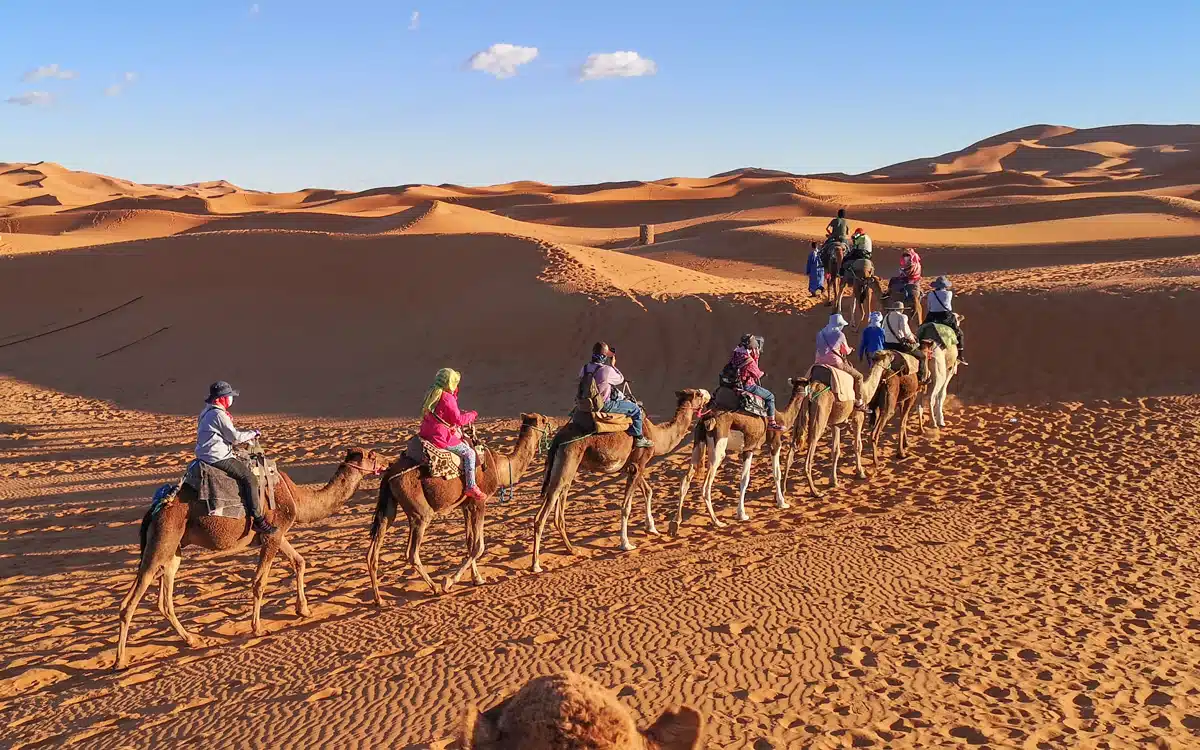
You lean back hard as the camel’s front legs fold. Your hands grip the wooden saddle frame under the blanket. The animal grunts, rocks forward, and suddenly you’re three meters off the ground watching the Erg Chebbi dunes turn amber in the late afternoon light. The magic of a Sahara camel trekking is real, but so is the stiff walk you’ll have afterward and the question of whether your camel is treated well. To have an authentic and responsible Merzouga camel trekking experience, understanding the reality is key. This guide strips away the Instagram filter to tell you exactly what a Merzouga dunes sunrise trek involves, from the saddle’s feel to how to spot an ethical operator, so you can book with confidence and comfort.
The Anatomy of a Merzouga Camel Trek: Duration & Reality
A typical sunrise trek lasts 1 to 1.5 hours of riding each way, covering roughly 3 to 4 kilometers total. You’ll spend about an hour at the camp itself for sunset or sunrise. The actual riding time surprises most people. It’s longer than a quick photo ride but shorter than the “epic journey” you might imagine.
The camel’s gait is a rolling, side-to-side motion that engages your core muscles in ways you didn’t expect. First-timers often feel it in their lower back and inner thighs the next morning. You will hear the camels’ soft grunts, the quiet “tsk tsk” sounds guides use to steer them, and the profound silence of the dunes when you stop. Dismounting requires leaning back sharply as the camel kneels. Let the guide help you. Your instinct will be to lean forward, which makes it harder.
Cost for a standard sunset or sunrise trek with a basic camp runs between 200 and 350 MAD per person, roughly $20 to $35 USD. Private treks, luxury camps, or longer multi-day rides cost more. The best time to visit the Sahara Desert is October through April, when temperatures are manageable and camels work in cooler conditions. The best light for photos is 20 minutes after the sun dips below the horizon at sunset, or 20 minutes before it rises at sunrise, when the dunes glow with soft, indirect light.
What Most Guides Get Wrong About Riding Camels
Most travel articles say camel rides are “smooth” or “relaxing.” They are neither. The motion is constant, rhythmic, and takes concentration if you’re not used to it. Your legs will ache. Your back will work. This isn’t a criticism of the experience. It’s a reason to prepare for it physically and mentally, not romanticize it.
Sahara Camel Trekking Ethics: How to Be a Responsible Visitor
Look at the camels’ humps before you agree to ride. A well-fed camel has visible fat reserves on its hump. Check for clean eyes and noses, and inspect where the saddle sits for open sores or raw skin. These are observable signs of good care or neglect. You don’t need veterinary training. You need to look.
Observe how the guide interacts with the animals. Does he use gentle vocal commands and a light stick for guidance, or is there shouting and hitting? A responsible operator limits caravan size to 8 or 10 camels maximum per guide, provides shaded rest for camels at camp, and doesn’t overload them with excessive tourist baggage. The camels’ working season in Merzouga runs roughly October to April. In peak summer heat, July through August, ethical operations significantly reduce or pause treks entirely.
Tipping your guide between 20 and 50 MAD is standard. If you witnessed good animal care, the tip directly rewards that behavior. Ask your tour operator one simple question: “What are the camels’ names?” A guide who knows his animals individually often has a closer, more caring relationship with them. This single question cuts through vague claims about “ethical practices” faster than any brochure.
Red Flags to Watch For
If the operator refuses to let you see the camels before booking, walk away. If camels are visibly limping, have discharge from eyes or nose, or show rib bones through their skin, refuse the trek. If the guide uses a whip instead of verbal commands, that’s not culture. That’s cruelty. You have the power to say no. For a broader view on Morocco travel safety and what to expect, read our dedicated guide.
What to Wear for Sahara Camel Trekking: A Practical Packing List
Wear closed-toe shoes with a back, like trainers or hiking shoes. Sandals mean hot sand by day, cold sand by night, and no ankle support during dismounting. Your feet will thank you. Footwear is the single most important clothing choice for this trek.
Fabric matters more than you think. Wear loose, breathable natural fibers like linen or cotton, or technical synthetics that wick sweat. Avoid tight denim. It chafes when you’re seated in a saddle for an hour, and it doesn’t insulate when the sun drops. Layer with a light jacket or fleece for the evening desert wind, even in summer. In winter months, December through February, bring a warm hat and gloves. The temperature can drop to 5°C at night.
Sun armor is non-negotiable. A shemagh, the traditional desert scarf, is vastly superior to a hat for protecting your neck and face from wind and sun. Sunglasses with side protection are crucial because the glare off the sand comes from all angles. Bring a bandana to cover your mouth and nose if it’s windy. Use a zip-lock bag for your phone and camera. Sand gets into everything. For a complete Sahara desert packing list, see our detailed checklist.
- Footwear: Closed-toe trainers or hiking shoes with ankle support.
- Clothing: Loose linen or cotton layers, avoid tight denim.
- Evening Layer: Light fleece or windbreaker (even in summer).
- Sun Protection: Shemagh scarf, side-protection sunglasses, SPF 50+ sunscreen.
- Sand Defense: Bandana for mouth, zip-lock bags for electronics.
Wear long, loose socks that go above your ankle. This prevents the saddle from rubbing your skin raw, a common but rarely mentioned issue. If your socks bunch up around your ankles, you’ll feel it an hour into the ride.
Booking Your Trek: From Budget Rides to Private Luxury
A budget group trek is bookable locally in Merzouga village for around 250 MAD per person. You’ll join a large caravan, likely have a basic blanket saddle, and stay in a standard Berber camp with shared tents. This is the most affordable option. It’s also the least flexible in terms of timing, pace, and privacy. You can learn more about the difference between a luxury desert camp and a standard desert camp in our blog.
A mid-range or standard tour is often part of a 3-day desert tour from Fes or Marrakech. It includes transfer, a dedicated guide, better saddles with cushions, and upgraded camp amenities like private tents and attached bathrooms. These tours typically cost between 600 and 1,200 MAD total per person, depending on group size and inclusions. The camel ride duration Morocco operators advertise is usually the same, but the overall comfort level rises. For a full breakdown of expenses, see our Morocco trip cost guide.
A private luxury trek is what a premium agency offers. Key advantages: you set the pace with frequent photo stops, you choose your exact sunset dune, you have a dedicated guide for questions and cultural context, and you stay in a luxury camp with full beds and ensuite facilities. Direct cost comparison: a private sunset trek for two with a luxury camp ranges from 1,500 to 2,500 MAD total, roughly $150 to $250 USD. The “golden hour” advantage is real. Private tours can time the trek perfectly for the best light, while large groups operate on a fixed, often mis-timed, schedule.
If you book a private Sahara desert tour from Fes, request a “female camel,” called “naqa” in Arabic. They are generally considered more even-tempered and smoother to ride than males. Not all operators will accommodate this, but asking shows you’ve done your research. To decide whether the desert experience is right for you, check out our honest assessment: Is a Sahara desert tour worth it?
What the Price Actually Buys You
Budget treks save money but sacrifice control. You ride when the group rides. You stop when the group stops. Mid-range tours add comfort and reduce group size. Private tours buy you time, attention, and the ability to shape the experience around your comfort and photography needs. This isn’t upselling. It’s a trade-off between cost and autonomy.
Ready to Experience the Sahara Beyond the Saddle?
A Merzouga camel trek is a sensory immersion: the feel of the gait, the sound of the wind, the scale of the dunes. It’s not just a photo opportunity. Your comfort and the animals’ welfare are directly linked to the choices you make before you book, from what you pack to which operator you select.
The trek is just the beginning. The Sahara desert holds deeper experiences, from nights under the stars in a luxury camp to exploring hidden oases and ancient kasbahs along the way. Learn more about traveling to the Moroccan Sahara for a comprehensive overview.
At Memento Morocco, we arrange private Sahara desert tours where every detail matters. You’ll ride with guides who know their camels by name. You’ll stay in luxury desert camps where the silence is real and the beds are comfortable. You’ll explore Merzouga, the Draa Valley, and the routes from Fes and Marrakech that most tours rush through. Let us craft a Sahara journey where every detail, from ethical animal care to your private sunset moment, is thoughtfully arranged.
📩 Contact us:
contact@mementomorocco.com | +49 1522 3075977