Sahara Desert in Summer: Too Hot or Still Worth It?
The Sahara desert in summer Morocco wakes at 5:30 AM with a coolness that feels impossible by noon. You watch the sun climb over Erg Chebbi’s dunes, turning sand from gold to amber to blinding white. Within three hours, that same landscape will radiate heat so intense you can see it shimmer. By 2 PM, the temperature peaks at 43°C (109°F), and even the camels retreat to shade. But then evening arrives, and the desert transforms again. The air cools by 15 degrees within an hour after sunset. Stars appear in numbers you’ve never seen. This is the reality of the Sahara in July and August: extreme contrasts, brutal midday heat, and moments of beauty that only summer visitors experience. This guide tells you exactly what to expect, how to stay safe, and whether a summer Sahara trip matches your travel style.
What Is the Weather Really Like in the Sahara During Summer?
The Sahara desert in summer Morocco reaches its peak temperatures between June and August. In Merzouga, the gateway to Erg Chebbi dunes, July averages a high of 43°C (109°F) and a low of 26°C (79°F). August mirrors these numbers, while June offers slightly more mercy with highs around 40°C (104°F). These are not occasional heat spikes. These are daily realities from late morning through mid-afternoon.
Humidity stays near zero, which means sweat evaporates instantly and dehydration creeps up faster than you expect. Wind picks up in the afternoon, and when it does, it carries fine sand that stings exposed skin and finds its way into every pocket and camera lens. The saving grace is the night. Once the sun drops below the horizon around 7:30 PM, temperatures fall quickly. By 9 PM, you’ll need a light jacket. By midnight, it can drop to 20°C (68°F) or lower, creating the perfect conditions for stargazing without a single cloud in sight.
The best time to experience the dunes is early morning between 5 AM and 7 AM, or late afternoon from 5 PM onwards, when temperatures drop below 35°C (95°F). If you’re planning a complete guide to Sahara desert tour, understand that summer visits require a schedule built around avoiding the midday sun. The heat is not negotiable, but with the right timing, it becomes manageable.
Is the Sahara Desert Too Hot in Summer? An Honest Verdict
Yes, the Sahara is too hot in summer if you expect to hike dunes at noon or spend hours outdoors without shade. The midday heat is dangerous, and heat exhaustion is a real risk for anyone unprepared. But if you adjust your expectations and plan around the temperature, summer offers advantages no other season provides. Fewer tourists mean you’ll have entire dune fields to yourself. Accommodation prices drop by 20 to 30 percent compared to peak winter months. A luxury camp that costs 1,200 MAD per night in December might cost 800 MAD in July. Clear skies are guaranteed, making every night a masterclass in astronomy. Learn more about the best time to visit the Desert if you are trying to plan your Sahara desert trip and are taking the weather and other factors into account.
Many desert camps now offer air-conditioned tents, a necessity rather than a luxury in July and August. Without AC, sleeping becomes difficult even after the sun sets, as tents retain heat well into the evening. The risk of discomfort is real, but so is the reward: solitude, lower costs, and a version of the Sahara most travelers never see. If you’re someone who handles heat well, stays hydrated, and follows a disciplined schedule, summer is absolutely worth considering. If you wilt in temperatures above 30°C (86°F), wait for October or March instead.
For context on seasonal planning, check our best time to visit Morocco month-by-month guide. Summer Sahara visits suit adventurous travelers willing to trade comfort for uniqueness. It’s not for everyone, and that’s precisely the point.
What Can You Actually Do in the Sahara in Summer?
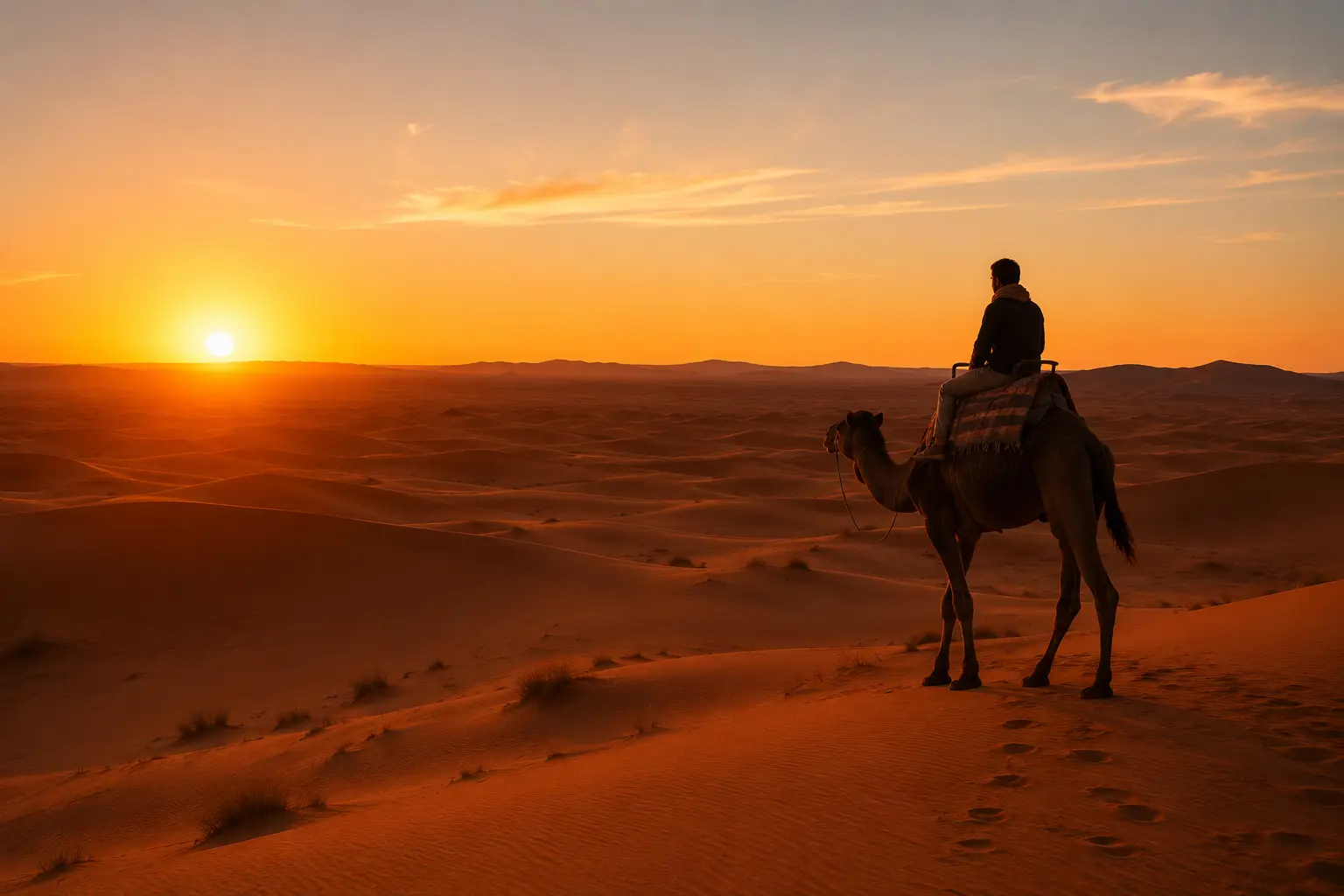
Camel rides work perfectly at sunrise and sunset. Book your ride for before 8 AM or after 5 PM, when temperatures drop below 38°C (100°F). The golden hour light turns the dunes into a photographer’s dream, and the cooler air makes the 90-minute trek comfortable. Midday activities must happen indoors: lunch at your camp, traditional henna painting sessions, or visits to small museums in nearby villages like Khamlia, known for its authentic Gnawa music performances.
Daytime is also ideal for exploring the fossil and mineral shops in Erfoud, a 45-minute drive from Merzouga, where air conditioning provides relief and local artisans demonstrate how they polish ancient trilobites into jewelry. Some camps organize cooking classes in shaded courtyards, teaching you how to make Moroccan tagine or fresh flatbread. These indoor cultural experiences become the centerpiece of summer itineraries, not fillers.
Night transforms the desert into a different world. Stargazing from 9 PM onward is spectacular, with zero light pollution revealing the Milky Way in full detail. Some camps host full moon gatherings where Berber musicians perform under open skies. Temperature drops to 22°C (72°F) by 10 PM, perfect for sitting around a fire with mint tea. Pack a cooling towel and portable fan for midday survival. These small items make an enormous difference when you’re waiting out the afternoon heat in your tent. You can read our article about packing list for a trip to the Sahara desert to have a comfortable experience.
Here’s a quick survival kit for summer desert days:
- Cooling towel: Drape it around your neck during midday. It drops perceived temperature by several degrees.
- Portable fan: A small USB-charged fan is worth its weight in gold when you’re waiting out the afternoon in your tent.
- 4+ liters of water per person per day: Dehydration is the number one risk. Start drinking before you feel thirsty.
- Electrolyte sachets: Available at any Moroccan pharmacy for around 20 MAD. Water alone won’t replace what sweat takes.
- Closed-toe shoes with thick soles: Sand reaches 70°C by midday. Flip-flops will melt or burn your feet.
- UV-protective sunglasses with side shields: Glare comes from all angles in the desert, not just above.
What Others Get Wrong About Summer Desert Activities
Most travel articles suggest sandboarding as a summer activity. This is bad advice. Sand temperatures reach 70°C (158°F) by midday, hot enough to burn through shoes within minutes. Sandboarding is only safe before 8 AM or after 6 PM, and even then, you’ll need closed-toe shoes with thick soles. The activity is possible in summer, but the window is narrow and the conditions harsh. Don’t let generic advice put you at risk of burns or heatstroke.
Best Time of Day to Visit the Desert in Summer (And What to Avoid)
Structure your summer Sahara day around temperature, not ambition. Wake at 5 AM for sunrise photography or a camel trek. The air is cool, the light is soft, and you’ll cover ground before the heat becomes oppressive. Return to camp by 8:30 AM for a late breakfast. From 10 AM to 4 PM, stay indoors or in deep shade. This is non-negotiable. The sun between 11 AM and 3 PM is brutal, and even short exposure can lead to heat exhaustion or sunburn that ruins the rest of your trip.
Use midday for rest, reading, or cultural activities inside your camp. Many camps have shaded lounges with fans or AC where you can plan the next leg of your journey, write postcards, or simply nap. Driving between sites is fine during peak heat if your vehicle has working air conditioning. Private tours ensure you’re never stuck in a hot car without relief. By 5 PM, the temperature begins to drop. This is your window for sunset hikes, dune photography, or visiting nomadic families who live in the surrounding desert.
Evenings stretch long into the night. Dinner in the Sahara is usually served around 8 PM, followed by tea and conversation under stars. If you’re planning the Marrakech to Sahara distance and travel time, aim to arrive late afternoon so you catch the sunset immediately and avoid driving through the worst heat of the day. This schedule maximizes comfort and minimizes risk.
Summer vs. Winter: Which Season Should You Choose for the Sahara?
Winter in the Sahara (December through February) brings daytime highs of 15°C to 25°C (59°F to 77°F) and nighttime lows that drop to 0°C to 5°C (32°F to 41°F). You’ll need a heavy jacket after sunset, but midday heat is never a concern. Winter is peak season, which means higher prices, crowded camps, and dunes dotted with other tourists. If you prefer mild temperatures and don’t mind sharing the experience, winter is ideal.
Summer offers extreme heat but far fewer crowds. You’ll often have entire dune sections to yourself. Accommodation rates drop significantly, and guides have more flexibility to customize itineraries since they’re not juggling multiple bookings. Stargazing is better in summer due to consistently clear skies, while winter occasionally brings clouds or even rare rain. Personal preference depends on your heat tolerance and how much you value solitude. Spring (March to May) and autumn (September to November) split the difference with moderate temperatures, but these windows are brief and book up quickly.
If you dislike crowds and can handle heat with proper planning, summer is your season. If comfort and mild weather matter more, visit in winter or during the shoulder months. Neither season is objectively better; they serve different types of travelers.
So, Is a Summer Sahara Trip Right for You?
Summer visits to the Sahara demand careful planning, but they reward you with solitude, lower costs, and starry skies that rival any night you’ve ever seen. With the right gear, a disciplined schedule, and an air-conditioned camp, the heat becomes manageable rather than miserable. The experience is unforgettable precisely because it’s not easy. You’ll have stories no winter visitor can match: dunes to yourself, temperatures that test your limits, and night skies so clear you’ll see satellites crossing overhead.
If you’re willing to adapt your expectations and embrace the extremes, the Sahara in summer is absolutely worth it. If you need perfect comfort at all times, wait for October or March. The desert doesn’t soften itself for anyone, and that’s part of its power.
Curious how this compares to other seasons, or wondering what the rest of Morocco looks like in summer? The heat varies dramatically by region, and coastal cities stay far cooler than the interior.
Ready to experience the Sahara in summer with a private tour designed around your comfort? We plan itineraries that work with the heat, not against it. Every vehicle is air-conditioned and spacious, so long desert drives stay comfortable even in peak temperatures. Our guides know exactly which camps offer the best cooling, which routes avoid midday exposure, and how to time each activity so you enjoy the desert without suffering through it.
Browse our most popular summer routes below. Each one includes private AC transport, handpicked camps, and a schedule built around your comfort.
3 Days Marrakech to the Sahara Desert | 3 Days Fes to the Sahara Desert | 7 Days Casablanca to the Sahara Desert
Have a different route in mind? We customize everything. Reach out and we’ll plan your summer Sahara trip together.
Contact us: contact@mementomorocco.com | +49 1522 3075977