Zagora Desert Tour vs Merzouga: What You Actually Get
You have exactly two days for a Sahara adventure from Marrakech. Should you drive 10 hours round-trip to Merzouga, or head to the closer, lesser-known Zagora? Most guides gloss over this decision with generic advice. Here’s the truth: a Zagora desert tour is the most popular short Sahara experience, but it delivers smaller dunes and a less dramatic landscape than Merzouga. If you’re short on time and budget, Zagora works. If you want the towering golden dunes you’ve seen in photos, you’ll need to make the longer journey to Erg Chebbi. This guide breaks down drive times, dune quality, camp conditions, and costs with the kind of specifics you won’t find in brochures. By the end, you’ll know exactly which desert fits your schedule and expectations.
So, Zagora or Merzouga? If you only have 2 days, choose Zagora. It’s closer to Marrakech (6–7 hours) and gives you a real desert night without spending most of your trip driving. If you want tall, iconic dunes and can spend 3 to 4 days, choose Merzouga. Zagora is practical. Merzouga is the full Sahara experience.
Zagora Desert from Marrakech: The Driving Reality
The distance from Marrakech to Zagora is 352 kilometers via the N9 and R108 highways. Most drivers quote five to six hours without stops, but in reality, you’ll spend six to seven hours total once you factor in bathroom breaks, lunch, and photo ops. The route takes you through the High Atlas Mountains, descends into the valley near Ait Benhaddou, passes through Ouarzazate (Morocco’s “Hollywood”), and follows the Draa Valley southeast to Zagora. The first half of the drive is smooth tarmac, but the last 60 kilometers can have rough patches and potholes. Read more about road conditions and driving tips between Marrakech and the desert for more information.
Your driver will typically depart Marrakech between 7am and 8am to reach the desert camp by mid-afternoon. Most tours stop at Ait Benhaddou, the UNESCO-listed ksar where films like Gladiator and Game of Thrones were shot. Ouarzazate offers a quick lunch break, but skip the overpriced tourist restaurants near the kasbah. Instead, ask your driver to take you to a local café on Avenue Mohammed V where a tagine costs 50 MAD (about $5) instead of 100 MAD. The Tamegroute pottery cooperative, located 18 kilometers before Zagora, is another stop that many budget tours skip. This is where artisans hand-shape the distinctive green-glazed pottery Morocco is known for, and you can watch them work the kilns before 4pm.
One thing nobody mentions: bring a neck pillow. The final hour into Zagora involves winding roads through date palm groves and small Berber villages, and the potholes will test your patience. If you’re prone to motion sickness, take medication before you leave Marrakech. The scenery is worth it, but the drive is real work, not a sightseeing cruise.
What Most Guides Get Wrong About the Zagora Drive
Most travel articles describe the Marrakech-Zagora route as a scenic, easy drive. That’s true for the first four hours through the High Atlas. The last two hours, however, are rough. If you’re in a shared minibus without air conditioning in July or August, the combination of heat, potholes, and tight seating makes the final stretch an endurance test. Private tours with AC and spacious vehicles make a genuine difference here. Ask your operator what type of vehicle they use before booking. It matters more than you think.
The Zagora Desert Experience: What You Actually Do
You arrive at Zagora town in the late afternoon, usually around 3pm or 4pm depending on how many stops you made. From there, a 4WD vehicle or camel takes you across stony desert terrain to a camp near smaller dune fields southeast of town. The larger Erg Chigaga dunes are further south, accessed from M’Hamid, about 90 minutes beyond Zagora. Most short tours from Zagora don’t reach Erg Chigaga proper. They stop at closer, more accessible dunes that still deliver a real desert night, just without the scale of the deep Sahara. The camel ride lasts about an hour, and it’s not the smooth glide you see in movies. Camels walk with a rolling gait that takes getting used to, and your hips will feel it by the time you reach the dunes. If you’re not comfortable with camels, ask your tour operator for a 4WD transfer instead. Some camps are only 20 minutes from Zagora by car.
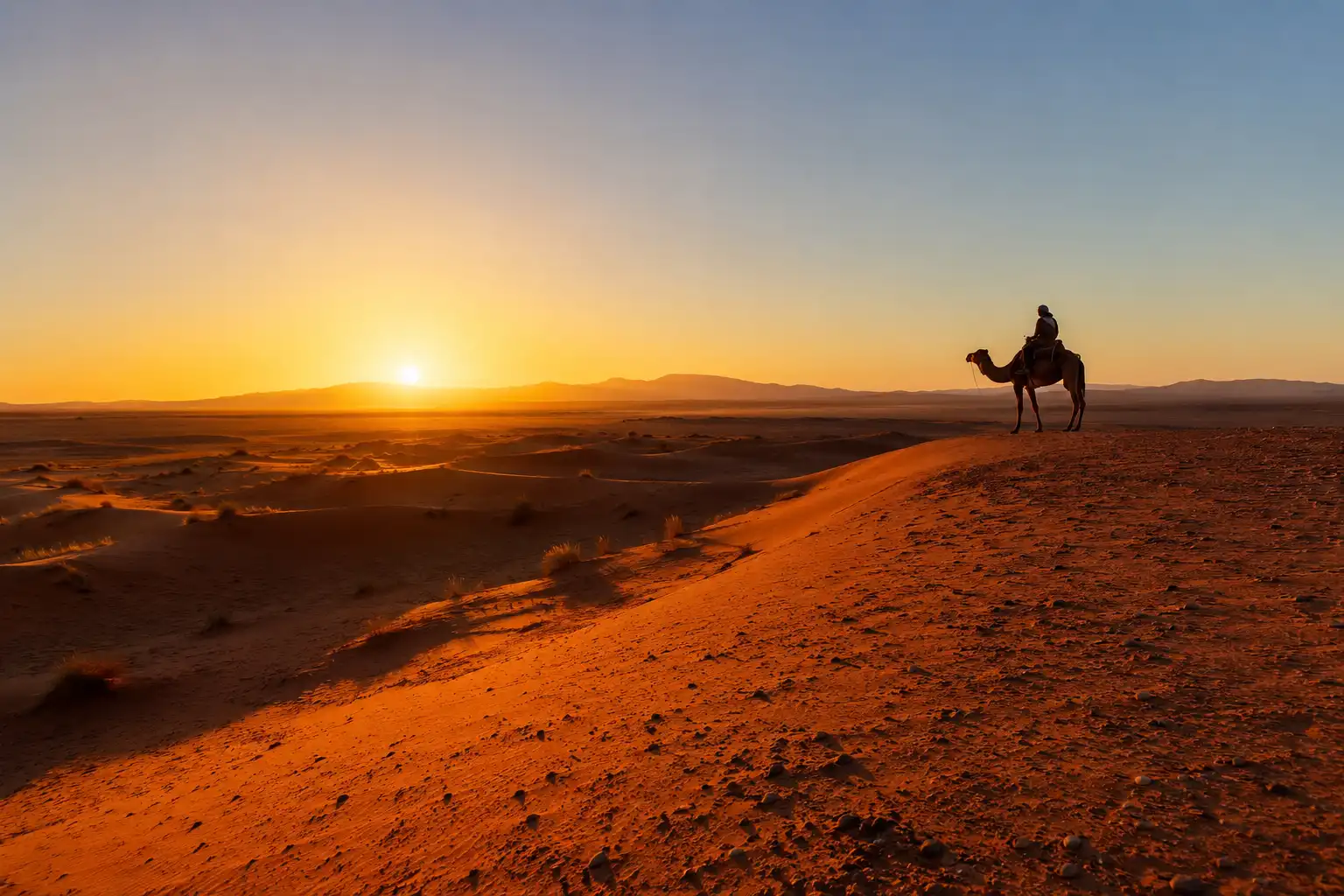
The dunes near Zagora are smaller than Merzouga’s Erg Chebbi, topping out at around 40 to 80 meters compared to Merzouga’s 300-meter giants. They’re more scattered too, with patches of rocky desert between the sand ridges. You won’t get the sweeping Instagram-worthy dune fields here. But what Zagora lacks in scale, it makes up for in quiet. There are fewer camps, fewer tourists, and at sunset, you might be the only person standing on top of your dune. The sand is a deep orange-red, especially in late afternoon light, and the silence is complete. No car engines, no other groups, just wind and the occasional bark of a desert fox.
Your camp dinner is served around 7pm or 8pm: usually a vegetable tagine, couscous, fresh bread baked in the sand, and mint tea. The food is simple but well-cooked, and the bread is worth the price of admission. Learn more about camp food menus in our article to have an idea about what to expect in terms of food. After dinner, the guides light a fire and play Berber drums. You’re not obligated to dance, but you’ll probably end up joining in. By 10pm, the camp lights go out and the stars take over. Winter months (November to February) offer the clearest skies for an exceptional stargazing experience because humidity is lowest. Bring a headlamp, because stumbling to the toilet tent in pitch darkness is no fun.
What Other Blogs Say Wrong About Desert Camps
Most travel blogs tell you the desert camp experience is “authentic” and “magical.” That’s marketing. Here’s what they don’t mention: budget group tours often put six people in a shared tent with thin mattresses and no private bathroom. The shared toilet is a squat-style pit latrine that smells worse as the night goes on. If you have any back issues or bathroom sensitivities, this will ruin your trip. Always ask your tour operator about tent arrangements before booking. Private tours guarantee private tents, and “VIP” camps (which cost about €30-50 more per person) include flush toilets, thicker mattresses, and sometimes even solar-powered showers. It’s worth the upgrade if you care about convenience or are traveling with kids. You can check our comparison guide between Sahara private tours and group tours to plan your trip accordingly.
Zagora vs Merzouga Distance: A Balanced Comparison
The drive from Marrakech to Merzouga is 560 kilometers, roughly 9 to 10 hours one way. That’s almost double the distance to Zagora. If you only have two days, a Merzouga tour means you’ll spend 18 to 20 hours on the road and maybe six hours at the dunes. You’ll arrive exhausted, watch the sunset, sleep, wake for sunrise, and leave. That’s not a desert experience, that’s a photo op. Zagora’s 350-kilometer distance lets you leave Marrakech at 8am, reach the camp by 4pm, and still have five or six hours to enjoy the desert before driving back the next afternoon.
Dune size is where Merzouga wins hands down. Erg Chebbi’s dunes stretch for 50 kilometers and rise up to 300 meters, creating the dramatic golden waves you see in National Geographic photos. The dunes near Zagora are scattered, lower, and redder in color. If you’re a photographer or you’ve dreamed of climbing massive dunes, Zagora will disappoint. But if you want a real desert night without the marathon drive, Zagora delivers the essentials: silence, stars, sand, and sunrise.
If you have only one night and can’t stomach 14 hours of driving, consider a third option: the Agafay stone desert, just 40 minutes from Marrakech. It has no real dunes, but it offers a desert-like dinner and camp experience without the long drive. For the real Sahara with golden sand, though, the choice remains Zagora or Merzouga.
Cost is another factor. Two-day group tours to Zagora from Marrakech range from €70 to €120 per person, depending on season and camp quality. Merzouga two-day tours start at €100 and can hit €180, but those prices don’t reflect the exhaustion factor. A three-day Merzouga tour (which is the minimum we recommend) costs €150 to €250. Zagora is cheaper because it’s shorter, not because it’s inferior. If you’re on a tight budget and tight schedule, Zagora makes more sense than cramming Merzouga into 48 hours.
- Best for Zagora: Two-day trips, families with young kids, budget travelers, first-time visitors who want a taste of the Sahara without committing to long drives.
- Best for Merzouga: Three-day trips, photographers, travelers who want the iconic tall dunes, people willing to endure 18+ hours of driving for the visual payoff.
- Our honest take: Zagora is a solid compromise. Merzouga is the bucket-list photo. Pick based on your time and comfort level, not hype.
2-Day Desert Tour Morocco: What to Pack and Expect
Daytime temperatures in the Zagora desert hit 30°C to 45°C from June through September. Nights drop to 5°C to 15°C year-round, and winter nights (December to February) can dip below freezing. You’ll need layers. Pack a long-sleeve cotton shirt, lightweight pants or a long skirt, a warm fleece or down jacket for the evening, and a scarf to cover your face during camel rides. Sand gets everywhere, so leave expensive gear at your Marrakech hotel. A hat with a brim is non-negotiable. Sunscreen (SPF 50) is mandatory. You’ll also want wet wipes (the unsung hero of desert camping), a headlamp, toiletries, and any medications you rely on. Check our recommended packing list for a trip to the Sahara Desert to be better prepared.
Shoes matter more than you think. Sneakers or closed-toe sandals work fine during the day, but flip-flops are useless in sand. If you’re doing a camel ride, wear shoes you can slip off easily because you’ll take them off before climbing onto the camel. Some travelers bring a small inflatable pillow for the camel ride itself (your lower back will thank you). Toilet paper and hand sanitizer are your responsibility; not all camps stock them. If you have a sensitive stomach, bring anti-diarrheal meds and electrolyte powder. Tap water at desert camps is not potable. Bring 3 liters of bottled water from Marrakech or buy it in Zagora before heading to camp.
Electricity and Wi-Fi are limited. Most camps have a few hours of solar power in the evening for charging phones, but don’t count on it. Charge everything fully in Marrakech. Cell signal fades once you leave Zagora town. Expect to be offline for 24 hours. If that stresses you out, this trip isn’t for you. You can learn more about camp facilities to know what to expect.
Is Zagora Desert Tour Worth It? Honest Verdict
Zagora is worth it if you have exactly two days, you’re traveling on a budget under €150 per person, you’re bringing young children who can’t handle 18 hours of driving, or you just want to say you slept in the Sahara. It’s a genuine desert experience: you’ll sleep under stars, eat tagine cooked over a fire, and wake to silence and sunrise. You won’t get towering dunes or luxury camps, but you will get the essence of the desert without sacrificing half your trip to a car seat.
Merzouga is the better choice if you can spare three days, you’re a landscape photographer who needs those big dunes, you want a wider range of camp options (from basic to five-star luxury), or you’re willing to trade comfort for scale. Merzouga’s dunes are undeniably more impressive. The photos you’ll take there are frame-worthy. But the drive is punishing, and rushing it into two days turns the trip into an endurance test, not a vacation.
Bottom line: Zagora is the practical choice for short trips. It won’t blow your mind, but it won’t waste your time either. If this is your only chance to see the Sahara and you only have 48 hours, book Zagora and don’t second-guess it. If you have three or four days and the budget to match, go to Merzouga and give yourself the full dune experience. There’s no wrong answer here, only the wrong fit for your schedule. One last tip: if you choose Zagora, make sure your tour includes stops at Ait Benhaddou, Ouarzazate, and Tamegroute. Some cheap tours skip cultural stops and just rush you to the dunes and back. Avoid those. The journey is half the experience.
Still Undecided? How to Choose Between Zagora and Merzouga
Zagora offers a genuine desert night with less driving, making it ideal for travelers with tight schedules or budgets. Merzouga delivers the iconic towering dunes but requires a larger time commitment. Both are valid choices, and neither is a mistake if you pick based on your priorities. Whichever you choose, a private tour ensures flexibility and a more authentic experience than group tours. Read our full Sahara Desert planning guide for practical tips and step‑by‑step advice.
Now that you know the trade-offs, the next step is deciding which tour style fits you best: group or private, budget or premium, two days or three. Most travelers underestimate how much the quality of your guide and camp affects the trip.
At Memento Morocco, we design private desert tours that adapt to your pace, not a preset schedule. Whether you need a classic 3‑day Marrakech to Sahara immersion, a 4‑day Marrakech‑to‑Fez journey through the dunes, or a complete 10‑day loop from Marrakech that also takes in Fez and Chefchaouen, every tour includes handpicked camps, expert local guides, and total freedom to stop where you want. Explore our handcrafted desert tours and let us plan your perfect Sahara adventure.
Contact us: contact@mementomorocco.com | +49 1522 3075977 | WhatsApp