Snakes and Scorpions in the Sahara Desert: Should You Really Worry?
Most travelers worry about snakes and scorpions in the Sahara before booking a desert tour. It’s one of the top concerns people search for.
Here’s the reality: these animals exist, but your chance of encountering one inside a proper desert camp is extremely low. Camps are set up in open sand where they don’t live, tents are sealed, and staff check the area daily. In fact, reported incidents involving tourists are rare to the point of being almost negligible.
The real risk in the Sahara isn’t wildlife. It’s things like sun exposure, dehydration, or choosing the wrong camp setup. But those don’t sound as dramatic, so they get ignored.
In this guide, you’ll learn exactly which animals actually live in Morocco’s desert, how often they are seen, what camps do to prevent encounters, and what simple steps eliminate nearly all risk.
Quick Facts
- Dangerous species: Deathstalker scorpion and horned viper are the only two to know. Both are nocturnal and actively avoid humans.
- Tourist risk: No deaths from scorpion stings among tourists in Morocco in recent years. Fewer than 20 sting cases reported annually across all visitors.
- Camp placement: Desert camps are deliberately set up in flat, open sand where scorpions and snakes don’t live. No rocky crevices, no rodent burrows.
- UV flashlight trick: Scorpions glow under UV light. Ask your camp host to shine one around your tent at night for instant peace of mind.
- Camel trek safety: You’re seated high off the ground. Caravan vibrations scare off small creatures long before you arrive.
- Sandboarding dunes: Tall, shifting dunes are biologically dead for dangerous wildlife. No food, no shelter, no scorpions.
- Risk comparison: You’re statistically more likely to get food poisoning or severe sunburn than a scorpion sting in the Sahara.
- Simple prevention: Shake out shoes in the morning, keep tent zippers closed, and use a headlamp to check under the bed before sleeping.
Data sourced from the Moroccan Poison Control Center and firsthand experience with Sahara desert camps.
What Dangerous Animals Actually Live in the Sahara?
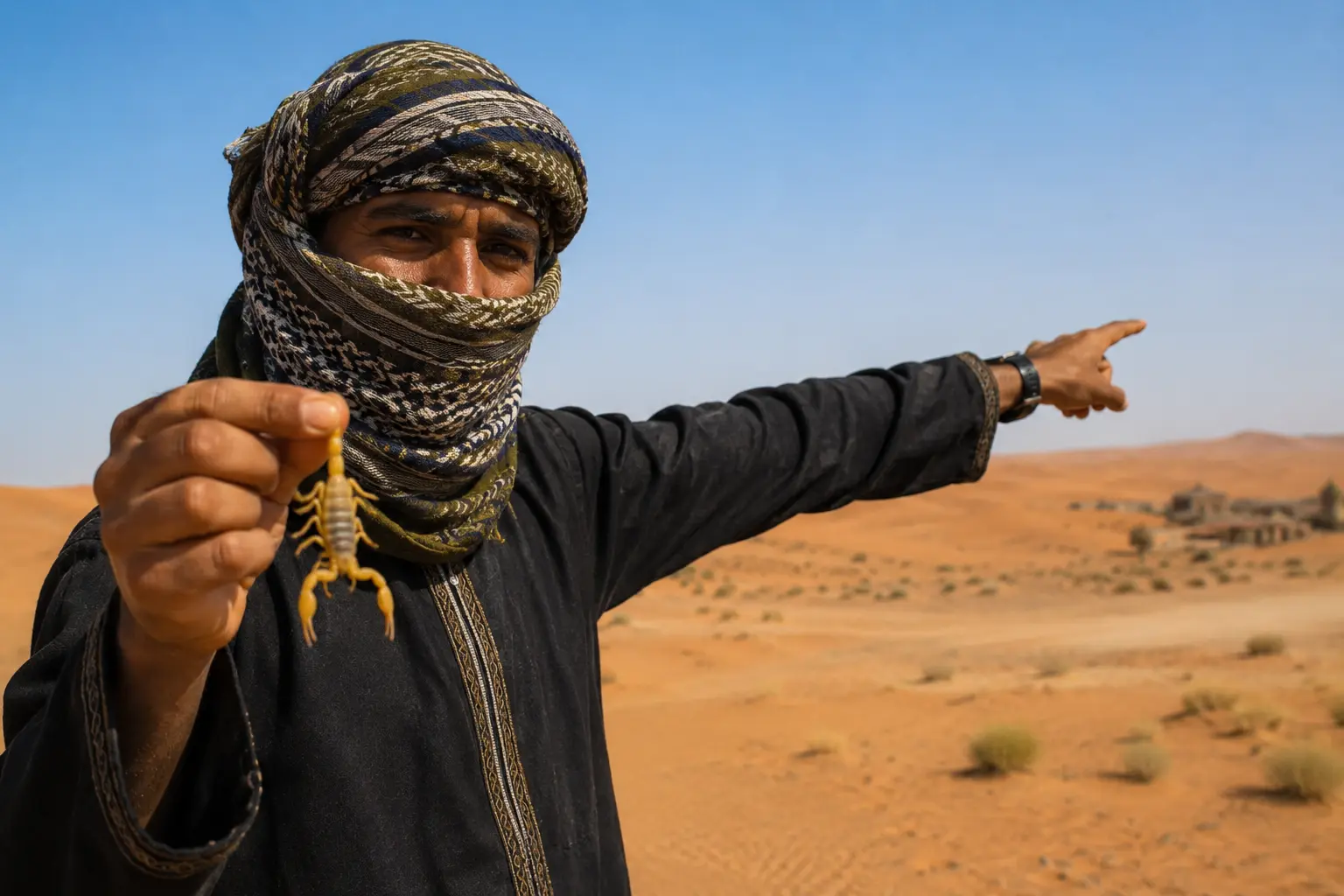
Let’s be specific. The two creatures that matter are the deathstalker scorpion (Leiurus quinquestriatus), the most venomous in the region, and the horned viper (Cerastes cerastes), the only dangerous snake. Both live in Erg Chebbi and Erg Chigaga, but both are nocturnal, reclusive, and actively avoid human activity. Deaths from deathstalker stings are extremely rare. Bites from horned vipers are almost never reported in tourist camps.
The rest of the wildlife you might encounter is harmless: fennec foxes, jerboas, geckos, and the occasional desert beetle. These animals pose no threat. What most travelers don’t realize is that camps are located in flat, open areas with minimal natural cover where scorpions and snakes prefer to hide. Tents have mesh windows and zippered doors, and most camps sweep the area before setup. If you’ve read warnings about camel spiders or tarantulas, ignore them. Those are myths or internet exaggerations.
On a camel trek, your vantage point is completely different. You’re seated high off the ground, and your feet never touch the sand. Even if a scorpion or viper were nearby, you’d spot it long before it becomes a problem. The movement of the caravan and the vibrations of the camels’ footsteps also scare off any small creatures long before you arrive. The animals you might notice during a trek are camels, fennec foxes, and migrating birds; not venomous predators. So if camel trekking is on your itinerary, you can cross “stepping on a scorpion” off your worry list for good.
Ask your camp host to shine a UV flashlight around your tent at night. Scorpions glow under UV light, and any hiding nearby will be instantly visible. This trick reassures anxious sleepers more than any verbal promise. For more context on what to expect during your trip, read our complete guide to Sahara desert tours.
Are Bugs a Problem in Desert Camp Tents?
Short answer: no. Tent floors are thick canvas or raised wooden platforms, and beds are made with fresh sheets stored in sealed plastic between guests. Mosquitoes are almost non-existent in the Sahara because the air is too dry. The occasional small spider or beetle may wander in, but they are harmless and rarely noticed.
Many travelers pack mosquito nets out of habit from other destinations. Save that space. The tents are already enclosed with mesh windows, and the desert climate keeps flying insects away. Camps provide bug spray if you request it, but most guests never use it. Glamping camps often have air conditioning or sealed canvas walls that make it physically impossible for insects to enter.
Pack a headlamp with a red light mode. Red light is less attractive to insects and won’t disturb your tent-mates. If you want to see what luxury desert accommodation actually looks like, check out what to expect at a luxury desert camp. The standards are higher than most travelers assume.
How Do Desert Camps Protect You From Wildlife?
Professional camps choose their sites carefully. They avoid areas with vegetation, rodent burrows, or rocky outcrops where scorpions hide. Staff sweep the tent area before setting up, and tent zippers are checked nightly. Some camps provide small battery-powered bug zappers, though they’re rarely needed. Guides carry first-aid kits with antivenom for vipers, though no one I know has ever used one.
Here’s the data that matters: no deaths from scorpion stings have been recorded among tourists in Morocco in recent years. According to the Moroccan Poison Control Center, fewer than 20 scorpion sting cases per year are reported among all visitors, with none requiring intensive care. The risk is statistically lower than getting food poisoning or severe sunburn. Yet travelers obsess over scorpions and ignore the sunscreen and other necessary safety measurements. For a broader look at safety concerns, read is it safe to go to the desert in Morocco. The answer is yes, but not for the reasons you think.
5 Practical Tips to Sleep Worry-Free in the Sahara
First, shake out your shoes and boots before putting them on in the morning. Scorpions sometimes hide in dark, enclosed spaces. Second, keep your tent zipper fully closed even when you’re inside. Third, use a headlamp to check under the bed before sleeping. These three steps eliminate 99% of potential problems.
Fourth, avoid eating inside the tent. Crumbs attract ants and beetles, which in turn might attract larger creatures. Keep snacks sealed in your bag. Fifth, place your bag on a luggage rack or elevated surface instead of the floor. This keeps it clean and reduces the chance of anything crawling inside.
Here’s one more trick: stuff a small cloth under the tent door gap, even if the zipper seems tight. This blocks any tiny creatures from slipping through. Most camps already seal gaps, but this gives anxious sleepers extra peace of mind. For a full list of what to bring, including the right footwear and lighting, check out our desert packing list with light and shoe tips.
What Most Guides Get Wrong About Desert Wildlife
Most travel articles say “snakes and scorpions avoid humans, so don’t worry.” That’s true but incomplete. The real reason you won’t see them is that modern camps are set up in areas these animals don’t inhabit. Scorpions prefer rocky crevices and vegetation. Snakes hunt near rodent burrows. Desert camps are deliberately placed in flat, open sand where neither of these exist.
Guides also fail to mention that the biggest threat from a scorpion sting isn’t death, it’s panic. The deathstalker’s venom causes severe pain, sweating, and rapid heartbeat. Medical help should be sought immediately. But the actual fatality rate among healthy adults is nearly zero. The danger is overstated because scorpions have a scary reputation, not because they pose a high statistical risk.
Another myth: “shake everything out obsessively.” Yes, check your shoes. But you don’t need to shake out your towel, your pillowcase, or your socks every single time. That’s exhausting and unnecessary. Focus your energy on the two actions that matter: zipping your tent and checking your footwear. Everything else is theater.
Sandboarding takes place on the tallest, steepest dunes: the kind that shift constantly with the wind. These are the most hostile environments imaginable for a scorpion or snake. There’s no food, no burrows, and no vegetation. The creatures that live in the Sahara actively avoid these areas because the loose, wind-scoured sand offers zero shelter and buries any attempt at hiding. So anyone worried about stepping on a scorpion while sandboarding can relax: the very landscape that makes boarding thrilling makes it biologically dead for dangerous wildlife. It’s the one spot in the desert where fear of creepy crawlies is logically impossible.
Ready to Experience the Sahara Without Fear?
The Moroccan desert is far from a creepy-crawly nightmare. With modern camps, experienced guides, and a few simple precautions, your night under the stars will be peaceful, not scary. Most travelers leave wondering why they were ever worried. The silence, the stars, and the gentle breeze far outweigh any imaginary threats.
Now that you know the truth about desert wildlife, it’s time to plan the Sahara adventure that fits your comfort level.
Imagine lying on your back outside your tent, counting shooting stars, with zero fear of what’s under your bed. That’s the Sahara experience we design for every guest. We handpick camps in Merzouga, Erg Chebbi, and Erg Chigaga with the highest safety standards and the most comfortable tents. Our private 3-day Sahara desert tours from Marrakech, 5-day Fes to Marrakech through the Sahara Desert, or 10-day full experience of the Sahara Desert and imperial cities include experienced guides who know every species in the desert and every question you’re too embarrassed to ask. Want a private, worry-free Sahara experience? Our team handpicks camps with the highest safety standards and the most comfortable tents. Contact us to design your perfect night in the dunes.
Contact us: contact@mementomorocco.com | +49 1522 3075977 | Whatsapp