Tizi n’Tichka Pass: The Drive Most Travelers Underestimate (Safety, Stops & Real Conditions)
Most drivers underestimate the Tizi n’Tichka pass by at least an hour. They assume it’s a straightforward highway when in reality it contains 27 documented switchbacks climbing to 2,260 meters above sea level. The pass is the highest paved crossing in North Africa, and treating it like a casual scenic drive leads to rushed photos, missed fuel stops, and occasional altitude sickness. By the end of this guide, you’ll know exactly what to expect on the Tizi n’Tichka pass: driving conditions, hidden stops, seasonal hazards, and insider safety tips that no generic blog post covers. You’ll be prepared for the switchbacks, the sudden temperature drops, and the roadside hazards that catch unprepared travelers off guard.
Quick Facts
- Distance: 100 km (62 miles) from Marrakech to Ouarzazate via N9
- Summit elevation: 2,260 meters (7,415 feet), highest paved pass in North Africa
- Number of switchbacks: 27+ documented hairpin turns
- Driving time without stops: 2.5 to 3 hours
- Driving time with stops: 4 to 5 hours
- Best time to cross: Before 10:00 AM to avoid fog and tour bus traffic
- Best season: October to November (mild weather, clear visibility, fewer crowds)
- Fuel station location: Taddert (30 km from Marrakech); fill up before the climb
- Snow closure risk: 1 to 3 days per year (December to February)
- Summit café toilet cost: 2 MAD per person
- Cell phone signal: Patchy from Taddert to Ouarzazate (download offline maps)
- Most common accident: Side mirror collisions on narrow switchbacks (use horn on blind corners)
Tizi n Tichka Drive Guide: What to Expect
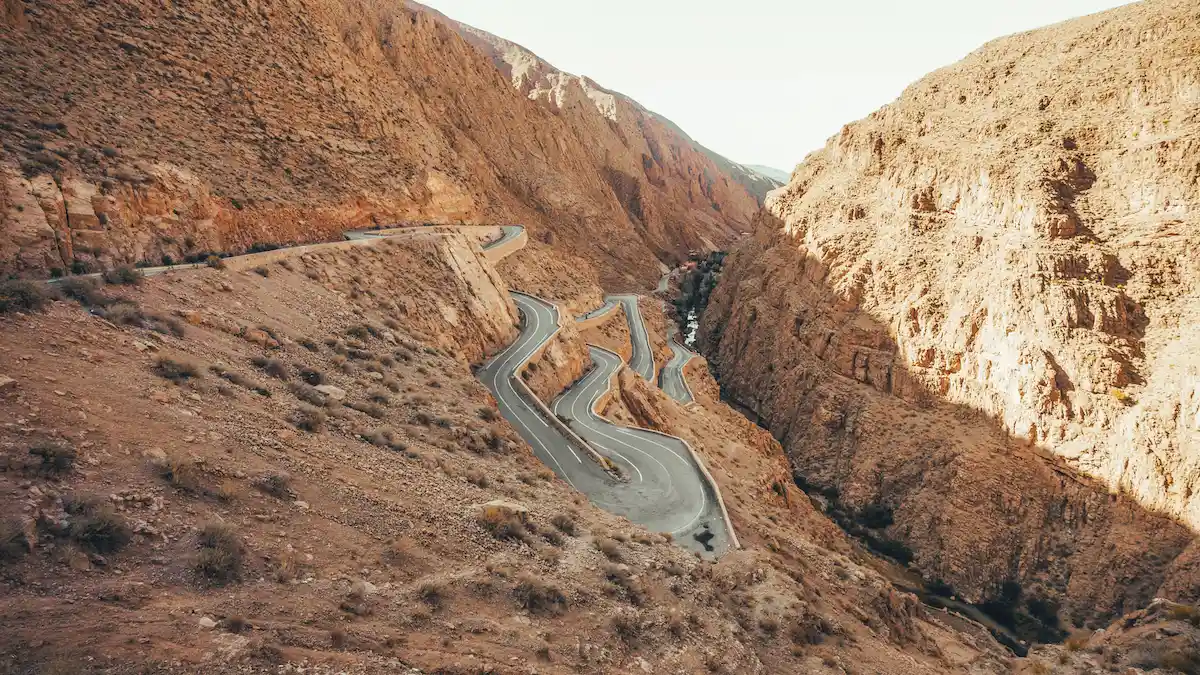
The Tizi n’Tichka pass stretches roughly 100 kilometers (62 miles) from Marrakech to Ouarzazate along the N9 highway. The first 30 kilometers climb gradually through red earth villages and olive groves until you reach Taddert, where the road begins its serious ascent. From Taddert onward, the switchbacks start in earnest, with over 27 hairpin turns carved into the mountainside as you climb toward the summit at 2,260 meters (7,415 feet).
Without stops, the drive takes 2.5 to 3 hours, but most travelers need 4 to 5 hours when accounting for photo stops, bathroom breaks, and a meal. The road is paved and generally in good condition, but many sections are narrow with no guardrails, and the drop-offs are steep. Overtaking is possible on certain stretches, but blind corners make it risky. The descent toward Ouarzazate is just as winding as the climb, and many drivers underestimate how much their brakes will be tested on the way down.
Arrive at the pass before 10:00 AM to avoid both traffic from tour buses and the afternoon clouds that often obscure views. The morning light also provides the best visibility for navigating the tightest turns. If you’re traveling in peak season (July and August), expect convoys of tourist vans that slow the pace considerably.
Tizi n Tichka Safety Tips: What Every Driver Should Know
Driving the Tizi n’Tichka pass requires more than cautious speed. Use lower gears on the descent to avoid brake failure, a common issue when drivers ride their brakes continuously down the mountain. Most rental cars have manual transmissions; shift into second or third gear and let engine braking do the work. Automatic transmissions should be placed in a lower drive mode (D2 or L) to prevent overheating the brake pads.
Altitude can cause lightheadedness, nausea, or headaches, especially if you ate a heavy meal before starting the climb. The air thins noticeably at the summit, and dehydration makes symptoms worse. Fog often rolls in at the pass after 2 PM, reducing visibility to 20 meters or less. If you encounter fog, use your hazard lights, slow to 30 km/h, and follow the white road markings. Sheep and goats cross the road without warning; honk before blind corners and be ready to brake.
Police checkpoints appear near the summit and occasionally at the base of the pass. Have your driver’s license, vehicle registration, and insurance papers ready. Officers check documents and vehicle condition (especially tires and brakes). If you feel dizzy or nauseous from altitude, stop at the summit café (Auberge Tizi N’Tichka) for mint tea; the sugar and hydration help reset your system.
Best Stops Along the Marrakech to Ouarzazate Road
The unofficial viewpoint at the highest point of the pass offers the best photo opportunity of the switchbacks stretching below. There’s no official pull-off, but most drivers park on the shoulder near kilometer marker 70. From here, you can see the serpentine road cutting through barren rock and scree slopes. Arrive early in the morning (around 9:00 AM) when the low sun illuminates the switchbacks from the south, avoiding harsh shadows that flatten the landscape in photos.
The café at the summit (Auberge Tizi N’Tichka) serves basic mint tea, coffee, and snacks. The toilets are paid (2 MAD per person) and relatively clean compared to other roadside options. Bring your own tissue paper. The café’s terrace provides a sheltered spot to rest if the wind picks up, which it often does at altitude. From the summit, a 12-kilometer detour leads to Telouet Kasbah, a lesser-known fortress with stunning zellige mosaics. The access road requires a capable car (or 4×4 in wet conditions), but the site sees far fewer tourists than Aït Benhaddou.
Just before reaching Ouarzazate, stop at Aït Benhaddou, a UNESCO World Heritage ksar that appears in films like Gladiator and Game of Thrones. Budget at least one hour to walk through the mudbrick alleys and climb to the granary at the top for panoramic views. Parking costs 10 MAD, and unofficial guides will offer tours for 50 to 100 MAD (negotiable). If you’re traveling in spring (April to May), consider a short detour east into the Valley of the Roses (Dades Valley) where thousands of Damask roses bloom along the riverbanks.
Seasonal Considerations for the High Atlas Pass Morocco
Winter (December to February) brings the highest risk of snow closures at the Tizi n’Tichka pass. Snow chains are recommended, and the road may close for 1 to 3 days per year when heavy snowfall makes conditions impassable. Check road status before departing by calling local information services or visiting the Moroccan road agency (CNM) website. Temperatures at the summit can drop to minus 5°C, even when Marrakech sits at 15°C, so pack warm layers and keep them accessible in the car.
Spring (March to May) brings occasional rain and fog, but the landscape turns green with wildflowers and new grass covering the slopes. Road crews repair winter damage during this season, so expect brief delays for resurfacing work near Taddert. Summer (June to September) offers clear skies and the most predictable driving conditions, but temperatures in Ouarzazate regularly exceed 40°C. The pass itself stays pleasant at altitude (20 to 25°C), but hydration becomes critical once you descend into the desert basin.
Autumn (October to November) is the ideal season for crossing the pass. Temperatures are mild (15 to 25°C), visibility is excellent, and tourist traffic drops after the summer rush. The light is golden for photography from 4 PM to sunset, but daylight becomes shorter (sunset around 6:30 PM by November), so plan your crossing earlier in the day if you want to reach Ouarzazate before dark. Always carry a blanket in the car; the sudden temperature drop at the summit catches many travelers unprepared.
What Most Guides Don’t Tell You About the Tizi n’Tichka Pass
Fuel stations are scarce once you leave Marrakech. Fill your tank at the station in Taddert (30 kilometers from Marrakech), as the station at the summit is often closed or charges inflated prices (up to 15 MAD per liter compared to 12 MAD in Marrakech). The next reliable fuel station appears in Ouarzazate. Running low on fuel halfway up the pass forces you to backtrack or rely on roadside vendors selling jerry cans at double the normal rate.
Cell phone signal becomes patchy from Taddert to Ouarzazate. Maroc Telecom and Inwi provide the most consistent coverage, but expect dead zones for 20 to 30 kilometers at a stretch. Download offline maps (Google Maps or Maps.me) before leaving Marrakech. The most common accident on the pass isn’t a rollover or brake failure; it’s side mirror collisions at narrow switchbacks where drivers on opposite sides misjudge the width of their vehicles. Use your horn on blind corners to alert oncoming traffic, and fold in your side mirrors manually if a large truck approaches.
Restaurant options are limited and often disappointing. The roadside stalls selling tagine and brochettes are best avoided unless you have a strong stomach. The cleanest and most reliable meal option is Le Grand Atlas in Ouarzazate, which serves grilled meats, couscous, and salads in a modern setting (expect to pay 80 to 120 MAD per person). The cleanest toilets along the route are at the summit café (paid, 2 MAD) or at the Aït Benhaddou car park. Carry a small bag of trash in your car; there are almost no public trash bins along the pass, and littering is frowned upon by locals who maintain the road.
Ready to Conquer the Tizi n’Tichka Pass? Your Next Step.
Driving the Tizi n’Tichka pass is an unforgettable experience when you’re prepared. You now know the altitude, the switchbacks, the seasonal conditions, and the practical hazards that most guides skip. With the details in this guide, you can plan your crossing with confidence, avoiding the common mistakes that turn a scenic drive into a headache.
From the pass, your journey continues to Ouarzazate, Aït Benhaddou, and the Sahara desert. To make the entire Marrakech-to-desert trip seamless and stress-free, many travelers choose a private tour with a local driver who knows every curve of this road.
Discover the High Atlas with confidence. Book a 3-day private tour from Marrakech to the Sahara or a 10-day Sahara Desert, and Imperial cities from Marrakech if you are willing to experience more of Morocco in one trip and let our expert drivers handle the pass while you soak in the views. We’ve crossed the Tizi n’Tichka pass hundreds of times at every season, and we know where to stop, where to eat, and how to avoid the crowds. Whether you’re heading to Ouarzazate, Aït Benhaddou, or the dunes of Erg Chebbi, we’ll make sure you experience Morocco’s most scenic road without the stress of navigating it yourself.
Contact us: contact@mementomorocco.com | +49 1522 3075977 | Whatsapp