Is the Sahara Desert Safe? A Practical Safety Guide for Morocco Travelers
You stand at the edge of Erg Chebbi at dawn, watching the wind carve patterns into apricot dunes that stretch to the horizon. Your camel waits behind you, blinking slowly. The guide adjusts his shesh and gestures toward the open sand. You feel a flicker of nerves: what if something goes wrong out there? So here’s the question every first-time desert traveler asks: is the Sahara Desert safe? The short answer is yes, with the right preparation. The real risks (heat, activities, remoteness) are manageable when you understand them. This guide breaks down the specific dangers you need to know and exactly how to mitigate them, so you can book your desert experience with confidence instead of worry.
The Sahara Desert in Morocco is safe for responsible travelers who prepare properly and stick with reputable guides. The real risks (heat, activities, remoteness) are manageable with the tips in this guide. Most accidents happen when travelers ignore advice, skip hydration, or book with unlicensed operators to save money. If you understand the environment and take basic precautions, the Sahara is one of the safest adventure destinations in North Africa.
Sahara Desert Safety Tips Morocco: What You Really Need to Know
Let’s address the most common fears directly: extreme heat, dehydration, getting lost, and wildlife. Most travelers overestimate the danger of scorpions and underestimate the danger of afternoon heat. The Sahara Desert safety tips locals follow are simple but specific. Between March and October, daytime temperatures in Erg Chebbi can hit 40°C to 50°C (104°F to 122°F). Winter nights drop to near freezing (around 0°C or 32°F). You’re dealing with temperature swings of 30°C within 12 hours. The Sahara receives less than 25 millimeters of rain annually in most areas, which means zero natural shade and relentless sun exposure. For a clear picture of what to expect from the weather, check out our guides to the Sahara Desert in summer and the Sahara in winter.
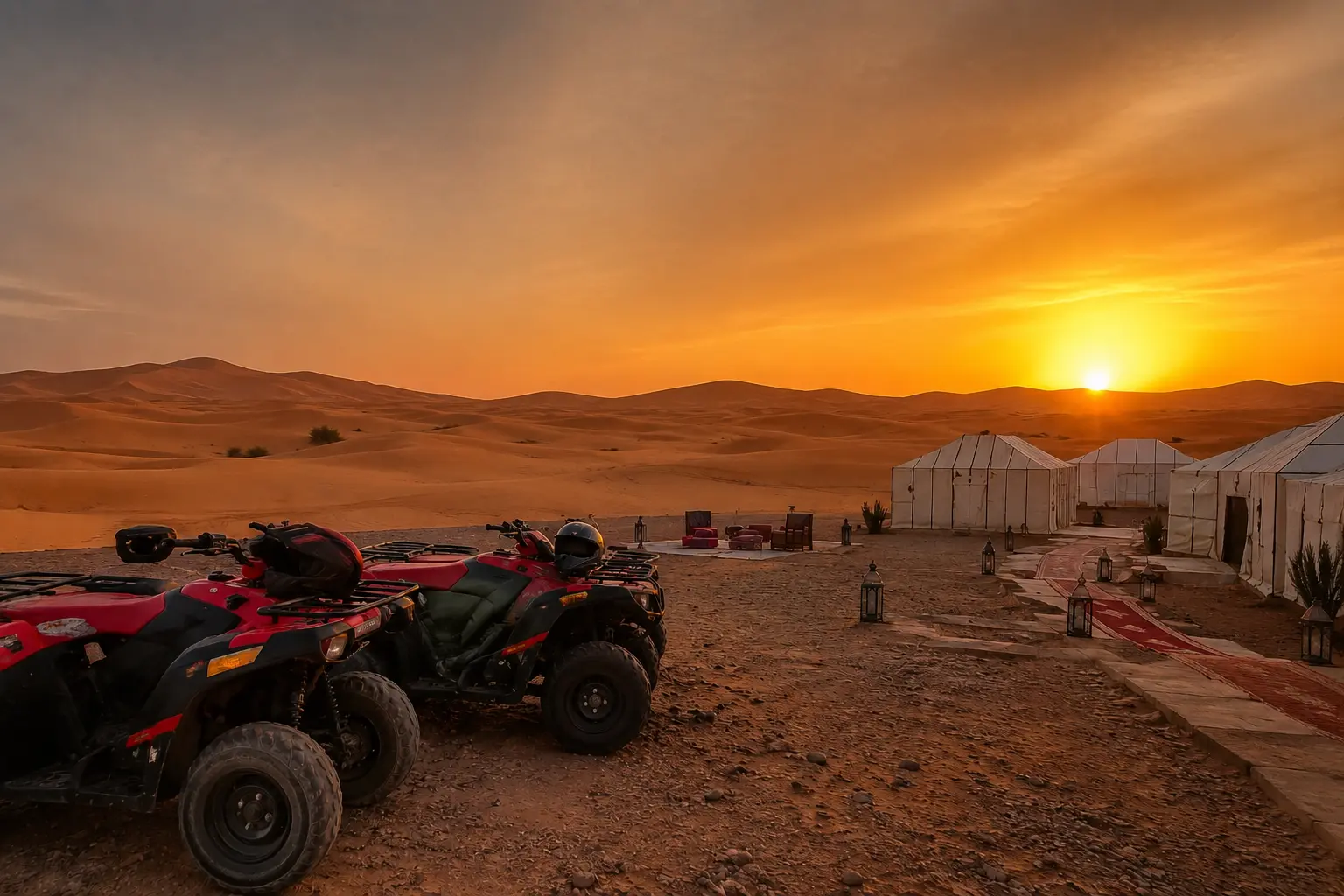
Camel treks move at 3 to 4 kilometers per hour. A full-day trek covers about 15 to 20 kilometers with breaks. You’re not racing across the sand; you’re navigating slowly through dunes that look identical after an hour. Quad bike rentals in Merzouga typically require a deposit (50 to 100 MAD, or about $5 to $10 USD) and a mandatory helmet. Most desert camps have shared bathrooms with flush toilets; some have bucket showers heated by the sun. Morocco’s emergency number is 19 for police and 150 for ambulance, but response times in remote desert areas can exceed two hours.
Most heat exhaustion cases happen between 2 PM and 4 PM, when the sun is highest and shade is nonexistent. Plan your afternoon camel trek or quad ride for 4 PM onward, when the sun is lower and the sand begins to cool. Your guide will likely suggest this anyway if they’re experienced. Being safe in the Sahara Desert involves timing your activities around the sun’s position, not your schedule. If you’re booking a private tour, request a midday rest at camp instead of pushing through peak heat. This simple adjustment eliminates the single biggest physical risk.
Heat Risks and Hydration: How to Stay Safe in the Moroccan Desert
Heat stroke is not the same as heat exhaustion, and knowing the difference can save your life. Heat exhaustion symptoms include heavy sweating, weakness, dizziness, and nausea. You can still sweat; your body is trying to cool itself. Heat stroke symptoms include confusion, hot dry skin, rapid pulse, and loss of consciousness. Your body has stopped sweating because it’s failing. Heat stroke requires immediate cooling (wet cloths, shade, air circulation) and emergency medical help. In the Sahara, the nearest hospital is often in Erfoud or Rissani, 50 kilometers from Erg Chebbi.
You need to drink 3 to 4 liters of water per person per day in summer, and 2 liters in winter. That’s not a suggestion; it’s a survival baseline. Plain water alone isn’t enough if you’re sweating heavily. Electrolyte tablets (brands like Nuun or Hydralyte) are available in major Moroccan supermarkets like Label’Vie and Carrefour in Marrakech or Fes. Buy them before you reach Merzouga. The sun is strongest between 11 AM and 3 PM; the UV index in summer can reach 11 or higher, which is classified as extreme. SPF 50+ sunscreen, a wide-brimmed hat, and light long sleeves are not optional. Local guides carry extra water and basic first aid kits; ask your tour operator about this before you book.
If you feel lightheaded or stop sweating during a trek, tell your guide immediately. Sit in the shade (even the shadow of a camel works), sip water slowly, and wet your neck and wrists with a damp cloth. Do not chug water; it can cause cramping. Do not continue trekking until you feel normal again. Guides who push you to “tough it out” are inexperienced or reckless. A reputable guide will always prioritize your safety over the itinerary. Freeze a 500-milliliter water bottle the night before your camel trek. It will thaw slowly and give you cold water through the morning. This is a common trick among desert guides who’ve been doing this for decades.
Activity Safety: Camel Trekking, Quad Biking, and Sandboarding
Each activity in the Sahara has unique risks that most travel blogs gloss over. Camel-related injuries are rare but include falls if the camel stands up suddenly or trips on loose sand. Always hold the saddle horn (called a “pommeau”) with both hands when the camel rises or kneels. The camel stands back legs first, then front legs, which pitches you forward. If you’re not braced, you can slide off. Reputable guides will walk you through this before you mount. Camels are docile but skittish around sudden noises or movements. Do not shout, wave your arms, or make sudden gestures near the camel’s head.
Quad bike accidents in Morocco mostly happen when riders speed on dunes without experience. Rental companies often require a brief training ride (10 to 15 minutes) before letting you go solo. The training covers turning on loose sand, braking on slopes, and what to do if the quad tips. Most injuries are ankle sprains from riders trying to catch themselves during a tip. Always wear closed-toe shoes; sandals or flip-flops are dangerous. Before quad biking, check the tire pressure. Deflated tires (around 10 PSI) provide better grip on sand and reduce the risk of tipping. Reputable rental shops do this automatically; ask if you’re not sure.
Sandboarding injuries are usually ankle sprains from catching the edge of the board or landing awkwardly. Wet sand (after rare rain) is safer than dry sand for learning because it’s more forgiving. Start on small dunes; the 150-meter dunes at Erg Chebbi are not beginner territory. Reputable desert camps provide safety briefings and proper equipment (helmets, gloves, boards in good condition). Always ask about insurance coverage before booking any activity. Tipping the guide is customary: 50 to 100 MAD per group for a half-day trek is standard.
Remote Travel Concerns: Getting Lost and Communication in the Sahara
The biggest anxiety most travelers have about the Sahara is this: what if something goes wrong and I’m far from help? Mobile reception exists, but it’s patchy. Maroc Telecom works in most desert areas near camps; 4G is often available near Merzouga and Zagora. Orange and INWI have weaker coverage. If you’re trekking deeper into Erg Chebbi or toward the Algerian border, expect no signal at all. Download offline maps before you leave (Google Maps or Maps.me both work). GPS functions without mobile signal as long as the maps are pre-downloaded.
Most desert camps have satellite phones or two-way radios for emergencies. Ask your guide about their backup communication plan before you start the trek. If you’re separated from your camel group (for example, if your camel bolts or you wander off to take photos), stay where you are. Do not try to find your way back by following footprints; sand shifts constantly and you’ll get more lost. Signal with a whistle (carry one; many guides provide them) or a mirror reflecting sunlight. Guides will retrace their route within 15 to 30 minutes if someone is missing. Search and rescue in the Moroccan Sahara is coordinated by local gendarmerie and is not a rapid service. Self-reliance and prevention are key.
Drop a GPS pin at your camp or vehicle before starting any activity. If you get disoriented, you can share that pin with your guide or emergency contact. Most smartphones can do this without mobile signal if you have pre-downloaded maps. Open Google Maps, long-press your starting location, and save it as a starred place. This works offline. If you’re on a multi-day trek, ask your guide to share the camp’s coordinates with you each morning. This simple habit eliminates the risk of wandering off and not knowing where to return.
Common Myths vs. Reality: Scorpions, Sandstorms, and Night Safety
Let’s debunk the exaggerated fears. Scorpions in the Moroccan Sahara are mostly the fat-tailed scorpion (Androctonus species), but bites are rare and the venom is not fatal to healthy adults. There have been no reported tourist deaths from scorpion stings in Moroccan desert areas in the last decade. Scorpions are nocturnal and avoid humans. They hide in dark, cool places during the day (under rocks, in cracks). If you’re camping, shake out your shoes and clothes before putting them on in the morning. If you’re worried, ask your camp to “scorpion-proof” your tent: they can place a bucket of water and a flashlight at the entrance. Scorpions are repelled by light and moisture. This is a real local trick. For a realistic look at what’s actually dangerous (and what’s just myth), read our guide to snakes and scorpions in the Sahara.
Sandstorms (called haboobs) occur mainly in spring (March to April) and can reduce visibility to 50 meters or less. Guides will stop immediately, cover your face with a shesh (traditional scarf), and wait it out. Sandstorms rarely last more than 30 minutes. The bigger discomfort is the fine sand that gets into your eyes, nose, and camera equipment. Bring a microfiber cloth to clean your lenses and a bandana to cover your mouth. Night safety in desert camps is not a concern. Camps are guarded by staff; theft is extremely rare. Lock your belongings in the tent’s zippered pocket or bring a small padlock for your backpack.
Morocco’s desert is generally very safe for solo female travelers on organized tours. Harassment is less common than in medinas like Marrakech or Fes, partly because desert guides have reputations to protect and partly because you’re in small, guided groups. If you’re traveling alone, booking a private tour (rather than a budget group tour) gives you more control over your itinerary and reduces the chance of uncomfortable interactions. For a detailed breakdown of what each option offers, read our comparison guide between private and group Sahara tours. Is the Sahara Desert safe at night? Yes, as long as you stay near camp. Do not wander off into the dunes after dark without a guide; it’s easy to lose your bearings and the temperature drops fast.
What Travel Blogs Won’t Tell You About Desert Safety
Most travel articles say “stay hydrated” and leave it at that. Here’s what they don’t tell you: hydration is not just about water volume. If you drink 4 liters of plain water and sweat heavily, you can develop hyponatremia (low sodium), which causes nausea, confusion, and muscle cramps. You need salt. Carry electrolyte tablets or eat salty snacks (nuts, crackers) throughout the day. Moroccan guides often carry dates and salted almonds for exactly this reason. Another thing most guides gloss over: the real danger of quad biking is not speed but terrain. Riding downhill on a steep dune is more dangerous than riding fast on flat sand. Always descend slowly, with your weight shifted back.
Here’s a contrarian point: some of the safest desert experiences are the least “adventurous” sounding. A two-hour sunset camel trek from a luxury camp like Merzouga Luxury Desert Camp is statistically safer than a three-day budget trek with an unlicensed guide. The quality of your guide and equipment matters far more than the length or “authenticity” of the experience. If a tour operator offers a price that seems too good to be true (for example, a two-day Sahara trek for under $50 USD per person), it probably is. They’re cutting corners somewhere, and it’s usually safety.
So, Is the Sahara Desert Safe? And What’s Your Next Step to an Unforgettable Trip?
If you prepare properly, the Sahara is not dangerous. It’s predictable. And that’s exactly what makes it safe.
Now that you have the facts, the next step is choosing the right desert experience for your travel style. Do you want a camel trek under the stars in Erg Chebbi? A quad-biking adventure at sunrise? A multi-day journey through the Draa Valley to M’hamid? From safety to experience, the best trips balance preparation with spontaneity. Let your confidence guide you to the perfect desert route. For the complete picture, our Sahara Desert planning guide walks you through routes, seasons, and camp options.
Ready to experience the Sahara safely? We run private desert tours from Marrakech to the Sahara, from Fes through the dunes, and a full 10-day loop that covers Marrakech, Fes, and Chefchaouen. Every trip comes with handpicked camps, satellite phones, extra water, and guides who carry wilderness first aid certification. You focus on the sunrise; we handle the logistics. Browse our handcrafted Sahara tours and start planning your desert adventure.
Contact us: contact@mementomorocco.com | +49 1522 3075977 | Whatsapp