Is the Sahara Desert in Morocco Safe for Tourists? The Honest Guide
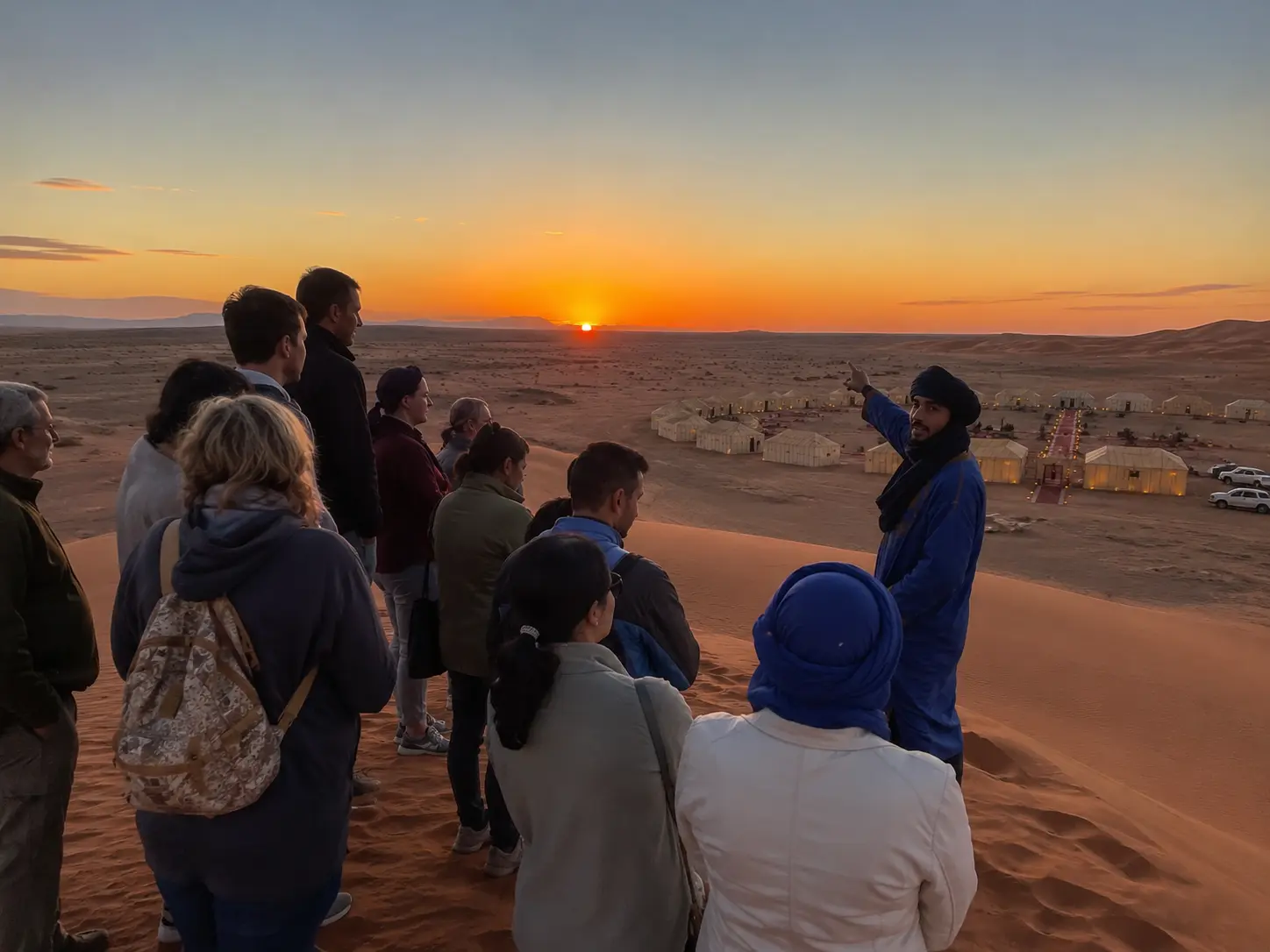
You stand at the edge of Erg Chebbi, watching the dunes glow copper in the afternoon light. The silence is absolute. Then the question hits: is this actually safe? If you’re asking about Sahara Desert Morocco safety, you’re not alone. Thousands of travelers wrestle with the same worry before booking their first desert tour. The good news: the Sahara is one of Morocco’s safest destinations when you know what to prepare for. This guide gives you the real risks, not the Hollywood version. You’ll learn which dangers are overblown, which ones demand respect, and exactly how to choose a tour operator you can trust. By the end, you’ll understand why the desert’s emptiness is its greatest safety feature.
Is the Sahara Desert in Morocco Dangerous?
The short answer: no, the Sahara Desert in Morocco is not dangerous when you visit with a licensed operator. Morocco’s desert regions report a tourist crime rate near zero, according to the Moroccan Ministry of Tourism. The biggest actual risk is heatstroke. Summer temperatures exceed 50°C (122°F) between June and August, and dehydration sneaks up faster than most travelers expect. You can learn more about the Sahara Desert weather and when is the best time to visit the Sahara Desert in our articles to plan your trip and be prepared.
Getting lost is the fear that keeps people awake at night, but it’s extremely rare on guided tours. Licensed operators use GPS, satellite phones, and decades of local knowledge. The routes between Merzouga, Erg Chebbi, and the desert camps are well-traveled daily. Terrorism is another concern travelers mention, but incidents in Sahara tourist zones are nonexistent. Military patrols monitor the southern borders, and the last recorded incident affecting tourists was over a decade ago.
What most guides won’t tell you: the desert itself is safer than Marrakech’s medina at night. Petty theft, pickpockets, and aggressive touts operate in the cities. Out in the dunes, the only thing that will bother you is the wind. If you want to dive deeper into planning your trip, check out our complete guide to Sahara Desert tours for route options and what to expect.
Common Safety Fears vs. Real Risks in the Sahara Desert
Let’s address the top five fears head-on. Scorpions sound terrifying, but stings are rare in tourist camps. Reputable operators treat sleeping areas with safe repellents and use bed nets. You’re far more likely to encounter a scorpion in a riad bathroom in Marrakech than in a desert tent at Erg Chebbi. For peace of mind, read more about snakes and scorpions in the Sahara Desert and camps (it’s not what you think).
Heatstroke is the number one real danger, and it’s preventable. Drink two to four liters of water daily, minimum. Avoid walking during midday hours between 11 AM and 4 PM. Wear a wide-brim hat, apply SPF 50+ sunscreen every two hours, and recognize early symptoms: dizziness, rapid heartbeat, confusion. Many travelers mistake dehydration for tiredness and push through, which is when things go wrong. Check your urine color. If it’s darker than pale yellow, you’re already dehydrated.
Getting lost is almost impossible on a guided tour. Self-driving requires a 4×4, a GPS unit, and a satellite phone for emergencies. Rental cars are not allowed off-road in most contracts. Terrorism fears are statistically unfounded. Morocco’s Sahara has seen zero incidents since 2011, and security is tighter than most European tourist zones. The real scam risk is in Marrakech, where fake “desert guides” approach tourists near Jemaa el-Fna and offer suspiciously cheap tours.
How to Choose a Safe Sahara Desert Tour Operator (Merzouga Focus)
Merzouga is the most popular entry point to Erg Chebbi, and it’s where most scams happen. A safe operator will show you their Ministry of Tourism permit before you book. This license number is public record. If they dodge the question or say it’s “being renewed,” walk away. Average costs for a safe two-day tour from Marrakech range from 800 to 1200 MAD ($80 to $120 USD) per person in a group, or 1500 to 2500 MAD ($150 to $250 USD) for a private tour. See our comparison guide between group and private Sahara tours to help you decide which is better for you.
Check recent Google Maps reviews and look specifically for mentions of safety, guide knowledge, and vehicle condition. Read between the lines. If multiple reviews mention “broken air conditioning” or “driver fell asleep,” that’s a red flag. Tours priced under 500 MAD are almost always overcrowded minivans with unqualified guides. You’ll share space with 12 people, stop at every carpet shop between Marrakech and Merzouga, and arrive exhausted.
Ask for a written itinerary with emergency contact numbers, vehicle insurance details, and camp location before you pay. A trustworthy operator provides this upfront. Erg Chebbi camps with proper lighting, flush toilets, and hot showers are the safest choice. Avoid “wilderness camping” unless you’re experienced and traveling with a professional guide who carries emergency equipment. For more infos and what to expect about camps, see luxury vs standard Sahara Desert Camps and Sahara Desert camp facilities.
Sahara Desert Safety Packing Essentials for Heat, Cold, and Emergencies
Temperature swings in the Sahara are brutal. Daytime highs hit 40 to 50°C (104 to 122°F) from June through August. Night temperatures drop to 5 to 15°C (41 to 59°F) in winter months. You need layers, not a single outfit. Pack a breathable long-sleeve shirt for sun protection, a down jacket or fleece for evenings, and thermal underwear if you’re traveling between November and February.
Your safety kit must include SPF 50+ sunscreen (reapply every two hours), a wide-brim hat that covers your neck, electrolyte powder packets (mix into water to prevent cramping), a headlamp with spare batteries, and a portable phone charger. First aid basics: antiseptic wipes, blister patches (you will get blisters from walking in sand), and oral rehydration salts (ORS) packets. These are sold at pharmacies in Marrakech and Merzouga for about 10 MAD ($1 USD) per packet.
If you’re traveling solo, a GPS messenger device like the Garmin inReach is worth the rental cost (around 300 MAD or $30 USD per day in Marrakech). It sends SOS signals via satellite when cell towers are out of range. Leave expensive jewelry and open-toe shoes at home. Dust ruins camera lenses. Bring a simple scarf or keffiyeh instead of a fancy shemagh. Locals use it as a head wrap, dust mask, or emergency bandage. For a full breakdown of what to bring, check out our complete Sahara Desert packing list.
Safety Tips for Solo Travelers, Couples, and Women in the Sahara
Solo travelers are common on desert tours, and many find the experience safer and more social than they expected. You’ll meet people from around the world at shared camps. That said, shared tents often sleep four to six people. Bring earplugs and a sleep mask. Snoring is real, and canvas walls offer zero soundproofing.
Female travelers: harassment is rare on reputable tours because guides know their reputation depends on guest safety. If you feel uncomfortable with a guide’s behavior, request a different guide immediately. Licensed operators will accommodate without question. Couples can request private tents for an additional 200 to 400 MAD ($20 to $40 USD) per night. It’s worth the cost for privacy and a better night’s sleep.
Walking alone at night near camp is safe. The desert is not a city. There are no strangers lurking in the dunes. The only danger is tripping over tent ropes in the dark, which is why you packed a headlamp. Many solo women worry about bathroom facilities. Luxury camps have en-suite tents with private toilets and hot showers. When booking, ask directly: “Does my tent have a private toilet and shower?” If the answer is vague, assume it’s shared and choose a higher-tier camp. Your comfort is a safety issue. Anxiety about basic needs ruins the experience.
What Other Guides Get Wrong About Sahara Desert Morocco Safety
Here’s the contrarian truth: most travel articles treat the Sahara like a theme park. They tell you everything is fine, book any tour, and trust the process. That’s dangerous advice. Not all operators are equal. The Ministry of Tourism license matters because unlicensed guides carry no insurance. If something goes wrong, you have zero legal recourse.
Another myth: “locals always know best.” Some do. Others are hustlers who see tourists as walking ATMs. The guy offering a “cheaper private tour” outside your riad in Marrakech does not have your safety in mind. He’s working on commission for a budget operator with old vehicles and no emergency protocol. Real local experts work for licensed agencies, not street corners.
The biggest thing guides avoid saying: the Sahara can kill you if you’re careless. It’s not an Instagram backdrop. Heatstroke, dehydration, and getting separated from your group are life-threatening scenarios. The romanticism of “losing yourself in the dunes” sounds poetic until you’re actually lost. Respect the desert. Follow your guide’s instructions. Drink more water than you think you need. The Sahara doesn’t care about your courage or your photo count.
Ready to Experience the Sahara Safely?
The Sahara Desert is one of Morocco’s safest destinations when you go prepared and with a trusted operator. Real risks like heat and dehydration are easily managed with the right gear, hydration discipline, and a licensed guide. The imagined fears, terrorism and banditry, are statistically negligible. You now have the knowledge to book with confidence and focus on the experience instead of the anxiety.
The next step is choosing a team that prioritizes your safety and comfort at every stage of the journey. From vehicle quality to camp standards to emergency protocols, the details matter. A great desert experience starts long before you reach the dunes.
Memento Morocco specializes in private Sahara Desert tours from Marrakech to Merzouga, Erg Chebbi camps, and overnight camel treks designed with safety as the foundation. Our guides carry satellite phones, first-aid kits, and vehicle insurance. Our camps offer en-suite tents, hot showers, and meals prepared with filtered water. We handle every safety detail so you can focus on the stars, the silence, and the sand. Ready to book a Sahara tour you can trust? Contact us today to customize your private desert experience.
Contact us: contact@mementomorocco.com | +49 1522 3075977