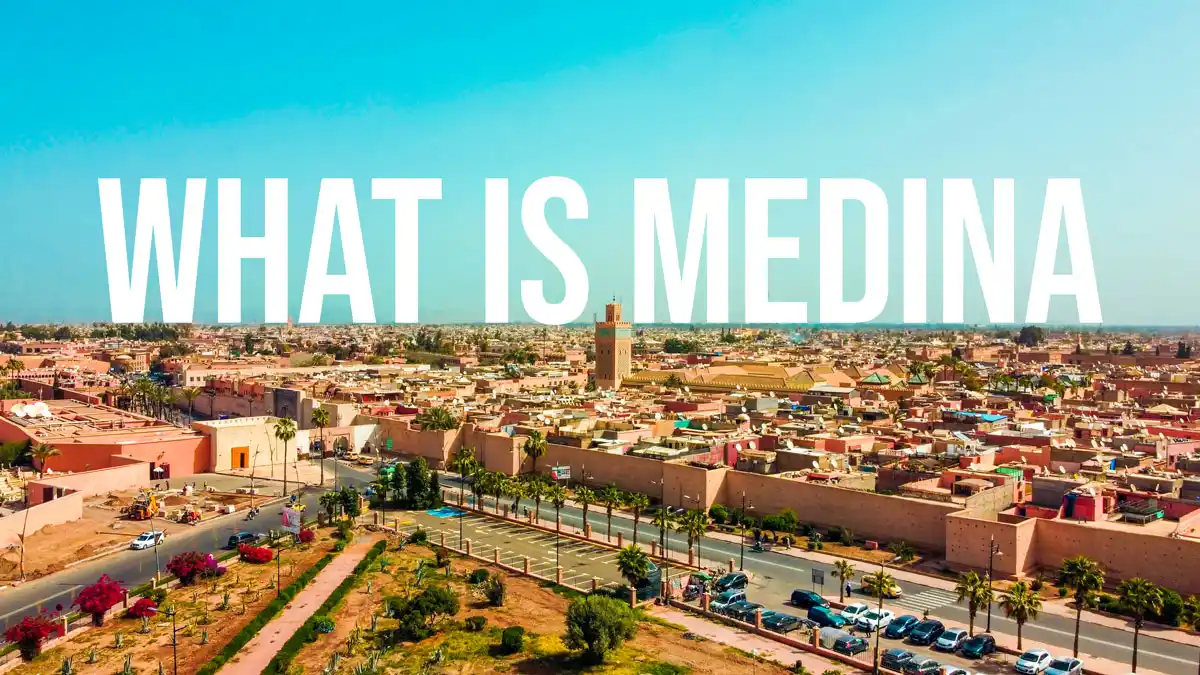
What is Medina In Morocco? A Guide to Morocco’s 8 Greatest Old Cities
When you step into a Moroccan medina for the first time, nothing quite prepares you for it. The alleys narrow until your shoulders nearly touch both walls. Donkeys loaded with gas canisters push past from behind. The smell shifts from fresh bread to tanned leather to cumin within twenty steps. As someone who has explored medinas across Morocco for years, I can tell you that each one is a completely different experience, different character, different pace, different things to buy and eat and get lost in. This guide covers the eight best medinas in Morocco, with the specific details that help you actually experience them rather than just pass through.
Quick Facts
- Number of major medinas: 8 – Marrakech, Fez, Chefchaouen, Essaouira, Meknes, Tangier, Casablanca, Rabat
- Oldest and largest: Fez el-Bali (9th century), over 9,000 streets, UNESCO site, world’s largest car-free urban area
- Easiest to navigate: Chefchaouen (small, calm) and Essaouira (grid layout, wide streets)
- Most demanding: Fez el-Bali; a genuine labyrinth; hiring a licensed guide (200–400 MAD) is worth it on your first visit
- Least touristy: Meknes and Casablanca; low crowd pressure, authentic local life, better prices
- Safety: Medinas are generally safe; keep belongings close, avoid isolated alleys at night, and decline unsolicited “guides” at the gates
- What to wear: Long, loose clothing; women should carry a scarf for mosque areas; closed-toe shoes with grip for uneven cobblestones
- Money: Carry small MAD bills; ATMs are outside medinas, not inside; most artisan shops are cash-only
- Navigation: Download Maps.me offline (more accurate than Google Maps inside medinas); every alley eventually leads to a gate, mosque, or market
- Best time to visit any medina: Early morning (before 9 AM) for quiet streets and best light; weekdays over weekends
Based on years of firsthand exploration across all eight medinas. Prices in Moroccan Dirham (MAD) with approximate USD equivalents.
What Does Medina Mean?
A medina is the historical heart of a Moroccan city, typically surrounded by high walls (the ramparts) and filled with narrow streets that follow no grid. These fortified urban centres were designed centuries ago to protect against invaders, with deliberately confusing layouts that slowed any enemy advance. Most medinas, especially in Fez and Marrakech, have retained that original layout intact. The word medina simply means “city” in Arabic, but in Morocco it specifically refers to the pre-colonial old town, as distinct from the Ville Nouvelle (the French-built modern district) that sits beside it.
Why Are Moroccan Medinas Unique?
Medinas are living museums. Every one of them contains mosques, madrassas (Islamic schools), souks (markets), foundouks (old merchant inns), and traditional homes packed into a space where no car has ever driven. The atmosphere is dense with sensory detail: artisans hammering copper at Place Seffarine in Fez (the rhythmic clanging is one of my favourite sounds in Morocco), the sharp smell of ammonia rising from the tannery pits, the blue-grey smoke from a bread oven tucked inside a residential alley. The medina is a form of urban design that has not fundamentally changed in seven centuries, and that is exactly why it feels like nothing else in the world.
1. Old Medina of Marrakech
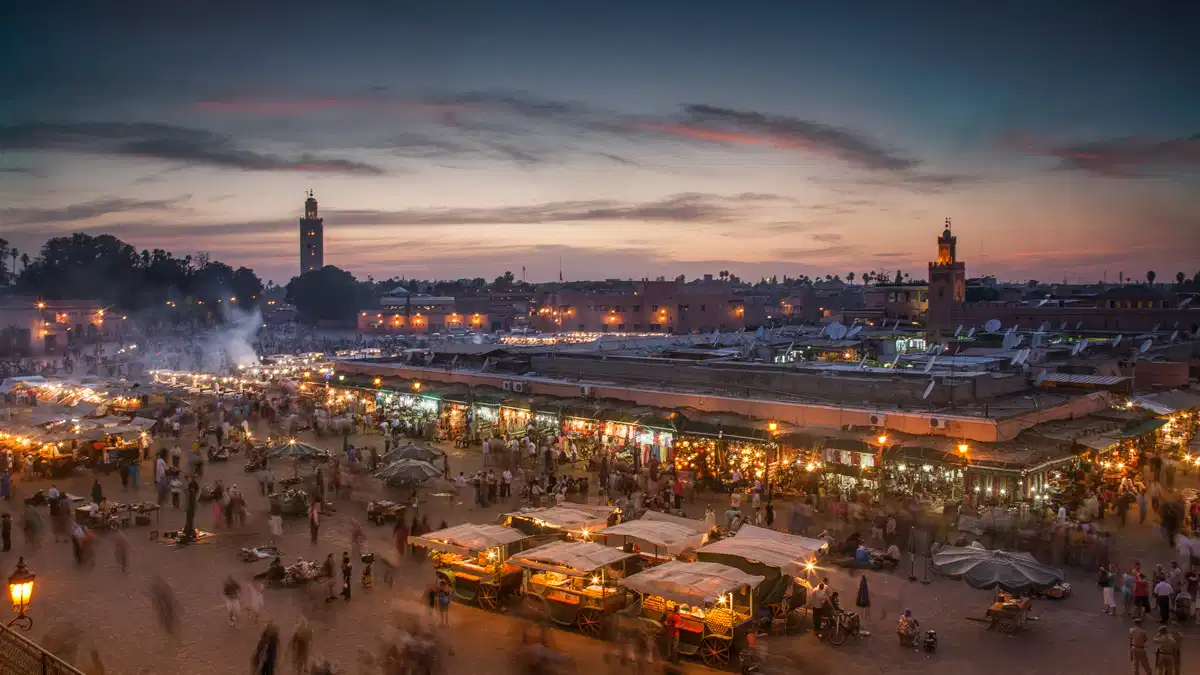
The old medina of Marrakech was founded in 1070 by the Almoravid dynasty and became the political and economic centre of a vast empire. The Almohads who followed gave the city its iconic pink-red walls and the Koutoubia Mosque, the tallest structure in Marrakech at 70 metres. Walking through the souks, you move through distinct artisan quarters: dyers in one alley, metalworkers in the next, woodcarvers and spice merchants and lamp sellers each occupying their own stretch. Jemaa el-Fna, the central square, transforms completely between morning and night, a fruit juice market at 8 AM, a carnival of storytellers and drummers and smoke from lamb-grilling carts by 10 PM.
Hidden spot: Most visitors never find the Medersa Ben Youssef, a 16th-century Islamic school tucked behind the Marrakech Museum. Entry is 70 MAD ($7 USD) and the courtyard is one of the finest examples of zellij tilework and carved stucco in Morocco. Go before 9 AM and you will have it almost entirely to yourself.
What to buy: Argan oil directly from the women’s cooperative near Bab Doukkala (not the tourist shops near Jemaa el-Fna, which mark up three to five times). Hand-embroidered tablecloths in the fabric souk off Rue Mouassine. Babouches (leather slippers) from the dedicated slipper souk, budget 80 to 150 MAD ($8 to $15) for decent quality.
Navigation tip: Follow the sound of hammering to find the metalworkers’ souk. Follow the smell of cedarwood shavings to reach the woodcarvers. Getting lost is not a problem — every alley eventually reaches a landmark gate or the central square.
Best time: 7:30 to 9:30 AM for the souk before the crowds arrive. Return to Jemaa el-Fna at 9:00 PM when the square reaches full intensity.
You can learn more about traveling to Marrakech and the best time to visit Marrakech in our dedicated guides.
2. Fez Medina (Fez el-Bali)
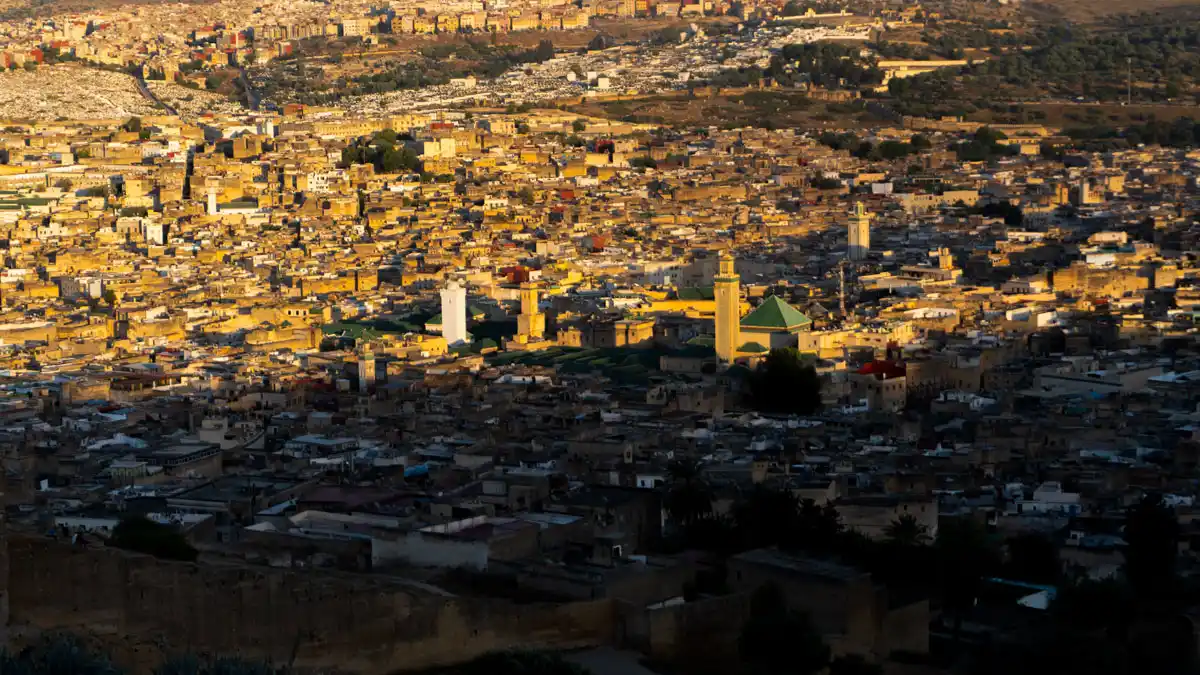
Fez el-Bali is the oldest medina in Morocco, founded in the 9th century when Idris I established the city. The University of al-Qarawiyyin, founded in 859 AD, sits at its heart and holds the Guinness World Record as the oldest continuously operating university on earth. Fez el-Bali is the largest car-free urban area in the world, a UNESCO World Heritage site with over 9,000 streets and alleys forming a genuine labyrinth. It is also the most demanding medina to navigate. I have been inside it dozens of times and still find new alleys.
Personal observation: My favourite moment in Fez el-Bali is always Place Seffarine, the brass and copper workers’ square directly outside the Al-Qarawiyyin mosque. Artisans sit cross-legged hammering trays and teapots while students pass through from the university behind them. The layered sound of different-pitched hammers is genuinely rhythmic; it is the most medieval thing I have experienced in Morocco, and most visitors walk straight past it.
Hidden spot: The rooftop of Medersa Bou Inania (entry 20 MAD / $2 USD) gives a clean view over Bab Boujloud and the medina rooftops. Most visitors look at the courtyard and leave. Climb to the roof and you get the full scale of Fez el-Bali spread below you, best in the late afternoon when the call to prayer echoes from the mosque towers.
The tanneries: Chouara Tannery is best viewed from the leather shop terraces surrounding it (the shops let you up for free, expecting you to browse, this is fair). The colours are most vivid in the morning. Carry mint leaves: the smell of pigeon dung and ammonia used to soften hides is strong, and the mint actually helps. Leather babouches from the tannery shops start at 120 MAD ($12 USD); negotiate down to 70 to 80 MAD for simple styles.
Best time: Enter through Bab Boujloud at 8 AM. The blue gate is at its most photogenic in early morning light, and the alleys are quiet enough that you can hear your own footsteps.
For everything you need to plan a visit, our comprehensive guide covers the best places to visit in Fez, including tips, tours, and what is actually worth your time. You can also read our post on what Fez is famous for for the historical context behind what you are seeing.
Fez is easiest experienced with someone who knows its alleys. Our 3‑day private tour from Casablanca to Fez puts you in the old city with a local guide from the moment you arrive.
3. Chefchaouen Medina
Chefchaouen’s medina is the easiest of Morocco’s medinas to navigate and arguably the most visually consistent. Founded in 1471 by Moulay Ali Ben Rachid as a mountain fortress against Portuguese invasions, it became a refuge for Muslims and Jews expelled from Andalusia during the Spanish Reconquista. The blue colour came later, the Jewish community began painting buildings blue in the 1930s, a practice the whole city eventually adopted. Today it ranges from cobalt to powder blue to turquoise depending on the street and the time of day.
Personal observation: The best photograph of Chefchaouen that nobody takes is from inside the medina at dawn, when the blue walls turn silver-grey before the sun hits them. Every photographer arrives at 9 AM when the light is already harsh and the streets are filling up. Come at 6:30 AM and you walk a completely empty blue city in soft pre-dawn light.
Hidden spot: The Spanish Mosque on the hill above the medina (free, 20-minute walk from the central square) gives the only aerial view of the blue rooftops. Most visitors see it from below. Walk up at sunset and look back down at the city glowing in orange light against the Rif Mountains.
What to buy: Chefchaouen is the best place in Morocco for hand-woven Berber blankets and striped djellabas (the traditional hooded robe). Budget 200 to 400 MAD ($20 to $40) for a good quality blanket, less for smaller woven pieces. The medina also sells kif paraphernalia openly, you are in the Rif, which is Morocco’s cannabis-producing region, and the culture is visible.
Day trip: Thirty-five kilometres from the medina, the Akchour Waterfalls sit in a canyon in the Rif Mountains. It is the best half-day excursion from Chefchaouen and sees a fraction of the tourists that the medina does. For everything to do in the city, see our guide to the 8 best things to do in Chefchaouen.
To reach Chefchaouen from Fez, our Fes to Chefchaouen day trip takes you through the Rif Mountains with a local driver who knows the best stops along the way.
4. Essaouira Medina
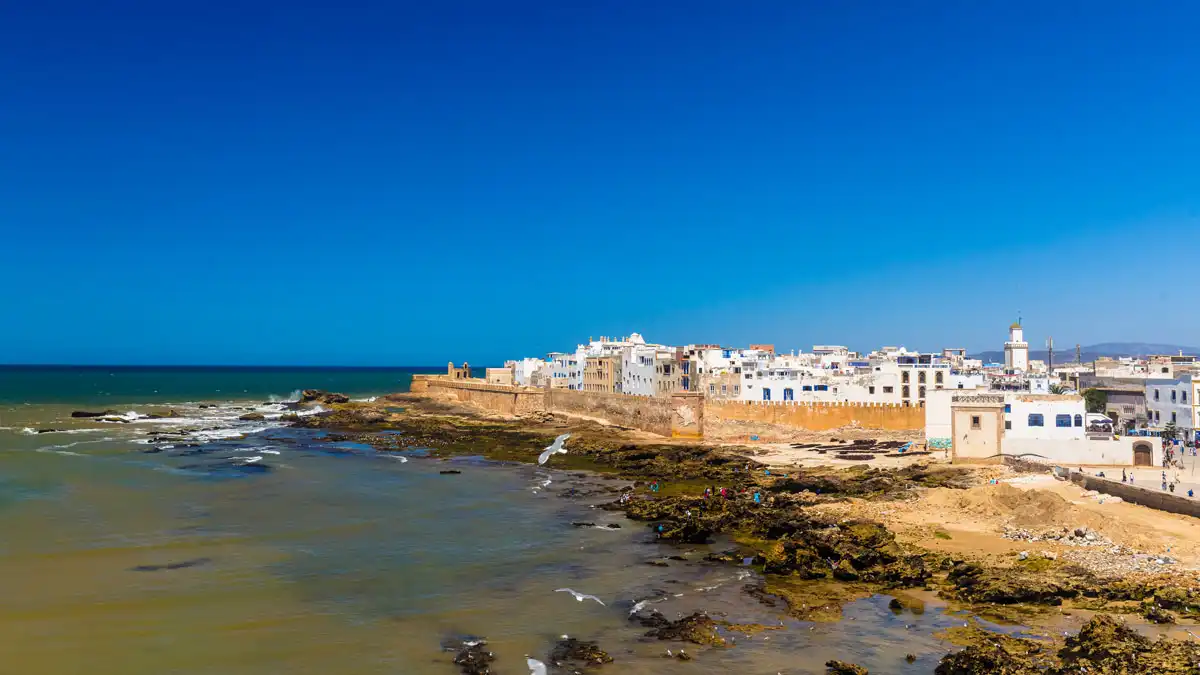
Essaouira’s medina is the most architecturally distinctive in Morocco. Built in the 18th century under Sultan Mohammed III and designed by French architect Théodore Cornut, it blends Moroccan and European planning — wide streets instead of the labyrinth of Fez, fortified sea walls, and a grid that actually makes sense. The constant Atlantic wind keeps the medina cool in summer when every other Moroccan city is baking. UNESCO listed it in 2001.
Personal observation: The smell of Essaouira is different from every other medina — salt air and fish, not spices and leather. Walking the ramparts above the Atlantic in late afternoon, with fishing boats in the port below and seagulls landing on the cannon mounts, is the most consistently peaceful experience I have had in any Moroccan city.
Hidden spot: The thuya wood cooperative near the fishing port sells boxes, frames, and furniture directly from the craftsmen who make them, at prices significantly lower than the tourist shops inside the medina walls. Thuya (arborvitae root burl) is unique to the Essaouira region and produces a distinctive swirling grain pattern. A small decorative box starts at 50 MAD ($5); larger pieces run 200 to 800 MAD ($20 to $80).
What to buy: Thuya wood products, Gnawa music instruments (local luthiers make guembris, the three-stringed bass used in Gnawa ceremonies), and fresh sardines grilled on the port-side charcoal stalls for 20 MAD ($2) per portion.
Best time: The Essaouira medina is at its best between April and June and again in September and October. July and August bring heavy winds (up to 40 km/h) that make walking the ramparts difficult and blow sand into your food.
5. Meknes Medina
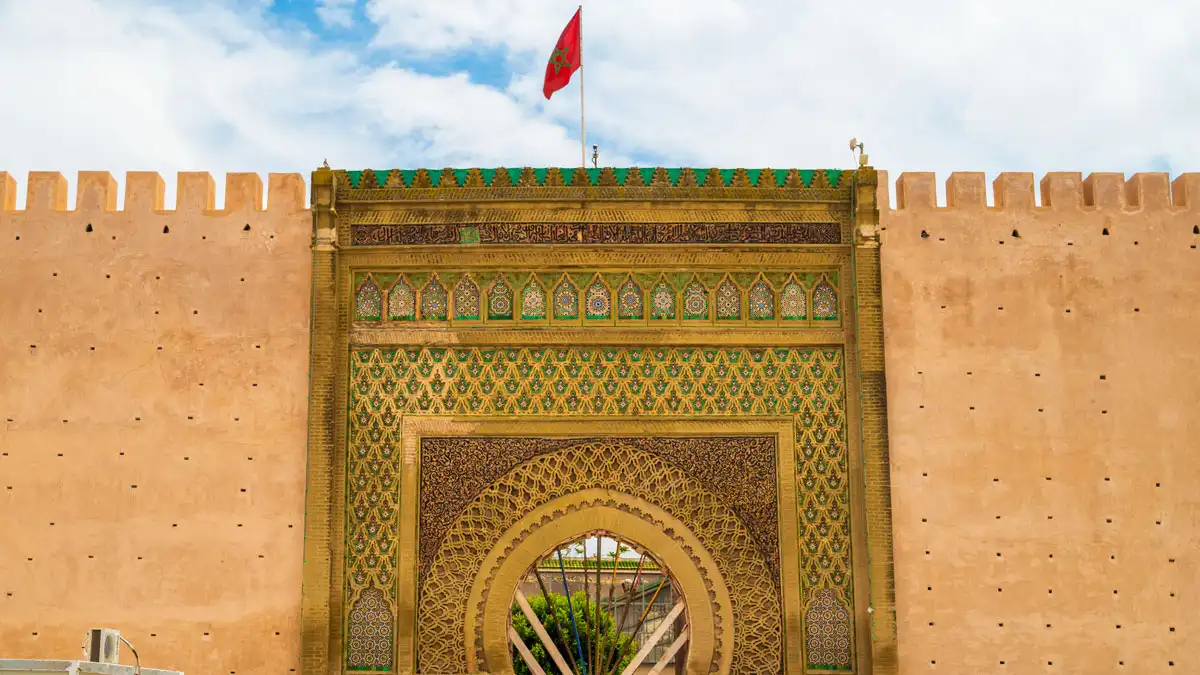
Meknes is the least visited of Morocco’s four Imperial Cities and the most relaxed. The medina rose to prominence under Sultan Moulay Ismail in the 17th century, who built it as his capital to rival the grandeur of Versailles. The grand Bab Mansour gate, completed in 1732, is considered one of the finest examples of Islamic architecture in Morocco, 16 metres high, decorated with intricate zellij tilework and calligraphic inscriptions, flanked by columns taken from the nearby Roman ruins at Volubilis. The medina itself is compact and walkable, with far less tourist pressure than Fez or Marrakech.
Hidden spot: The rooftop terrace of Medersa Bou Inania in Meknes (entry 10 MAD / $1 USD) is one of the quietest viewpoints in any Moroccan medina. Stand on the roof and look directly over Bab Mansour, you get the gate’s full scale without the selfie crowds that gather in the square below. Come at 8 AM and you may be the only person up there.
What to buy: Meknes is the centre of Moroccan wine production (the Meknes vineyards produce the country’s best reds) and the medina sells local bottles at prices far below what you pay in Marrakech. The olive market inside the medina is also excellent, Meknes olives are considered the finest in Morocco, and a kilogram goes for 20 to 40 MAD ($2 to $4) depending on variety.
Day trips: The Roman ruins of Volubilis are 33 kilometres from Meknes (30-minute drive) and are the best-preserved Roman site in North Africa. Moulay Idriss Zerhoun, Morocco’s holiest town, sits on a hilltop 5 kilometres further. Both can be combined in a half-day.
Best time: Meknes sees the fewest tourists in Morocco. Even at peak season (March to May), the medina feels calm. Visit on a Friday morning to experience the weekly market outside Bab Mansour, when the square fills with vendors from surrounding villages.
Meknes sits right on the route between Casablanca and Chefchaouen, making it a logical stop on a multi‑day northern circuit. Our 4‑day private tour from Casablanca to Chefchaouen includes a full morning in Meknes, with time to walk Bab Mansour, the medina, and the Roman ruins at Volubilis before continuing into the Rif.
6. Tangier Medina
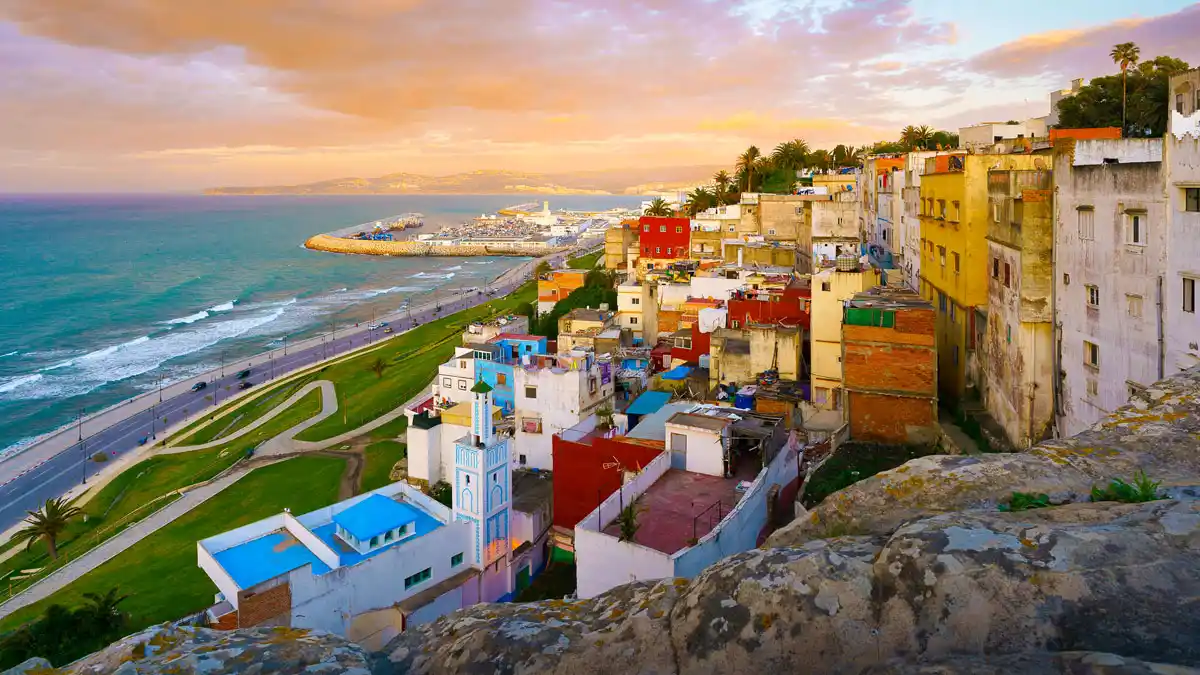
Tangier’s medina sits at the point where the Atlantic meets the Mediterranean, overlooking the Strait of Gibraltar with Spain visible on clear days. Its history reaches back to the 5th century BC, Phoenicians, Carthaginians, Romans, Arabs, Portuguese, British, Spanish, and French have all controlled it at different points. That layered history is visible in the architecture: Andalusian tile work beside Portuguese stone doorways beside French colonial facades. In the 1950s and 60s, Tangier was an International Zone exempt from Moroccan law, which made it a magnet for writers, artists, and exiles. Paul Bowles lived here for 52 years. Jack Kerouac visited. The Beat Generation drank in its cafes.
Personal observation: The Kasbah district at the top of the medina is noticeably different from the commercial lower section, quieter, more residential, with whitewashed walls and painted blue doors overlooking the strait. Stand at the Kasbah Museum terrace in the late afternoon and you can see the Spanish coast clearly. That view, free from the museum garden, is Tangier in one image.
Hidden spot: Café Hafa, perched on terraced cliffs above the Atlantic just outside the medina walls, has been serving mint tea since 1921. It has barely changed. The Rolling Stones came here. So did the Beatles. No food, just tea at 8 MAD ($0.80) a glass, served on stepped terraces over the sea. It is the most atmospheric café in Morocco and most tourists never find it.
What to buy: Tangier’s medina has better antique and vintage shops than any other Moroccan city, a legacy of its international history. The Rue es-Siaghine (Jewellers’ Street) carries silver pieces from across the Maghreb. Budget 100 to 500 MAD ($10 to $50) depending on what you find.
7. Casablanca Medina
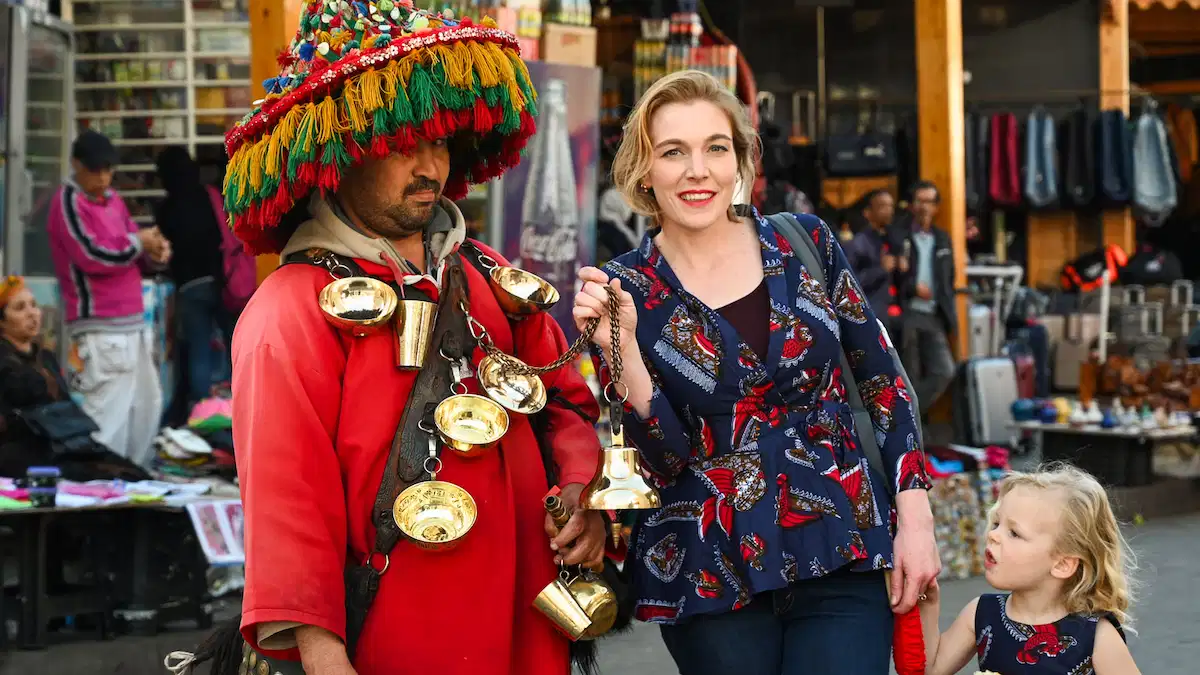
Casablanca’s medina is the least famous and most authentic of the group, a working-class neighbourhood with no tourist infrastructure, no official guides offering themselves at the gate, and no souvenir shops lining the main street. Built in the 18th century under Sultan Mohammed Ben Abdallah, it was a modest coastal trading settlement before French colonists arrived in 1907 and built the modern city around it. Today it sits in the shadow of the Hassan II Mosque, the third-largest mosque in the world, whose minaret is visible from 50 kilometres at sea.
Personal observation: I always direct people to the medina’s fabric market on Rue Commune, where local tailors make djellabas on foot-pedal sewing machines while their customers wait. It is the most honest commercial scene I have found in any Moroccan medina, no performance for tourists, just work being done. A custom-made djellaba costs 200 to 400 MAD ($20 to $40) and takes three hours.
Hidden spot: The Habous quarter (also called the New Medina), built by the French in the 1930s as a planned Moroccan neighbourhood, sits 2 kilometres from the old medina and is far more photogenic and relaxed. Its covered arcades, olive market, and Pâtisserie Bennis (the best cookies in Casablanca) make it worth the taxi ride. Entry is free and there are no touts.
What to buy: The old medina is the best place in Casablanca to buy practical Moroccan household items at local prices: hand-painted ceramics, brass teapots, djellabas, and traditional slippers. The tourist markup that exists in Marrakech does not exist here.
8. Rabat Medina
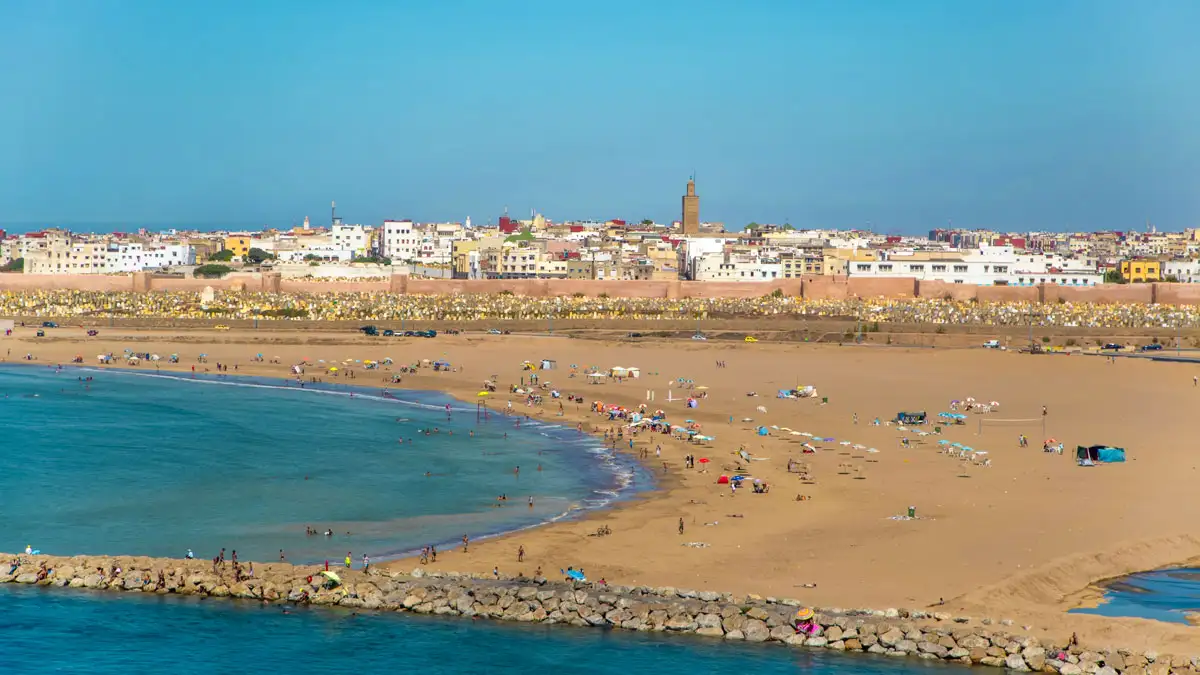
Rabat’s medina is the smallest and most manageable of Morocco’s Imperial City medinas. Built by the Almohad dynasty in the 12th century as a ribat (fortified military monastery), it became Morocco’s capital under French rule in 1912, a status it retains today. UNESCO listed it in 2012 as part of a broader designation covering the entire modern capital. The medina has a Ville Nouvelle feel to it, wide enough for two people to walk side by side in most streets, with modern cafes alongside traditional carpet shops and a general absence of pressure to buy anything.
Personal observation: The Rue des Consuls, which runs through the middle of the medina, is one of the most pleasant shopping streets in Morocco. Carpet and antique dealers line both sides, and unlike Marrakech, they let you browse without following you. I once spent two hours looking at Berber rugs here before buying a small kilim for 250 MAD that would have cost 800 MAD in Marrakech’s souk.
Hidden spot: The Andalusian Wall at the northern edge of the medina, built in the 17th century by Andalusian refugees expelled from Spain, runs for several hundred metres and is largely unknown outside Morocco. Walk along its base in the early evening when local families sit on the steps and the light turns the old stones gold.
What to buy: Rabat is Morocco’s best city for quality carpets and antiques at reasonable prices, largely because fewer tourists visit and dealers are not inflating for the foreign market. Budget 200 to 2,000 MAD ($20 to $200) for carpets depending on size and origin.
Which Medina Is Right for You? A Comparison
| Medina | Best For | Vibe | Must-Do | Crowd Level |
|---|---|---|---|---|
| Marrakech | First-timers, shoppers | Chaotic, colourful, intense | Jemaa el-Fna at 9 PM | Very high |
| Fez | History lovers, artisans | Ancient, labyrinthine, demanding | Chouara Tannery at 9 AM | High |
| Chefchaouen | Photographers, relaxers | Calm, blue-washed, slow | Dawn walk before 7 AM | Moderate-high |
| Essaouira | Coast lovers, artists | Breezy, artsy, European feel | Walk the sea ramparts at sunset | Moderate |
| Meknes | Off-the-beaten-path seekers | Grand, quiet, overlooked | Bab Mansour at dawn | Low |
| Tangier | Culture, history, literary interest | Eclectic, port city, layered | Café Hafa for tea over the strait | Moderate |
| Casablanca | Authentic local life | Working-class, unstuffy, real | Habous quarter + Bennis pastries | Low tourist pressure |
| Rabat | Carpets, antiques, a quiet afternoon | Relaxed, residential, underrated | Rue des Consuls for rugs | Low |
Practical Tips for Visiting Moroccan Medinas
What to wear: Long, loose clothing in all medinas, not for the heat (though it helps), but for cultural respect and practical comfort. Women should carry a light scarf that can cover the head and shoulders when entering any mosque courtyard or passing close to a mosque entrance. Closed-toe shoes with grip are essential in Fez and Marrakech, where cobblestones are uneven and wet alleys appear without warning.
Avoiding scams: The most common scam in Fez and Marrakech is the “unofficial guide” who approaches you near a gate, claims the medina is closed or that there is a festival happening in a different direction, and leads you to a carpet or leather shop. Official guides wear a numbered badge issued by the government. If someone approaches you unsolicited near Bab Boujloud or Bab Doukkala, decline politely and keep walking. Restaurants near tourist squares often have no menu prices. Always ask to see the menu with prices before sitting down. A reasonable tagine and drink should cost 80 to 120 MAD ($8 to $12). If it costs double, you are at a tourist-trap establishment.
Money: Carry small bills in MAD at all times. A 200 MAD note creates friction at street food stalls, public toilets, and small souvenir shops. ATMs inside medinas are rare and often out of cash, withdraw from ATMs in the Ville Nouvelle before entering. Most artisan shops and carpet dealers do not accept cards. Budget cash for anything under 200 MAD.
Toilets: Most medinas have paid public toilets near the main gates, costing 2 to 5 MAD ($0.20 to $0.50). Always carry your own tissues. The toilet attendant provides a small square of paper, but it is never enough. Café and restaurant toilets are available if you buy a mint tea (8 to 15 MAD / $0.80 to $1.50), which is the better option in terms of cleanliness.
Staying oriented: Download Maps.me with Morocco offline before you arrive. It is more accurate inside medinas than Google Maps, which frequently puts you in walls. That said, accept that getting lost is part of the experience. Every alley in Morocco eventually leads to a mosque, a market, or a gate. If you are genuinely disoriented, ask a shopkeeper (not someone on the street who approaches you) for the direction of the nearest bab (gate), they will point you there without expectation of payment.
Transportation: Petit taxis are the right way to move between the medina and your accommodation. The fare for a short ride is 10 to 20 MAD ($1 to $2) in most cities. Agree on a price before entering or insist on the meter (taximeter). In Marrakech specifically, many petit taxi drivers near tourist areas refuse the meter. The standard response is to open the door, say “taximeter” firmly, and wait. If they refuse, get the next taxi.
Guided Tours and Day Trips From Each Medina
From Fez: A day trip to Meknes and Volubilis covers the Roman ruins, Bab Mansour, and Moulay Idriss in one loop. The Fes to Chefchaouen day trip takes about two hours each way and is the most popular single-day excursion from Fez.
From Marrakech: The mountains, the Ourika Valley, and Ait Benhaddou are all within two to three hours. For the desert, our 3-day Marrakech desert tour passes through the Atlas Mountains, Ait Benhaddou, and reaches the Erg Chebbi dunes at Merzouga on Day 2.
Guided medina tours: Hiring a licensed guide is genuinely worth it for Fez el-Bali on your first visit. The medina has 9,000 streets and a guide will take you to workshops and courtyards that are invisible from the main alley. Budget 200 to 400 MAD ($20 to $40) for a two to three hour tour. Ask your riad to recommend someone, they know the legitimate guides.
So, What Is a Medina?
A medina is the oldest part of a Moroccan city, the pre-colonial urban core that has survived everything built around it. Each one is its own world: different architecture, different rhythm, different things to eat and buy and get lost looking at. Marrakech’s medina will overwhelm you with colour and noise. Fez el-Bali will disorient you and then reward you with something you did not expect. Chefchaouen will slow you down completely. Essaouira will smell of the sea. They are all worth your time, and none of them will feel the same twice.
Ready to explore? Our 10-day Morocco tour covers Casablanca, Fez, Chefchaouen, Sahara Desert, and Marrakech with private transport and local guides who know each medina properly. For those heading south from Fez to the Sahara, our Fes to Marrakech desert tour takes you through the Atlas Mountains and into the dunes in one continuous route. And if you want to understand what the broader Morocco trip costs before planning anything, our Morocco trip cost guide breaks down every expense honestly.
Contact us: contact@mementomorocco.com | +49 1522 3075977 | WhatsApp