Luxury vs. Standard Morocco Desert Camps: The Real Difference
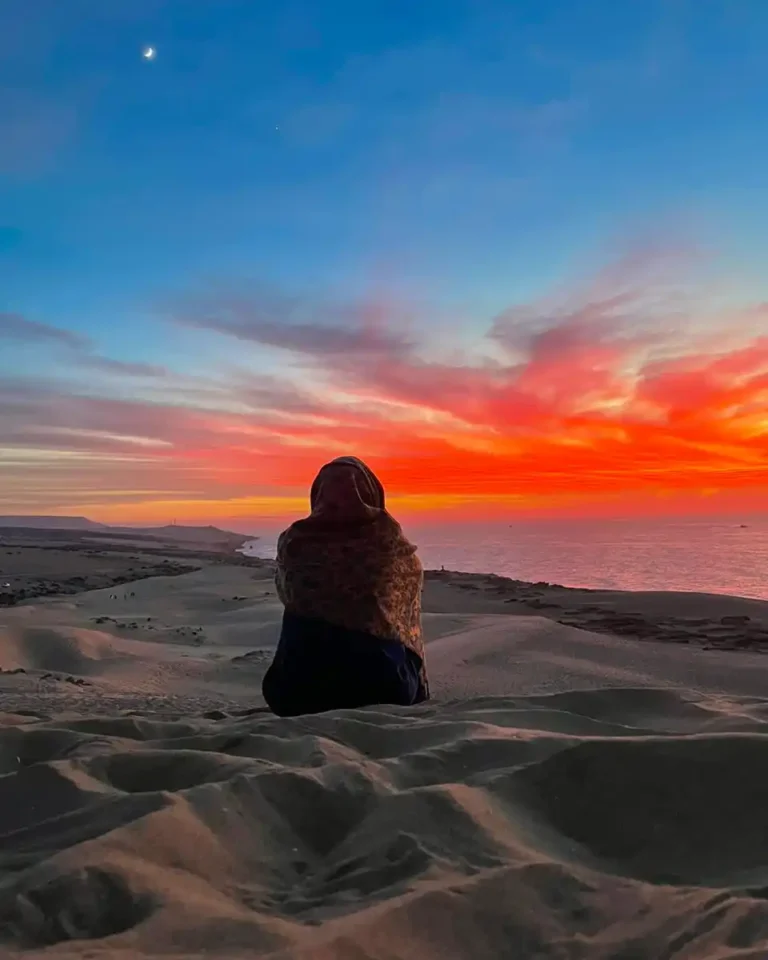
Picture this: you’re sitting cross-legged on a woven rug inside a private canvas suite, the only sound the whisper of wind across cold dunes. Now picture this: you’re laughing around a crackling fire with travelers from four countries, passing mint tea, while a Berber guide taps out a rhythm on a clay drum. Both scenes happen in morocco desert camps. Both are in the same Sahara. But the experience, the cost, and the memory you take home are entirely different. This guide strips away the marketing language and shows you the concrete differences in accommodation, food, cultural access, and price between luxury and standard desert camps. You’ll know exactly which type matches your travel priorities before you book.
Defining the Terms: What ‘Luxury’ and ‘Standard’ Actually Mean in the Sahara
The words “luxury” and “standard” get thrown around carelessly in morocco desert camps marketing. Here’s what they actually mean on the ground. A luxury desert camp morocco features permanent or semi-permanent structures: large canvas suites on raised wooden platforms, or geodesic domes with clear ceilings for stargazing. You get an ensuite bathroom with a flush toilet, a sink with running water, and usually a hot shower powered by solar panels or propane heaters. Inside, you’ll find a proper king or queen bed with a frame, quality linens, rugs, and often a private terrace with chairs. The staff-to-guest ratio is high, sometimes one staff member for every two guests.
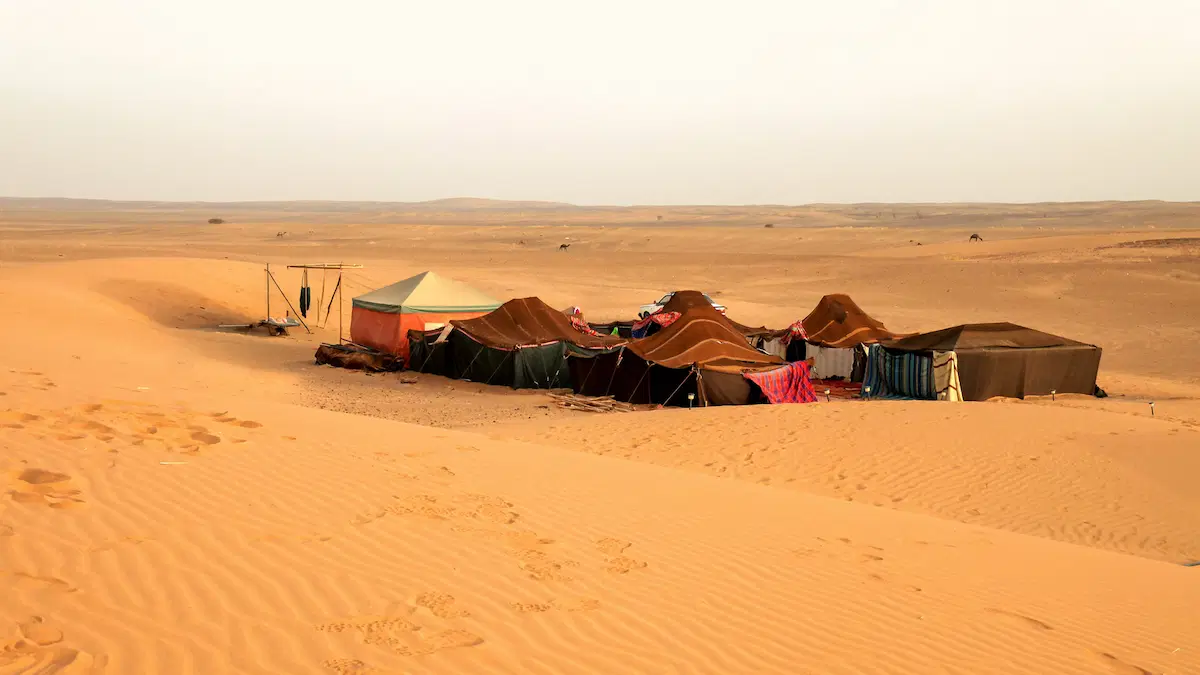
A standard camp is a different category entirely. You sleep in traditional Berber tents made from camel hair or thick wool, the same material nomadic families have used for centuries. The tent has low wooden poles, woven rugs on the sand floor, and mattresses laid directly on platforms or the ground. Blankets replace duvets. The bathroom is a shared block, usually a two-minute walk from your tent. It’s basic: squat or simple flush toilets, a sink, and sometimes a cold-water shower (hot showers cost extra at some camps, around 20-30 MAD). Dinner is communal. You eat from shared tagine platters at a long table or seated on cushions around a low table.
Here’s what most guides won’t tell you: many standard camps are run by local Berber families who live part of the year in the dunes. The simplicity isn’t about cutting costs. It’s the authentic nomadic setup, adapted slightly for guests. When you choose standard, you’re opting into a traditional way of life, not a “budget version” of luxury. The decision isn’t about better or worse. It’s about whether you value ensuite comfort and privacy, or communal authenticity and direct cultural exchange. Think carefully about what to pack for the Sahara based on which camp type you choose.
The Accommodation & Amenities Breakdown: From Beds to Bathrooms
Let’s get specific about what you’re actually paying for. In a luxury camp, your tent or suite is spacious, often 30-40 square meters. The bed sits on a proper frame with a thick mattress, fitted sheets, a duvet, and pillows with cases. Some camps provide bathrobes and slippers. You’ll find bedside tables, lamps (solar-powered electricity runs throughout), and sometimes a small seating area with armchairs. Your private bathroom is enclosed within the tent structure or attached via a covered walkway. It includes a western-style flush toilet, a sink with a mirror, and a shower with adjustable temperature. Towels, basic toiletries, and sometimes even hairdryers are provided.
In a standard camp, your tent is smaller, around 12-20 square meters. The mattress sits on a raised wooden platform or directly on layered rugs over the sand. It’s typically a foam mattress, 10-15 cm thick, with a fitted sheet and wool blankets. You might get a pillow, but it’s often thin. Lighting comes from candles or a single battery-powered lantern. There’s no electricity inside the tent. If you need to charge your phone or camera, you walk to the communal area where a central solar panel powers a charging station (bring your own cable and consider a power bank). The shared bathroom block is a separate structure. Expect a squat toilet or a basic flush toilet, a sink with cold running water, and a mirror. Showers, when available, are cold unless you pay extra for hot water, heated in a barrel over a fire.
The price reflects these differences directly. A night at a luxury desert camp accommodation in Merzouga costs between 1,500 MAD and 4,000 MAD per person ($150 to $400 USD), depending on the season and specific camp. This usually includes dinner, breakfast, the camel trek to and from the camp, and sometimes extras like sandboarding or a quad bike ride. A night at a standard camp costs between 400 MAD and 1,000 MAD per person ($40 to $100 USD), also including dinner, breakfast, and the camel trek. The cost gap is about four times. You’re paying for the private bathroom, the bed quality, the electricity, and the staffing level. If sharing a bathroom for one night doesn’t bother you, that’s $250 USD you can spend elsewhere on your Morocco trip.
Dining, Service, and the Social Experience
Food and service philosophy separate these camp types as much as the tents themselves. At a luxury camp, dinner is a plated, multi-course affair. You start with Moroccan mezze: zaalouk (cooked eggplant salad), taktouka (pepper and tomato salad), olives, fresh bread. The main course is often an individual tagine, chicken with preserved lemon and olives, or lamb with prunes and almonds, served on fine ceramic. Dessert might be orange slices with cinnamon or almond pastries. Wine and beer are available for purchase at most luxury camps (though alcohol availability depends on the camp’s licensing). You eat at a private table, or with a small group if you’re part of a tour, in a dedicated dining tent with proper chairs and linens.
At a standard camp, dinner is communal and family-style. Everyone gathers around a long table or sits on floor cushions in a large shared tent. The main dish is a massive tagine or a mechoui (slow-roasted meat), placed in the center for everyone to eat from with bread. Side dishes, Moroccan salads, couscous, and fruit are passed around. Breakfast in both camp types includes Moroccan bread, jam, amlou (almond butter with argan oil), cheese, and mint tea. But in standard camps, you’re eating elbow-to-elbow with other travelers. Conversations spark. Stories get shared. This is where solo travelers make friends and couples meet people from around the world.
Service models differ too. Luxury camps employ dedicated staff: a chef, servers, tent attendants, guides. The service is polished and unobtrusive. You’re taken care of, but interactions are professional. Standard camps are often family-run. The man who leads your camel trek might be the same person cooking your tagine and playing the drums after dinner. His wife or sister might serve the tea. The interaction is informal, warm, and personal. You’re a guest in their Sahara desert experience, not a customer in a business transaction. If you want to learn a few Berber phrases or hear stories about nomadic life, you’ll get more of that in a standard camp. If you want to relax without social obligation, luxury offers that space.
Location, Activities, and Cultural Access
There’s a common belief that luxury camps occupy the best dune locations. That’s not always true. Many luxury Merzouga desert camp setups sit on the edge of the erg (dune sea) where vehicle access is easier. This allows for paved or graded roads right up to the camp entrance, making logistics simpler for luggage, food deliveries, and guest transport. Some standard camps, especially in Erg Chebbi near Merzouga, are positioned deeper into the dunes. You reach them by a longer camel trek (60-90 minutes instead of 30-45 minutes) or a 4×4 ride that navigates soft sand tracks. The trade-off: you’re more immersed in the dune landscape, farther from roads and noise.
Both camp types include core activities. You’ll get a camel trek to the camp in the late afternoon, timed to arrive for sunset over the dunes. In the morning, you trek back after sunrise. This is standard across the board. Luxury camps often bundle in additional activities as part of the package: sandboarding down the dunes, a quad bike excursion, henna tattoos, or a guided stargazing session with a telescope. Standard camps focus on the essentials: the camel ride, the sunset, the communal dinner, and the evening of Berber music around the fire. If you want extras, you can often arrange them separately through your guide for an additional fee (sandboarding: 50-100 MAD, quad biking: 200-400 MAD per hour).
Cultural access is where the dynamic flips. Standard camps give you direct, unfiltered interaction with Berber hosts. You’ll sit with them after dinner, ask questions, maybe help make Moroccan tea, or learn a few drum rhythms. The cultural exchange is organic. Luxury camps present culture in a more curated way. You’ll hear Berber music performed by staff, but it’s scheduled, almost like a show. You’ll see traditional textiles and decor, but it’s arranged for ambiance. Both approaches are valid. One is immersive participation; the other is comfortable observation. If you’re traveling with kids or elderly family members, the easier access and added comfort of a luxury camp might outweigh the cultural trade-off. For deeper insight into Morocco’s diverse desert regions, read our guide to the Sahara desert regions and tips for visiting the Sahara desert for the first time.
What Most Guides Get Wrong About Camp Locations
Here’s the contrarian truth: proximity to the dunes doesn’t always mean a better experience. Some travelers assume the farthest camp is the most authentic. But the quality of the camp operation, the integrity of the hosts, and the actual dune landscape around you matter more than GPS coordinates. We’ve seen “remote” camps that are surrounded by scraggly, low dunes with trash in the distance, and “accessible” camps perched on magnificent high dunes with 360-degree views. Always ask your tour operator for photos of the specific camp location and dune type, not just the tent interiors. The Sahara is not uniform. Erg Chebbi near Merzouga has tall, Saharan-red dunes. Erg Chigaga near M’Hamid has wilder, more isolated terrain but fewer luxury options. Choose based on the landscape you want to wake up to.
Making Your Choice: A Practical Decision Framework
The right camp type depends on your personal priorities, not just your budget. Here’s how to decide. Choose a luxury desert camp if your top priority is comfort and privacy. If the idea of walking 100 meters to a shared bathroom at 2 a.m. in the cold sounds unpleasant, spend the extra money. Choose luxury if you’re celebrating an anniversary, honeymoon, or milestone birthday and want the experience to feel special and effortless. Choose luxury if you have limited time in Morocco (say, a 5-day trip) and want maximum comfort in the one night you spend in the desert. Choose luxury if you’re traveling with anyone who has mobility issues, since ensuite facilities eliminate logistical stress.
Choose a standard camp if your priority is authentic cultural immersion and social interaction. If you enjoy meeting other travelers and don’t mind basic facilities for one night, this is your option. Choose standard if you’re budget-conscious and would rather spend money on extending your trip, hiring a private guide for another day, or upgrading your accommodation in Marrakech or Fes. Choose standard if you’re a younger traveler (20s-30s) seeking adventure over amenity. Choose standard if you want the most direct access to Berber hospitality and are comfortable with the trade-offs in privacy and comfort.
Ask yourself this critical question: Is this a once-in-a-lifetime splurge or an adventurous travel experience? If it’s the former, and you’re unlikely to return to Morocco, luxury might be the memory you want. If it’s the latter, and you see this as one chapter in a longer journey of understanding Morocco, standard gives you a richer cultural story. For families, luxury is often worth it for the space, private bathrooms, and elimination of logistical friction with kids. For solo travelers, standard camps are often the preferred social hub where you’ll meet like-minded people. To plan the rest of your journey around your camp choice, explore our private Morocco desert tours that match your style.
If you want to make sure you are making the right choice and knowing what to expect, you can refer to our article about how to plan your Sahara desert tour from Marrakech, which covers everything from how to get there, whether it is work it, places you want to visit, and more.
Ready to Experience the Moroccan Sahara Desert Your Way?
The choice between a luxury and standard Morocco desert camp isn’t about “good” or “bad.” It’s about what kind of memory you want to create: one of curated comfort or raw, communal adventure. Your budget, your travel style, and your tolerance for basic amenities are the real deciding factors. Both experiences offer a profound connection to the desert, just through different lenses. If you want to learn more about a comprehensive Sahara desert experience, you can refer to our detailed guide about Sahara desert to learn more about this great journey.
The right camp is just one part of a perfect Sahara journey. How you get there, the routes you take, and the local insights you gain along the way are equally important.
We design private tours that weave your ideal desert camp experience into a effortless journey across Morocco by handling every detail of your experience. You get a local expert who knows which camps deliver on their promises, a 4-day Marrakech to Sahara Desert tour or a 7-day Morocco private tour including the Sahara desert, the best times to visit, and the routes that maximize your days. This is the Sahara on your terms, with the comfort or adventure level you actually want. Let us craft a great private tour that includes your ideal desert camp experience, with tailored logistics and deep cultural insight.
📩 Contact us: contact@mementomorocco.com | +49 1522 3075977