Marrakech to Sahara Desert Distance & Real Travel Times
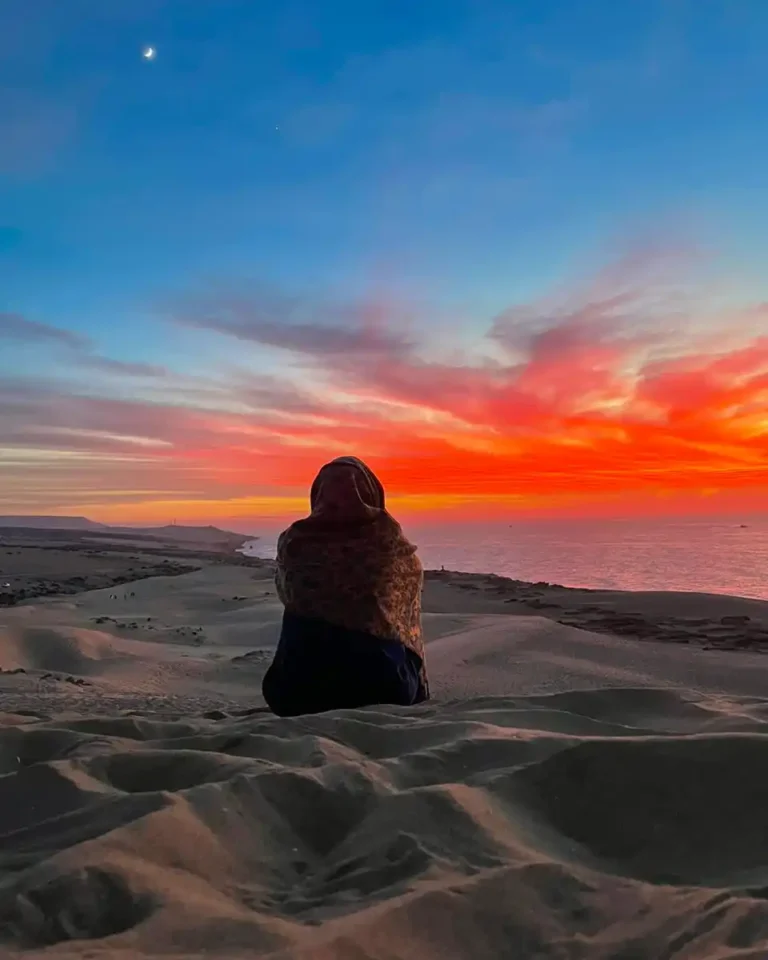
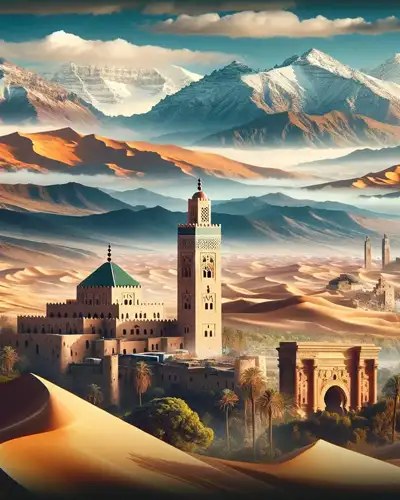
You stand in Jemaa el-Fnaa at sunset, watching snake charmers and listening to a hundred conversations in Arabic and French. Twelve hours later, you wake to absolute silence in the Erg Chebbi dunes, watching the sun bleed orange across a sea of sand that stretches to Algeria. The journey from Marrakech to the Sahara desert is not a transfer. It is a pilgrimage through landscapes that shift from cedar forests to river gorges to lunar stone plains. The distance matters because the transformation happens slowly, kilometer by kilometer. You will cross the High Atlas at 2,260 meters, drop into valleys where Berber villages cling to red earth cliffs, and finally arrive where Morocco stops and the desert begins. This guide gives you exact distances, realistic travel times that account for mountain passes and rest stops, and the local knowledge you need to turn a long drive into the best part of your trip.
The Two Deserts: Merzouga vs. Zagora Distances
Most travelers make one critical mistake when they search “Marrakech to Sahara desert distance.” They assume there is one desert destination. There are two, and the difference between them is 200 kilometers and an entirely different experience. The Marrakech to Merzouga distance is 560 kilometers (348 miles). The Marrakech to Zagora distance is 360 kilometers (224 miles).
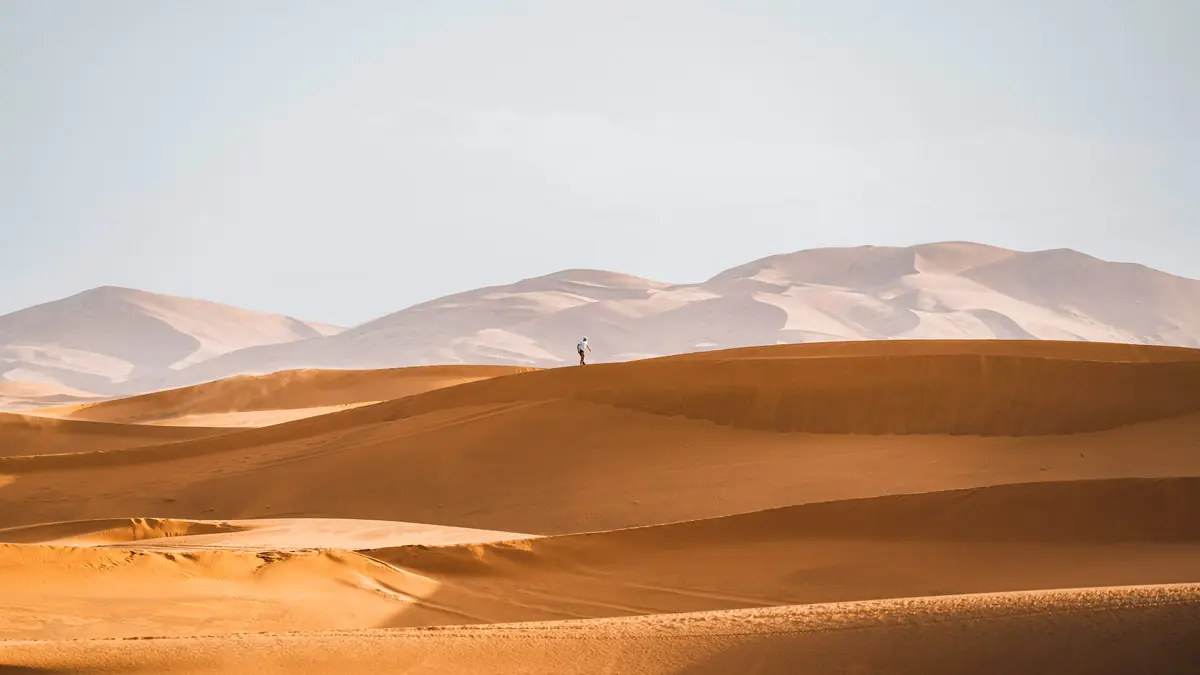
Merzouga sits at the western edge of Erg Chebbi, the famous sea of golden dunes that tower up to 150 meters high. This is the postcard Sahara, the Lawrence of Arabia landscape, the place where you ride camels into silence and sleep under more stars than you thought existed. Zagora sits in the Draa Valley, surrounded by date palm groves and smaller dunes. It is beautiful, accessible, and authentic, but the dunes here rarely exceed 30 meters. If you want the iconic Sahara experience, you drive the extra 200 kilometers to Merzouga.
The choice depends on your time and your priorities. A two-day trip from Marrakech can reach Zagora with one overnight stop. Reaching Merzouga properly requires three days minimum, with stops in Ouarzazate and Tinghir. Both are the Sahara, but only one delivers the dunes you see in every Morocco travel photo.
Marrakech to Desert Travel Time: The Reality Beyond Maps
Google Maps tells you the drive from Marrakech to Merzouga takes nine hours. Google Maps has never stopped for mint tea in a Berber village or waited for a flock of goats to clear the N10 highway. The real Marrakech to desert travel time is 10 to 12 hours for a private journey with proper stops. Add two hours if you are traveling in a large group tour bus that stops for scheduled photo breaks and lunch buffets.
The route breaks into two unequal halves. Marrakech to Ouarzazate takes four to five hours. You climb the Tizi n’Tichka pass on the N9 highway, a winding mountain road that gains 1,500 meters in elevation over 30 kilometers. In winter (December through February), this pass can close for a few hours after heavy snow. In summer (June through August), start before 7 a.m. to avoid crossing at midday heat. From Ouarzazate to Merzouga takes another five to seven hours on the N10, depending on how many times you stop at Todra Gorge, the Valley of the Roses, and the fossil shops in Erfoud.
Traveling during Ramadan adds 90 minutes to the journey. Drivers break their fast at sunset, restaurants close during daylight hours, and the pace slows universally. If you are on a private tour, this is manageable. If you are self-driving and unfamiliar with the rhythm, it becomes frustrating. The advantage of a private driver is simple: they know where to stop, when to stop, and which roadside cafe in Boumalne Dades serves the best tagine between the two cities.
- Spring (March to May): Ideal conditions, 10-hour journey with comfortable temperatures and blooming almond trees in the Dades Valley.
- Summer (June to August): Extreme heat after 11 a.m., plan for a 12-hour journey with extended rest stops in air-conditioned cafes.
- Autumn (September to November): Perfect weather, 10-hour journey, but book accommodations early as this is peak season.
- Winter (December to February): Possible snow delays on Tizi n’Tichka, budget 11-12 hours and check road conditions the morning you leave.
Your Marrakech Desert Route: A Stage-by-Stage Guide
The road from Marrakech to Merzouga is not one landscape. It is five. You climb, descend, cross rivers, skirt cliffs, and finally arrive where vegetation surrenders to sand. Each stage has a different color, a different smell, a different population. This is why the journey matters.
Stage One: The Ascent (Marrakech to Tizi n’Tichka, 100 km). You leave the red city and immediately begin climbing. The N9 winds through foothills where Berber villages appear as clusters of ochre-colored homes built into the mountainside. Juniper and oak forests give way to exposed rock. At 2,260 meters, you reach the pass. On a clear day, you see the Anti-Atlas range to the south and the valley you are about to descend into. Roadside vendors sell fossils and geodes. The air is thin and cold even in July.
Stage Two: The Oasis Belt (Ouarzazate to Tinghir, 170 km). After Ouarzazate, the landscape opens into what Moroccans call the “Road of a Thousand Kasbahs.” The N10 follows the Dades River through a valley where fortified villages and crumbling kasbahs appear every few kilometers. In March, the Valley of the Roses is in bloom. In October, saffron fields are harvested. The Dades and Todra gorges split the plateau like cracks in dry earth, revealing 300-meter-tall limestone cliffs that turn gold at sunset.
Stage Three: The Desert Gate (Erfoud to Merzouga, 50 km). Past Erfoud, the road becomes a straight line. Palm groves disappear. The ground turns from red earth to gray hammada, a stone desert that stretches flat to the horizon. Then, without warning, you see them: the dunes of Erg Chebbi, rising like a golden wall 10 kilometers wide and 40 kilometers long. The tarmac ends at the village of Hassilabied. From there, you transfer to a 4×4 or camel to reach the camps. This is where Morocco ends and the Sahara begins.
How to Travel: Private Tour, Group Tour, or Self-Drive?
The question is not whether you can drive yourself from Marrakech to Merzouga. You can. The question is whether you should, and whether the cost savings are worth the trade-offs you will not realize until you are stuck behind a broken-down truck on a single-lane mountain pass with no cell service.
Self-Drive: Rental cars in Morocco cost 250 to 400 MAD per day (roughly $25 to $40 USD) for a basic sedan. Add fuel (around 1,200 MAD for the round trip). The freedom is real. The risks are equally real. The Tizi n’Tichka pass has no guardrails in sections, and local drivers overtake on blind curves. Police checkpoints require passport copies and vehicle registration. Most rental contracts void insurance if you drive off-road, which you must do to reach desert camps. Sandstorms can appear in minutes. If you have never driven in Morocco, this is not the route to learn on.
Group Coach Tour: Budget tour companies run three-day Marrakech to Merzouga trips starting at 1,200 MAD ($120 USD) per person. You share a bus with 20 to 40 travelers, follow a fixed itinerary, and stop where the driver decides. Lunch is often a tourist buffet in Ouarzazate. These tours are efficient and affordable. They are also inflexible. You cannot linger at Ait Ben Haddou or skip the carpet shop stop in Ouarzazate. Many group tours use Zagora instead of Merzouga to shorten the drive.
Private Tour with Driver: A private driver-guide costs 3,000 to 5,000 MAD ($300 to $500 USD) for a multi-day desert trip, depending on vehicle type and season. This includes the vehicle, fuel, and the driver’s accommodation. It does not include your hotels or meals. What you gain is control. You stop at Telouet Kasbah instead of the crowded Ait Ben Haddou if the light is better. You avoid the midday heat by leaving Marrakech at 6 a.m. You eat where locals eat, not where tour buses park. Your driver speaks Tamazight, Arabic, French, and enough English to explain why the kasbahs in this valley use pisé (rammed earth) instead of stone. For experiencing a night in a luxury desert camp near Merzouga, this is the only way to travel without stress.
| Transport Type | Cost (MAD / USD) | Pros | Cons |
|---|---|---|---|
| Self-Drive | 1,500 MAD / $150 | Total freedom | Navigation, safety, insurance issues |
| Group Coach | 1,200 MAD / $120 | Budget-friendly | Fixed schedule, tourist traps |
| Private Tour | 3,500 MAD / $350 | Flexible, local expertise | Higher upfront cost |
What Most Guides Get Wrong About the Desert Journey
Every Morocco travel blog tells you to stop at Ait Ben Haddou. Almost none of them tell you that Ait Ben Haddou is now 90% reconstructed for film crews and tour groups. The ksar you see in photographs was abandoned by its residents decades ago. If you want to see a living fortified village, stop at Telouet instead. The Glaoui Kasbah here is crumbling and empty, but it is real. The tiles in the reception hall are original. The view from the rooftop terrace looks out over a valley where Berber families still farm barley and almonds the way their ancestors did.
Most guides also fail to mention that the final 50 kilometers from Erfoud to Merzouga is the least interesting part of the drive. The landscape is flat, beige, and featureless. This is when exhaustion sets in. This is when you question whether the journey was worth it. Then you see the dunes, and the question becomes absurd.
Is the Long Journey from Marrakech to the Sahara Worth It?
The distance from Marrakech to the Sahara desert is significant. It is also necessary. You cannot teleport from an imperial city to an ocean of sand without crossing the geographic and cultural zones in between. The journey is the preparation. The mountain pass teaches you that Morocco is not flat. The oasis valleys teach you where water determines life. The hammada stone desert teaches you what absence looks like before you see the dunes.
With the right planning, choosing Merzouga for the tall dunes or Zagora for a shorter trip, and opting for a private journey that allows flexibility, the road itself becomes a core memory. You will remember the first glimpse of the Anti-Atlas more clearly than the name of your hotel in Marrakech.
If managing these logistics feels overwhelming, let our team handle the details. We design private desert tours from Marrakech that account for the distance, the season, and your energy levels. You focus on the scenery. We handle the timing, the stops, and the moments in between. Our routes cover Marrakech, Ouarzazate, and Merzouga, with overnight stops chosen for light and location, not convenience for the driver. Explore our curated private desert tours from Marrakech, designed to master the journey and maximize your time in the dunes.
If you want to plan for your journey to Marrakech, make sure to check out detailed guide about how to plan your Sahara desert journey from Marrakech, and the ultimate guide to the Sahara desert in general.
📩 Contact us: contact@mementomorocco.com | +49 1522 3075977