Your Perfect 10 Days Morocco Itinerary: Marrakech, Sahara Desert & Fes
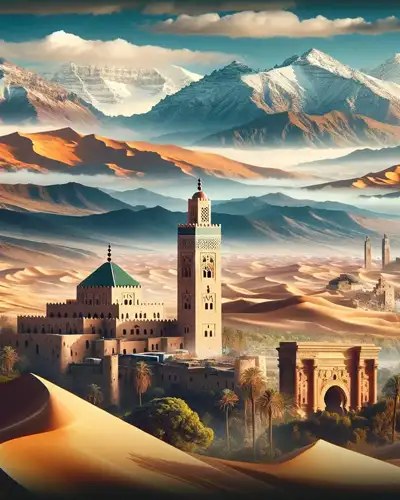
Imagine the scent of cumin and saffron drifting through Marrakech’s labyrinthine souks as the sun sets behind the snow-capped Atlas Mountains, fading into the silent majesty of the Sahara where sand dunes stretch endlessly beneath a star-filled sky. This comprehensive 10 days Morocco itinerary is tailored for first-time visitors seeking an memorable journey through the country’s most iconic destinations. You’ll get a step-by-step route with specific times, accurate prices in both MAD and USD, and local secrets to navigate Marrakech, the Sahara Desert, and Fes confidently. Expect practical advice on avoiding tourist traps, understanding cultural customs, and making the most of every hour without exhausting yourself on long drives.
Why This 10 Days Morocco Itinerary Works for First-Timers
This route starts in Marrakech for a reason: most international flights land at Marrakech Menara Airport, placing you immediately in Morocco’s most accessible city for cultural immersion. The itinerary balances iconic highlights with manageable travel times, ensuring you experience the Sahara desert adventure without spending entire days trapped in a vehicle. From Marrakech, you journey southeast through the High Atlas Mountains to the Sahara, then northeast to Fes, covering diverse landscapes from urban medinas to barren desert valleys.
The structure optimizes your energy by clustering activities in each destination before moving on. You spend three nights in Marrakech to recover from jet lag and explore at a comfortable pace, then transition through the desert with overnight stops in Dades Valley and Merzouga before arriving in Fes. This prevents the common mistake of rushing through cities in a single day, which leaves you exhausted and unable to absorb the cultural depth each place offers.
Ending in Fes provides convenient departure options via Fes-Saïss Airport or a direct train connection back to Casablanca Mohammed V International Airport. The route covers approximately 1,010 km total, with the longest single drive being Marrakech to Dades Valley at 5-6 hours. For more context on Morocco’s travel landscape, explore our Morocco travel blog for additional destination insights.
Day-by-Day Breakdown: Marrakech to Fes via the Sahara
Days 1-3: Marrakech — Imperial City Experience
Arrive in Marrakech and spend your first afternoon recovering in your riad within the medina walls. On Day 1 evening, head to Jemaa el-Fnaa square at dusk around 6 PM when snake charmers, henna artists, and food stalls come alive under the orange glow of sunset. The square transforms into a theater of Moroccan street life, with the smoke from grilled meat stalls mixing with the rhythmic beats of Gnawa musicians.
Day 2 begins early at Majorelle Garden, opening at 8 AM — arrive by 9 AM to avoid tour bus crowds and photograph the cobalt blue buildings in soft morning light. Entry costs 70 MAD per person (approximately $7 USD). Afterward, explore the Bahia Palace in the Mellah district by 11 AM, where intricate zellige tilework and carved cedar ceilings showcase 19th-century craftsmanship. Entrance is 70 MAD ($7 USD). Spend Day 2 afternoon navigating the souks: the textile souk off Rue Semarine, the spice vendors near Rahba Kedima square, and the metalworkers’ quarter where copper lanterns are hammered by hand. To buy tickets online, visit the official website of Le Jardin Majorelle.
Day 3 focuses on lesser-known sites like the Saadian Tombs (70 MAD, $7 USD) and a traditional hammam experience at Les Bains de Marrakech, where a scrub and massage package runs 300-600 MAD ($30-60 USD). Book your desert tour departure for Day 4 morning. Accommodation in Marrakech ranges from budget riads at 400-800 MAD per night ($40-80 USD) to luxury options like Riad Yasmine at 1,500 MAD per night ($150 USD).
The best time to visit Marrakech is typically no the summer, as temperature are scorching and the experience is poor during the day, unless you are well prepared for the uncomfortable sun and heat.
Day 4: Marrakech to Dades Valley via Ait Benhaddou
Depart Marrakech by 8 AM, driving southeast over the Tizi n’Tichka pass, which peaks at 2,260 meters above sea level with panoramic views of the High Atlas. Stop at Ait Benhaddou around noon — this UNESCO World Heritage ksar (fortified village) served as a filming location for *Gladiator* and *Game of Thrones*. Entry is 10 MAD ($1 USD), but hire a local guide for 100 MAD ($10 USD) to hear stories about the kasbahs’ construction using rammed earth and straw.
Continue through Ouarzazate, known as Morocco’s Hollywood for its film studios, then into the Dades Valley. Arrive at your guesthouse by 6 PM after a total drive time of 5-6 hours covering approximately 330 km. The road twists through the Valley of Roses, where in May locals harvest damask roses for rosewater production. Overnight in a family-run guesthouse like Chez Pierre or Kasbah Tizzarouine, costing 500-900 MAD per night ($50-90 USD) with dinner included.
Day 5: Dades Valley to Merzouga — Sahara Desert Camp
Leave Dades Valley by 9 AM, driving through Todra Gorge where limestone cliffs rise 300 meters on either side of the Todra River. Stop to walk into the gorge for 30 minutes before continuing through the barren Ziz Valley and past Erfoud, known for fossil workshops. You reach Merzouga village and the edge of Erg Chebbi dunes by 4 PM, covering 280 km in approximately 5 hours.
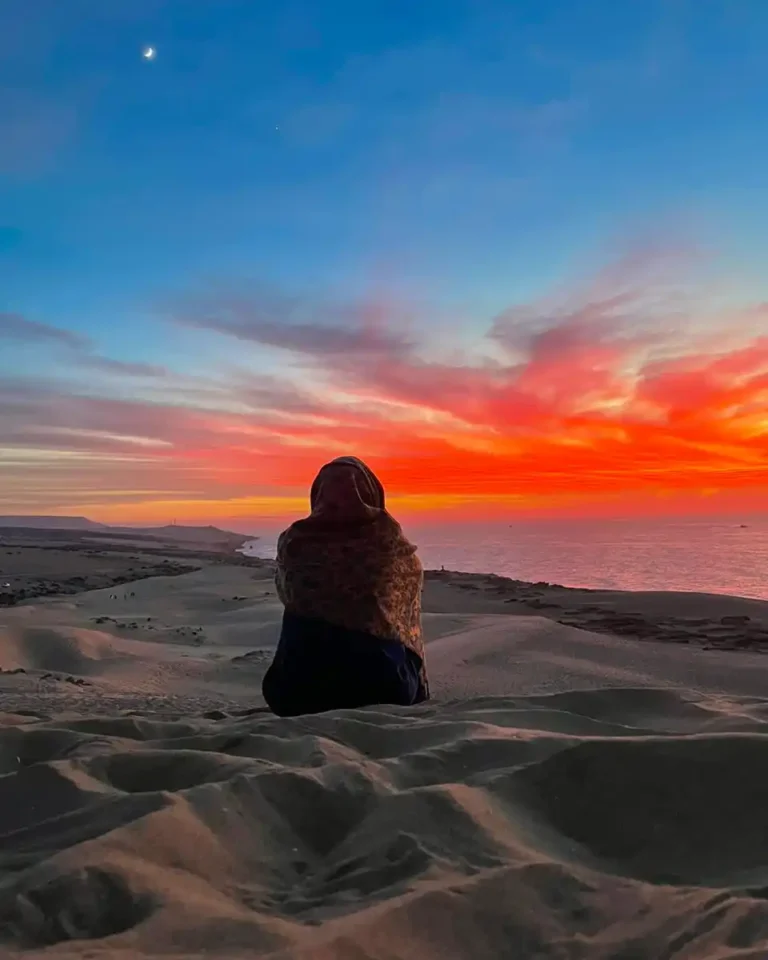
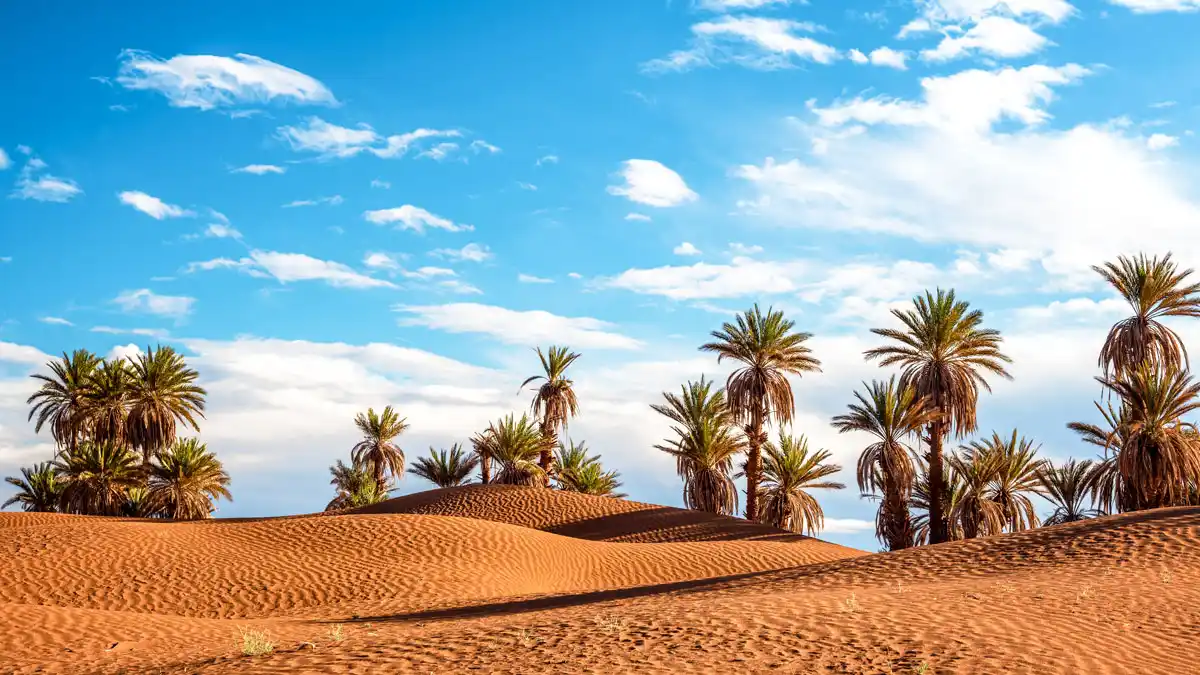
At Merzouga, transfer luggage to camels for a 90-minute trek into the dunes, departing around 5 PM to reach camp by sunset at 6:30 PM. Luxury desert camps offer private tents with proper beds and en-suite bathrooms, priced at 1,200-2,000 MAD per person ($120-200 USD) including dinner and breakfast. Budget camps with shared facilities start at 800 MAD ($80 USD). The silence of the Sahara at night, interrupted only by Amazigh drumming around the campfire, remains one of Morocco’s most profound experiences. For detailed planning, see our guide on how to plan a Sahara desert tour from Marrakech.
Day 6: Merzouga to Midelt via Erfoud
Wake before sunrise at 6 AM to watch the dunes shift from purple to orange to gold as the sun rises over Algeria, just 50 km east. Return to Merzouga by camel or 4×4 by 9 AM, shower at a hotel, then drive north toward Midelt. The route passes through Erfoud, where you can visit fossil workshops selling trilobite and ammonite specimens embedded in black marble — prices range from 50 MAD for small pieces to 5,000 MAD for large slabs.
Continue through the Middle Atlas cedar forests, reaching Midelt by 3 PM after 4 hours and 230 km. This apple-growing town sits at the junction between the Middle and High Atlas ranges, offering cooler temperatures and mountain views. Overnight at Hotel Taddart or similar for 400-700 MAD per night ($40-70 USD). Midelt serves as a rest stop before the final push to Fes, allowing you to break up what would otherwise be an exhausting 8-hour drive from the Sahara.
Days 7-9: Fes — Medieval Medina Exploration
Drive from Midelt to Fes by 2 PM on Day 7, covering 220 km in 3 hours through the Middle Atlas via Ifrane, a French-colonial alpine town nicknamed “Little Switzerland” for its European architecture. Check into your riad in Fes el-Bali, the 9th-century walled medina and UNESCO World Heritage site, where riads range from 600 MAD ($60 USD) for budget options to 2,000 MAD ($200 USD) for restored palaces.
Day 8 requires a licensed guide — hire one through your riad for 300-400 MAD ($30-40 USD) to navigate Fes el-Bali’s 9,000 alleyways. Start at Bab Bou Jeloud gate at 9 AM, visit the Chouara Tannery from an adjacent leather shop’s terrace (vendors expect you to purchase something if you photograph from their terrace), then explore Al-Qarawiyyin University, founded in 859 CE and recognized by UNESCO as the world’s oldest continuously operating university. Non-Muslims cannot enter the mosque, but you can view the courtyard from the entrance.
Day 9 explores Fes el-Jdid (New Fes), built in the 13th century, where you visit the Royal Palace gates and the Mellah (Jewish Quarter). Spend the afternoon at Merenid Tombs on the hills north of the medina for panoramic sunset views over Fes. Dinner at Restaurant Dar Hatim offers authentic Fassi tagine with preserved lemon and olives for 120-180 MAD ($12-18 USD). For broader Morocco travel logistics, review our resource on train travel in Morocco.
For a full guide on Fes and its landmarks, you can read our article that covers everything you need to know about Fes.
Day 10: Departure from Fes
Your final morning allows for last-minute souk shopping or a relaxed breakfast at your riad. Fes-Saïss Airport sits 15 km south of the city, reachable in 20 minutes by taxi for 150-200 MAD ($15-20 USD). Alternatively, take the train from Fes Ville station to Casablanca Mohammed V Airport, departing every 2 hours with a journey time of 4 hours and tickets costing 150-220 MAD ($15-22 USD) depending on class.
Logistics: Travel, Accommodation & Budget Tips
Transportation Options and Costs
For this 10 days Morocco itinerary, a private car with driver offers maximum flexibility and comfort, allowing stops at viewpoints and kasbahs that buses and trains cannot access. Expect to pay 2,500-4,000 MAD per day ($250-400 USD) for a private vehicle including driver and fuel, totaling 17,500-28,000 MAD ($1,750-2,800 USD) for the full 7 days of driving. Split among four passengers, this becomes cost-effective.
Alternatively, take the train from Marrakech to Fes (7 hours, 250-400 MAD or $25-40 USD) and book separate 2-3 day desert tours from Marrakech or Fes. Group desert tours cost 1,000-1,500 MAD per person ($100-150 USD) for 2 days/1 night, while private tours start at 3,000 MAD per person ($300 USD). The train runs on French-built tracks and offers comfortable first-class seating with panoramic windows through the Middle Atlas.
Car rental without a driver costs 300-500 MAD per day ($30-50 USD) for a compact vehicle, but driving in Morocco requires confidence navigating unmarked roads, aggressive traffic in cities, and mountain switchbacks. International driving permits are legally required alongside your home license. Fuel costs approximately 15 MAD per liter ($6 per gallon), and the Marrakech-Fes route via Sahara consumes roughly 120 liters.
Accommodation and Seasonal Considerations
Budget riads and guesthouses range from 400-800 MAD per night ($40-80 USD), offering basic rooms with shared or private bathrooms and breakfast. Mid-range riads with courtyards, pools, and air conditioning cost 800-1,500 MAD ($80-150 USD). Luxury riads and kasbahs exceed 2,000 MAD ($200 USD), featuring rooftop terraces, hammams, and multi-course dinners.
The best months for this itinerary are September through November and April through May. During these periods, Sahara desert temperatures range from 20-30°C (68-86°F) during the day and drop to 5-15°C (41-59°F) at night. Summer months (June-August) see desert temperatures exceeding 40°C (104°F), making daytime activities uncomfortable despite lower accommodation prices. Winter months (December-February) bring cold desert nights below 0°C (32°F), requiring heavy sleeping bags in standard camps.
Ramadan affects restaurant hours and alcohol availability, most cafes outside hotels close during daylight hours. Check the Islamic calendar before booking, as Ramadan dates shift 11 days earlier each year. Eid al-Fitr following Ramadan sees Moroccans travel domestically, raising accommodation prices and reducing availability.
Daily Budget Breakdown
A realistic daily budget per person ranges from 800-1,500 MAD ($80-150 USD), covering accommodation, meals, transport, and activities. Meals cost 40-80 MAD ($4-8 USD) for street food like msemen (flaky flatbread) and harira (lentil soup), 80-150 MAD ($8-15 USD) for casual restaurant tagines, and 200-400 MAD ($20-40 USD) for upscale dining. Entry fees to monuments total approximately 300 MAD ($30 USD) across the entire itinerary. Souvenir budgets vary wildly — leather bags in Fes start at 200 MAD ($20 USD), handwoven carpets range from 800-8,000 MAD ($80-800 USD) depending on size and quality.
Cultural Insights & Must-Try Experiences
Moroccan Cuisine Beyond the Tourist Menu
Tagine dominates tourist menus, but locals eat it primarily at home, not in restaurants. In Fes, visit Restaurant Dar Hatim for authentic Fassi tagine with preserved lemon, olives, and chicken cooked in a conical clay pot over charcoal. The dish costs 120 MAD ($12 USD) and reveals the proper balance of spices — mild, not the overpowering cumin many tourist restaurants use.
Couscous is served traditionally on Fridays after midday prayers when families gather. Some riads offer Friday couscous meals if you arrange in advance. Street food provides the most authentic experience: try msemen with honey from vendors near Bab Bou Jeloud in Fes (5-10 MAD or $0.50-1 USD), or harira soup from carts in Marrakech’s Jemaa el-Fnaa after sunset during Ramadan (10 MAD or $1 USD). Avoid eating visibly during daylight hours in Ramadan out of respect for those fasting.
Mint tea accompanies every interaction, from riad check-in to carpet shop browsing. Refusing tea can seem rude, so accept at least one glass. The tea is poured from height to create foam, served very sweet — locals drink it throughout the day despite the sugar content.
Bargaining, Dress Codes, and Cultural Etiquette
Bargaining is expected in souks, but not in restaurants or riads. Start at 40-50% of the initial asking price and negotiate calmly. Walking away often brings the vendor down further — if they don’t chase you, your offer was likely too low. Prices in shops with fixed-price signs (often government-run cooperatives) are non-negotiable but typically higher than souk prices.
Dress modestly in medinas and conservative areas: cover shoulders and knees regardless of gender. Women face less hassle wearing loose clothing and headscarves in Fes and rural areas, though it’s not required. Marrakech’s Gueliz district (new town) sees more Western-style clothing, but medinas remain traditional spaces. Topless sunbathing is illegal, and public displays of affection between unmarried couples can attract disapproving stares in conservative neighborhoods.
Photography requires permission, especially of people. Offering 5-10 MAD for a portrait is customary, and some performers in Jemaa el-Fnaa aggressively demand payment after being photographed. Religious sites forbid photos inside mosques. Always ask before photographing women, particularly those wearing niqabs in rural areas.
Regional Cultural Differences You’ll Notice
Marrakech’s Arab-Andalusian heritage shows in its ornate riads and formal Arabic spoken by locals. Fes retains a more conservative atmosphere rooted in its role as a religious and intellectual center. The Sahara desert regions are predominantly Amazigh (Berber), where locals speak Tamazight dialects before Arabic, and cultural practices like tribal drumming and henna traditions differ from coastal cities.
In desert camps, you’ll hear Amazigh music featuring the guembri (three-stringed lute) and bendir (frame drum), distinct from Andalusian or Gnawa styles in Marrakech. Amazigh hospitality emphasizes offering guests the best portions of meals and endless tea refills — refusing repeatedly seems rude, so accept graciously.
Making the Most of Your 10 Days: Insider Advice
Timing and Crowds: When to Visit Key Sites
Visit Sahara dunes at sunrise (6-7 AM) and sunset (6-7 PM) for the best light and coolest temperatures. Midday in the desert is visually flat and uncomfortably hot — use this time for travel or resting in the shade. Majorelle Garden in Marrakech becomes overcrowded after 10 AM when tour groups arrive; entering right at opening (8 AM in summer, 9 AM in winter) gives you near-empty gardens for an hour.
Fes medina is least crowded early morning before 9 AM and late afternoon after 5 PM when shops close for evening prayers. Avoid midday in the tanneries — the smell intensifies under the hot sun, and mint sprigs vendors offer are essential (free, but they expect tips). Book guided medina tours for morning to maximize open shops and avoid afternoon heat.
What Most Guides Get Wrong About Morocco Travel Logistics
Many travel articles claim you can visit Chefchaouen (the blue city) on this 10-day itinerary. You cannot, not without sacrificing either the Sahara or Fes. Chefchaouen sits 600 km north of Fes in the Rif Mountains, requiring 4-5 hours of driving each way. Adding it means either skipping the desert entirely or extending to 12-14 days. First-time visitors should prioritize the Marrakech-Sahara-Fes triangle, saving Chefchaouen for a future trip focused on northern Morocco.
Guidebooks often suggest taking public buses for budget travel. This works in theory but adds immense time and stress. Buses between Marrakech and Fes via the desert require multiple transfers, no air conditioning in older vehicles, and frequent breakdowns. You’ll spend more time in transit than exploring, and language barriers make navigating rural bus stations frustrating. If budget is tight, opt for a group desert tour and trains between cities rather than attempting the full route by bus.
Health, Safety, and Practical Concerns
Drink only bottled water — tap water in Morocco is chlorinated but can upset foreign stomachs. A 1.5-liter bottle costs 10-20 MAD ($1-2 USD) at shops. Most riads provide complimentary bottled water in rooms. Brush teeth with bottled water for the first few days until your system adjusts.
Carry cash in Moroccan dirhams (MAD) for small vendors, guides, and souks. ATMs are widely available in cities, dispensing up to 2,000-5,000 MAD per withdrawal with foreign card fees around 3-5%. Inform your bank of Morocco travel to avoid card blocks. Credit cards work in upscale riads and restaurants, but medina shops and markets are cash-only. Keep small bills (20 MAD, 50 MAD) for tips and small purchases — breaking 200 MAD notes can be difficult.
Sun protection is critical: pack SPF 50 sunscreen (sold locally but expensive at 100-150 MAD or $10-15 USD per tube), sunglasses, and a lightweight scarf for desert sand and sun. Desert temperatures drop sharply at night — bring layers including a fleece or light jacket even in summer. In winter months (December-February), pack a warm coat for desert camping where temperatures fall below freezing.
Buy a local SIM card at the airport from Maroc Telecom, Orange, or Inwi for 50-100 MAD ($5-10 USD) including data. This provides 4G connectivity in cities and along major routes. WiFi is spotty in desert camps and rural guesthouses. Download offline maps via Google Maps or Maps.me before leaving cities. For comprehensive preparation, consult our detailed advice for travelling to Morocco.
Packing Essentials Specific to This Route
Pack a headlamp or flashlight for desert camps where electricity is limited to sunset-to-midnight generator hours. Bring a reusable water bottle (1-2 liters) and water purification tablets as backup. Sturdy walking shoes are essential for medina cobblestones and rocky desert terrain — avoid new shoes to prevent blisters. A daypack for carrying water, sunscreen, and purchases makes medina exploring easier.
Include a power adapter for European two-pin plugs (Type C and E), a portable battery pack for phone charging in the desert, and ziplock bags to protect electronics from sand. Wet wipes and hand sanitizer are invaluable when bathrooms lack soap or paper. Women should pack a lightweight scarf for covering shoulders in mosques or conservative areas. A small Arabic phrasebook helps, as English is limited outside tourist zones and French dominates as the second language.
What Comes After Your First 10 Days in Morocco?
This itinerary covers the essential highlights for a memorable first visit, balancing culture, adventure, and logistics without overwhelming first-time travelers. You will experience Morocco’s imperial heritage in Marrakech and Fes, the raw beauty of the Sahara desert, and the warmth of Amazigh hospitality along the way. Morocco’s diversity means you can always return to explore regions we haven’t touched — the blue streets of Chefchaouen in the Rif Mountains, the Atlantic coast’s surf towns like Essaouira and Taghazout, or the High Atlas valleys where traditional Amazigh villages cling to terraced mountainsides.
Extending this route to 12-14 days allows a more relaxed pace with additional stops in Casablanca for Hassan II Mosque, or a detour through the Draa Valley’s palm oases south of the Sahara. Some travelers prefer spending 4-5 nights in the desert region, adding Zagora or M’hamid for multi-day camel treks beyond Merzouga’s dunes. Others focus exclusively on northern Morocco, combining Fes with Chefchaouen, Tangier, and the Roman ruins of Volubilis near Meknes.
To tailor this route to your preferences and ensure a stress-free journey, consider the flexibility of a private tour crafted around your interests and pace. Whether you want to spend an extra night under Sahara stars, arrange a cooking class in a Marrakech riad, or visit artisan cooperatives in the Atlas Mountains, a customized private tour removes logistical worries while preserving authentic experiences. Memento Morocco specializes in designing private itineraries across Marrakech, Fes, and the Sahara Desert with expert English-speaking guides who know the hidden corners and cultural nuances that make Morocco memorable. Contact us to customize your perfect Morocco private tour, with expert guides and great logistics.
📩 Contact us: contact@mementomorocco.com | +49 1522 3075977